Saturday, February 14, 2026

Review of "Heroes: The Greek Myths Reimagined (Greek Myths #2)" by Stephen Fry


I often see the names of ancient Greek heroes in literature and the arts, and I'm not always sure who they are. To bone up on the subject, I read "Heroes: The Greek Myths Reimagined" by Stephen Fry - an actor, comedian, and writer who puts a fun spin on Greek mythology.


                                                              Author Stephen Fry


'To survive in the world of the Olympian gods, and the venomous and mutant creatures the gods have spawned, mortals have felt the need to supplicate and submit themselves to the gods, to sacrifice to them and flatter them with praise and prayer. But some men and women began to rely on their own resources of fortitude and wit. These are the heroes'.


In this book, Stephen Fry relates the adventures of Perseus, Heracles, Bellerophon, Orpheus, Jason, Atalanta, Oedipus and Theseus. The Greek myths involve hundreds of people, gods, and heinous beings, and Fry includes many of them in this narrative - with a handy glossary and index at the back, along with footnotes for further clarification.

In this review, however, I'll just say a little about each swashbuckler, and provide a glimpse of Fry's humor and wry observations.

πŸ—‘️πŸ—‘️ Perseus: A prophecy led to baby Perseus and his mother DanaΓ« being cast into the sea in a wooden box.


Perseus and DanaΓ« cast into the sea

Perseus and DanaΓ« were rescued, and Perseus grew up to be a brave young man who was 'tricked' into obtaining the head of Medusa. After Perseus agreed to bring back Medusa's head, he consulted his mother.

P: Mum, what's a Medusa?
M: She's a Gorgon, a dreadful creature with boar's tusks instead of teeth, razor sharp claws of brass, and venomous snakes for hair.
P: Get away!
M: That's the story.
P: Right....and if....say, for example....someone was to go hunting for her?
M: They'd be a fool. One glance from her will turn you to stone. If you were to meet her eyes for just one second you would be petrified.
P: Scared?
M: No, petrified means turned to stone. Like a statue.
P: Oh. so THAT'S Medusa? I'd rather hoped she might turn out to be some of giant chicken, or a pig maybe.

Perseus goes on to have a series of adventures, one of which is cutting off Medusa's head.


Perseus and Medusa

πŸ—‘️πŸ—‘️ Heracles: Heracles was the son of Zeus and Alcmene, which infuriated Zeus's wife Hera. Hera took out her spite on young Heracles, and duped him into killing his wife and two sons. To expiate his guilt, Heracles had to perform twelve tasks for King Eurystheus - who was jealous of Heracles reputation as the tallest, broadest, strongest, fastest young man in the world.

Heracles' tasks included killing the Nemean Lion, slaying the Hydra, bringing back the golden hind (deer) of Ceryneia, capturing the Erymanthian Boar, and so on.


Heracles and the Hydra

When Heracles returned with the live Erymanthian Boar, Eurystheus was so terrified of the enormous beast that he leapt into a great stone jar and cowered there, saying "Take it away....Take it away NOW!" The scene is a favorite among Greek pot painters, who loved to depict the frightened Eurystheus cringing in his jar while Heracles threatens to drop an enormous squirming pig down on top of him.


Heracles holds the Erymanthian Boar over Eurystheus, cowering in his stone jar

πŸ—‘️πŸ—‘️ Bellerophon: Bellerophon tamed the winged horse Pegasus, and crowds came to watch him ride the white horse through the sky. When Bellerophon spurned the advances of a married woman called Stheneboea, the wrathful female told her husband that Bellerophon tried to force himself on her. In a roundabout way, this resulted in Bellerophon performing a series of tasks for King Iobate. These tasks entailed killing the fire-breathing Chimera, subduing the Solymi raiders, taming the Amazon warriors, and more.


Bellerophon on Pegasus fighting the Chimera

Author Stephen Fry writes, 'It gives me no pleasure to relate that Bellerophon's youthful cockiness soured over the years into a very unappealing arrogance and vanity. Such hubris was a blasphemy that could not go unpunished, and [condemned by Zeus] Bellerophon died a crippled, embittered, and lonely old man.' πŸ˜ͺ

πŸ—‘️πŸ—‘️ Orpheus: In the words of Stephen Fry, 'Orpheus was the Mozart of the ancient world. He was more than that. Orpheus was the Cole Porter, the Shakespeare, the Lennon and McCartney, the Adele, Prince, Luciano Pavarotti, Lady Gaga, and Kendrick Lamar of the ancient world, the sweet-singing master of worlds and music'.

Orpheus is known for his many adventures, in the midst of which he married beautiful Eurydice. When Eurydice died from a snake bite, Orpheus put aside his lyre and vowed never to sing again.

Apollo convinced Orpheus to enter the underworld to bring Eurydice back. When Orpheus encountered Hades and Persephone - the King and Queen of the dead - he charmed them with his music and Hades gave permission for Eurydice to depart. Hades told Orpheus, 'Leave us. Eurydice will follow. But if you turn round to look at her before you reach the mouth of the cave, you will lose her.' Sadly, Orpheus turned a moment too soon and lost Eurydice forever.


Orpheus plays his lute for Hades and Persephone


Orpheus looks back at Eurydice too soon

πŸ—‘️πŸ—‘️ Jason: Jason is famous for his voyage on the Argo to retrieve the Golden Fleece from Colchis (today the Republic of Georgia) and bring it back to Greece. When Jason was preparing for his crusade, word went out that a party of heroes was required to crew the Argo and help win eternal glory. Some of the best-known figures of the Greek world became Argonauts, including Heracles and Orpheus.


Jason and the Argonauts

Stephen Fry observes, 'It is generally held that, in historical ancient Greece, many grand families laid claim to Argonaut ancestors. Over the generations, poets and historians were paid to include such ancestors in 'definitive' accounts of the voyage in order to lend prestige to the pedigrees of the rich and powerful'.

In any case, Jason and the Argonauts' long quest was filled with all manner of danger and adventure, not least because the Golden Fleece was guarded by a fierce serpent that never slept or closed its eyes.


Jason taking the Golden Fleece

πŸ—‘️πŸ—‘️ Atalanta: Atalanta was born to an Arcadian king who had no use for female offspring. The king had the baby left on a mountaintop to die, but a bear found the outcast and raised her. Later, the child was taken by a group of hunters who named her Atalanta, and 'taught her the secrets of trapping and killing, of shooting with arrows, spears, and slings, coursing, hunting, tracking, and all the arts of venery and the chase'.


The huntress Atalanta

Atalanta was dedicated to Artemis, the goddess of wild animals and chastity. When the citizens of Calydon disrespected Artemis, she cursed the city with a monstrous boar that had razor-sharp tusks the size of tree branches, and an insatiable appetite for livestock. The boar trampled the crops, ravaged the vineyards and barns, and like the rats in 'The Pied Piper of Hamelin', bit the babies in their cradles and drank the soup from the cooks' own ladles.

A call for hunters went out, to conquer the Calydonian Boar during the Calydonian Hunt led by Meleager. Many Greek heroes volunteered, but when Atalanta showed up, some men shouted with derision. They said things like:

Girls can't throw.
Girls can't run in a straight line without bumping into trees or tripping over.
Girls can't shoot arrows without the bowstring snapping back and stinging them in the face.
Girls don't have the stomach to kill.

Atalanta proved them all wrong and was instrumental in killing the boar. Atalanta then went on to additional exploits.


Atalanta and Meleager


The Calydonian Boar Hunt

πŸ—‘️πŸ—‘️ Oedipus: After a Delphic oracle proclaimed that the son of King Laius and Queen Jocasta would kill his father, a baby son was born to the couple. Laius told his most trusted servant, 'Take this baby and expose it on the highest point of Mount Cithaeron, and just to be sure, stake him to the hillside. I don't want him crawling away'.

A shepherd rescued the infant and the child was adopted by King Polybus and Queen Merope of Corinth, who called him Oedipus. As far as Oedipus knew, Polybus and Merope were his parents, and he was a true prince.

When Oedipus visited the Oracle at Delphi, he was told, 'Oedipus will kill his father and mate with his mother.' Stunned, Oedipus knew he must never see Polybus and Merope again. The risk of harming Polybus through some accident was too great. And as for marrying his mother....the idea made him feel physically sick. He was very fond of his mother, but in that WAY?

On his subsequent wanderings, Oedipus had a fatal confrontation with his REAL father Laius. Oedipus then answered the riddle of the Sphinx, and was allowed to pass the crossroads where she stood. Afterwards, Oedipus met and married his REAL mother Jocasta. Years later, when Oedipus learned what he had done, he pulled the long gold brooch pins from Jocasta's dress and thrust them into his own eyes.


Oedipus kills Laius


Oedipus answers the riddle of the Sphinx


Oedipus and Jocasta

πŸ—‘️πŸ—‘️ Theseus: When Theseus moved an 'immovable' boulder in his home city of Troezen, he found a pair of sandals and a silver sword left by his (until then) unknown father, King Aegeus of Athens. Theseus's mother urged him to go to the Athenian court to meet old Aegeus, saying 'He'll be so tickled! You know he married Medea of Colchis. Terrifying woman by all accounts. A sorceress and murderer of her own close kin. I'll hunt out a present for you, a little treasure of some kind you can give them both with my regards'.


Theseus moves the boulder to find sandals and a sword

Theseus decided to travel to Athens by foot, a long, arduous, dangerous journey that resulted in the Six Labors of Theseus. These included killing the one-eyed giant Periphetes; confronting Sinis the bender; defeating the Crommyonian Sow; and more.


Theseus confronts the Crommyonian Sow

Theseus finally arrived in Athens, where he was heir to the throne, but had many rivals and enemies. Queen Medea was especially anxious to do away with Orpheus because she wanted her son to rule Athens. Thus Orpheus was given a series of deadly tasks, which he completely successfully.

Later, Theseus defeated the Minotaur in the maze, for which he's renowned. Theseus became the King of Athens, and the Athenians viewed Theseus as the inventor of wrestling. bull-leaping, democracy, and justice - as well as being a paragon of intelligence, wit, insight, and wisdom.


Theseus defeats the Minotaur in the maze

In mythology, 'the heroes cleansed our world of monsters like dragons, giants, centaurs, and mutant beasts that infested the air, earth, and seas. This permitted humans to spread out with confidence and transform the wild world into a place of safety for humanity'. (Ha ha ha)

The book is a lively overview of some better known Greek heroes, with descriptions of their complicated lineages, interwoven family relations, and the nefarious creatures in their midst. Tangential anecdotes add enlightenment to the book, making this a good introduction to Greek folklore. Highly recommended.

Stephen Fry has penned additional books on Greek mythology, in his inimitable entertaining fashion. Fry's love for the subject, and vast knowledge, is obvious and admirable. πŸ‘

Rating: 4 stars

Thursday, February 12, 2026

Review of "The Drunkard's Walk: How Randomness Rules Our Lives" by Leonard Mlodinow


Lots of people might think they can compute the odds that something will happen. For instance, If my favorite baseball team is playing an opponent with inferior stats I might be pretty sure my guys will win....and place a small wager. But random chance - which is the rule rather than the exception - could trip me up. A so-so batter on the other team might miraculously hit a grand slam home run! 😲


In this book Leonard Mlodinow explains how randomness affects our lives. For example, a publisher rejected George Orwell's book 'Animal Farm' with the remark "it's impossible to publish animal books in the U.S." And before he became successful author Tony Hillerman was advised "to get rid of all that Indian stuff." John Grisham's books were repeatedly rejected at first. And J.K. Rowling's first Harry Potter book was rebuffed a number of times. These writers persisted and eventually happened on the right publisher....but other (perhaps equally talented) authors didn't. Random chance at work!


Of course if we really want to figure out how likely it is that something will (or won't) happen we have to rely on math.


In this book Mlodinow elucidates some of the math concepts behind probability theory and statistics - a lot of which is complex and requires re-reading a couple of times (for me anyway). So I'll just give a very basic illustration.

Suppose Don picks up two coins and tosses them. He wants to know how likely it is he'll get one head. Don figures the possible outcomes are: zero heads, one head, or two heads. So, he thinks there's a 1 in 3 likelihood. Nope.


Don has to consider all the possible sequences: heads-heads; heads-tails; tails-heads; and tails-tails. Two possible outcomes yield one head - so the chances are 1 in 2 (50%).

A basic principal of probability theory is that the chances of an event happening depends on the number of ways it can occur.

Here's another example: In 1996 the Atlanta Braves beat the New York Yankees in the first two games of the World Series (where the first team that wins four games is the victor). So, what was the chance the Yankees would make a comeback and win the series - assuming the teams are equally matched? After explaining all the possible ways the Yankees could win the remaining games, Mlodinow calculates that the Yankees had a 6 in 32 chance of winning the series, or about 19%. The Braves had a 26 in 32 chance of winning the series, or about 81%. Against the odds, the Yankees won!


Mlodinow goes on to explain that - if one team was better than the other - that would weigh into the calculations and the odds would be different. This same type of reasoning can be applied to competing businesses, television shows, movies, whatever. And even if the odds favor the 'better contender', sometimes - by pure chance - the 'worse contender' will win.


Of course 'experts' try to predict all kinds of things: whether stocks will go up; if a superhero movie will be No. 1 at the box office; whether Toyotas will sell better than Buicks; if a certain horse will win the Triple Crown; and so forth. And Mlodinow explains that - no matter how 'knowledgeable' the maven - the predictions might be wrong. The reason: our brains aren't wired to do probability problems very well. πŸ₯΄

In the book, Mlodinow discusses Pascal's triangle, the Bell Curve, random number generators, the best strategy for picking the 'correct door' on 'Let's Make a Deal', the likelihood a woman carrying fraternal twins will have two girls, whether scolding a worker who does badly and praising a worker who does well makes a difference in their future performance, one man's strategy for winning at roulette....all kinds of interesting stuff.


Pascal's Triangle


Bell Curve


Let's Make A Deal


Twins

The book is informative and contains a lot of fascinating stories about the philosophers and mathematicians who developed probability theory, how they did it, and why (usually having something to do with gambling.... ha ha ha). I enjoyed the book and would recommend it to readers interested in the subject.


Rating: 4 stars

Monday, February 9, 2026

Review of "The Girl and The Gravedigger: An Inspector Leopold von Herzfeldt Mystery" by Oliver PΓΆtzsch


Vienna, Austria, 1894: The Vienna Museum of Art History is the repository of numerous treasures from ancient Egypt - some on display, and some stored for future study.


A recently arrived mummy would have lain undisturbed in the storage room for years if a larcenous cleaning woman hadn't found the room inadvertently unlocked.


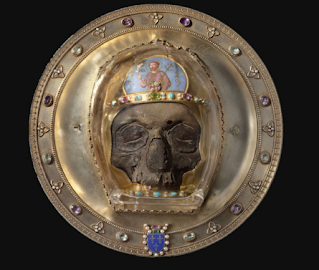
The cleaner, having heard mummies were buried with jewels and gold, unwrapped the relic's bandages, looking for valuables. Instead, the woman found the dead body of Egyptologist Alfons StrΓΆssner, with green emeralds in his eye sockets. The cleaner's screams echoed throughout the building.


The death of Professor StrΓΆssner adds to rumors of a curse, because other Egyptologists who'd recently opened an Egyptian tomb - and removed the contents - had also died.

Stylish Police Inspector Leopold von Herzfeldt - who's an advocate of 'new' investigative methods, and who doesn't believe in Egyptian curses - gets the StrΓΆssner case.


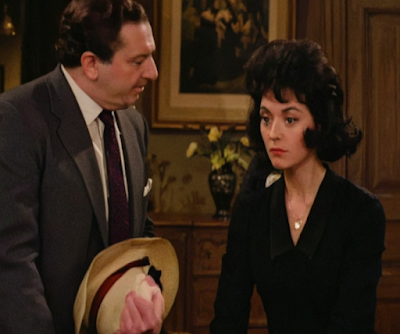
When Leo interviews Professor StrΓΆssner's daughter Charlotte - who looks like Cleopatra- she expresses complete bewilderment. Charlotte thought her father was in Egypt doing research, and she even produces letters StrΓΆssner sent from the Middle East.


Further investigation leads von Herzfeldt to the Vienna Archaeological Society, whose members include Austria's rich and elite, including Archduke Rainer Ferdinand.


This pretentious crowd doesn't appreciate Leopold coming around, but he perseveres, makes startling discoveries, and eventually unveils the truth.

In addition to the killing of Professor StrΓΆssner, the Vienna police are concerned with two other cases. One is the death of a zookeeper in the lion's cage, which is blamed on an African chief in an 'ethnic' exhibit.


Police Detective Von Hertzfeld gets embroiled in the zookeeper's murder by his girlfriend, Julia Wolf, who works as a crime scene photographer and a chanteuse.


Julia believes the African chief arrested for killing the zookeeper is innocent, and she wants Leo to help the man.

Vienna's other police investigation involves a serial killer who's murdering handsome young male prostitutes and cutting off their genitalia.


The serial killer case draws in the entire police department, and Leo and Chief Inspector Paul Leinkirchner become the lead detectives. This is tricky because Leo has Jewish ancestry and Leinkirchner is openly antisemitic.


During the serial killer investigation, Leo - who always dresses in the height of fashion - (literally) gets down in the dirt and mud in his best suit. (I winced at the despoilment of this finery and hoped Vienna had good cleaners. 😊)

As events progress, perpetrators are uncovered, and there's even a 'Hercule Poirot' moment when Leo reveals a surprising miscreant.


One of the most interesting characters in the story is Augustin Rothmayer, a gravedigger at Vienna Central Cemetery. Rothmayer is a brilliant eccentric who's writing a book called 'Death Rites Around the World'.


Colorful excerpts from Rothmayer's book are scattered through the novel. For example, in ancient Egypt, a dead pharaoh's wife and servants were killed and buried with him. (Nothing in this world would have induced me to marry a pharaoh. 😠) Rothmayer helps with all the police investigations in his own unique fashion.


Besides penning an engaging police procedural, author Oliver PΓΆtzsch gives us a peek at the ambiance of old Vienna. The story mentions a tasteful 'upper class' brothel; a homeless encampment in the sewers; horsecar trams; the Imperial Court Library in the Hofburg palace; theater shows; expensive restaurants; nightclubs; and more. All this is a nice complement to the story.


I enjoyed the novel and recommend it to mystery fans.

I listened to the audiobook, narrated by Rupert Bush, who does a fine job.

Thanks to Netgalley, Oliver PΓΆtzsch, and HarperAudio for a ARC of the book. 

 Rating: 4 stars 

Friday, February 6, 2026

Review of "Wolf Worm: A Suspense/Horror Novel" by T. Kingfisher


Author T. Kingfisher is well-known for her horror novels, and this is her latest macabre story. If you're easily creeped out, or have an insect phobia, this isn't the book for you.

****

It's 1899, and thirty-year-old Sonia Wilson is a naturalist and artist who worked with her father until he died. Afterwards, with no good job offers, Sonia was obligated to teach watercolor painting in a Wilmington, North Carolina girls' school, a low-paying job with no future prospects.


Consequently, Sonia is happy to accept a job offer from the entomologist Dr. Matthias Halder, who needs an illustrator for his book about parasitic insects.


Dr. Halder sends Sonia a train ticket, but there's no one waiting at the Chatham, North Carolina train station when Sonia arrives in the late afternoon.


There IS a banner reading 'Home of the World Famous Chatham Rabbit.' Sonia later learns Chatham rabbits are famous for being the main ingredient in delicious stews.


Rabbit Stew

Dr. Halder's residence, Halder House, is ten miles from the train station, and Sonia is getting ready to walk when she's offered a buggy ride with Mr. Asa Phelps. Mr. Phelps is a grim, God-fearing man who tells Sonia it's not safe to walk in the evening, because there are devils in the woods. Sonia is skeptical about this story, but little does she know!!


After Sonia gets to Halder House, she meets the staff: Mrs. Kent, a Black woman, is the housekeeper/cook;


Mr. Kent, a White man, is the caretaker/handyman;


and there's a young maid called Sally.


There's also a cat named Smiley, who rules the roost.


The mixed race couple, the maid, and the cat are friendly to Sally, in contrast to Dr. Halder - a rigid man prone to shouting, who's concerned only with his 'very important' work.


In Halder House, Sonia is installed in quarters called 'the studio', whose previous occupant left behind paints, brushes, palettes, sketchbooks, beautiful paintings of insects, and more.


Dr. Halder gives Sonia her assignments, to paint Cochliomyia hominivorax, the screwworm fly (aka botworm fly); screwworm fly larvae; other botflies; and more.


Screwworm Fly


Screwworm Fly Larva

Later, Dr. Halder tells Sonia the screwworm fly is a parasite whose larvae (maggots) eat the living tissue of warm-blooded animals, such as horses, cattle, goats, sheep, humans, and so on. Dr. Halder goes on to describe screwworm infections, and - unfortunately for Sonia - she later encounters an infested raccoon.


Sonia settles in at Halder House, does her work, and meets the housekeeper's friend, Ma Kersey, an indigenous Lumbee. Ma Kersey is a healer and midwife, as well as source of supernatural lore about North Carolina, and stories about Dr. Halder.


Dr. Halder frequently wanders through the woods at night, and when Sonia - an inveterate nosybody - surreptitiously follows Dr. Halder, she sees him enter a locked shed.


Eventually, Sonia enters the shed herself, and the horror part of the book ensues.


Botfly larva on human skin

Before that time, however, Sonia's first person narration demonstrates a wry sense of humor, and a tendency to make fun of herself.


The novel has wonderful word-pictures of Chatham's woodsy scenery.....


......and nightmare-inducing descriptions of screwworm fly infestations.


Squirrel with a botworm infestation

I like the scenes of Sonia doing her watercolor illustrations, which provide a glimpse of how the artist works, and the problems she encounters. Who knew the color 'coral' was so hard to get right.😊

If you can keep turning the pages, this spooky story will take you strange places. Strictly for horror fans.

I listened to the audiobook, narrated by Mary Robinette Kowal, who does a fine job.

Thanks to Netgalley, T.Kingfisher, and Macmillan audio for a ARC of the book. 

 Rating: 4 stars