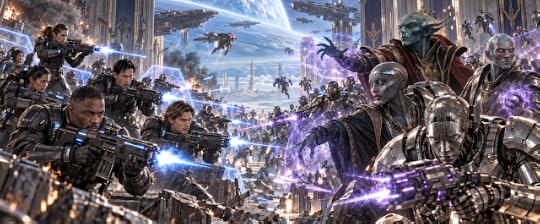
Monday, September 21, 2026

Review of "Trash: A Garbageman's Story" by Simon Paré-Poupart


As a teenager in Quebec, Simon Paré-Poupart (b. 1985) liked school, and reading, and role-playing games. Paré-Poupart was sure he'd be an intellectual some day and he was right. Simon completed graduate studies in sociology and international business, and has work experience as a journalist and social worker. He's also a garbageman.
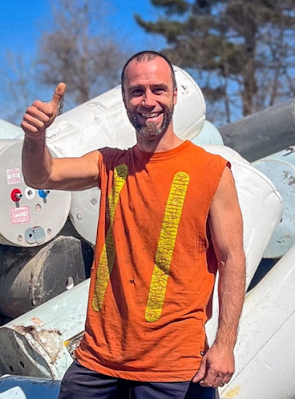

Author Simon Paré-Poupart

Simon's trashman career began at age eighteen, when his stepfather, whose world was the gym, kept telling Simon "Be a man." When Simon asked how he could be a man, his stepfather said, 'Try doing a run behind a garbage truck. That's supposed to be a tough job!"

So in summer 2003, Paré-Poupart became a runner - a guy who runs behind the truck picking up garbage. Little did Simon know the job would put him through college and university and that he'd "keep right on throwing trash, where the physical challenge, camaraderie, and steady income balance out the intellectual satisfactions of other jobs in journalism, research and social services."


Simon Paré-Poupart throwing trash.

Paré-Poupart tells his story in a series of anecdotes about himself, his co-workers, the trash-disposing public, and the garbage industry. Garbage is a dirty, often unscrupulous business. Besides household bins and bags, Simon observes, "Nighttime is when construction trucks roam the streets to illegally dump their waste...That means our routes are littered with big bags full of glass and sharp nails. They're so heavy you have to prop them against your legs to lift them...You don't know when you've cut yourself until you feel the warm blood running down your leg."


Construction Waste.

Paré-Poupart notes garbage collection is a family business, passed on from father to son, relative to relative, and that the job often inspires loyalty. As an example, Simon mentions a co-worker called Rock'nRoll, who was still driving a garbage truck at age seventy - with an IV drip in the cab. Rock'nRoll had throat cancer and was administering his own treatment. Simon writes, "And his two sons were just like him: proud and plenty scrappy."
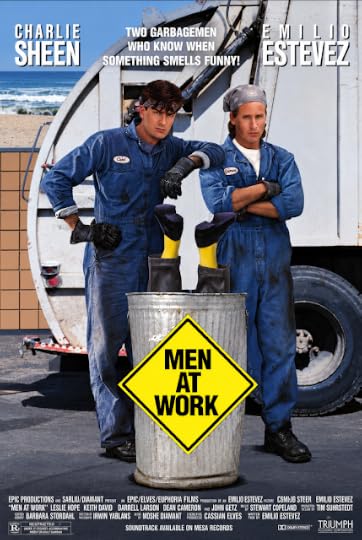

Real-life brothers Charlie Sheen (left) and Emilio Estevez play garbagemen in the comedy 'Men at Work' (1990)

Many trash collectors are marginalized men who might drink, smoke weed, take speed, use drugs, sleep in the street, have dysfunctional home lives, be ex-convicts, etc. [Note: there are very few women on garbage trucks.] Paré-Poupart has worked with all manner of garbagemen, and he writes about them with empathy, describing trashmen as nonconformists out of necessity, rebels without a cause, chaotic, pathetic, and fiercely independent.
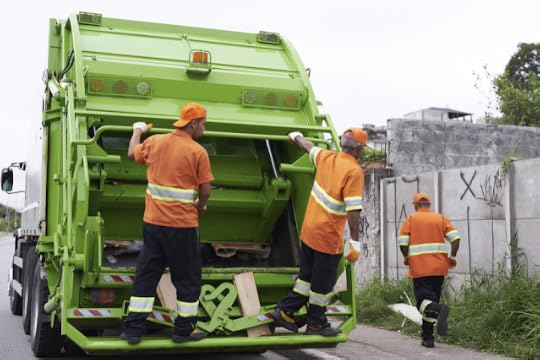

Runners working on a garbage truck

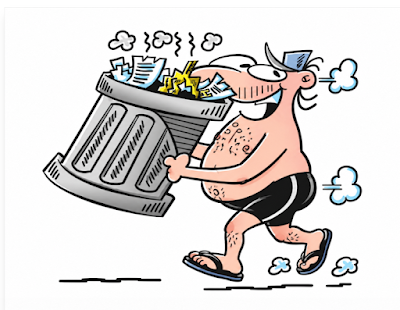
One of Paré-Poupart's memorable colleagues is called Spandex, for the shorts he wears. Spandex runs behind a truck shirtless, in flip-flops and bike shorts, and "He talks to the trash. It's like he'd rather have a conversation with a garbage bag full of vegetable peels or broken bottles than human beings. He tells the garbage all about the weather and fills it in with what's new in his life...he also asks the garbage how it's doing, despite the cold, mud, and heat, and the worms eating away at what few shards of dignity [Spandex] is clinging to. How did Spandex get into this unusual habit? No one really knows. Some say it's the outcome of a life stacking up failure after failure, a sense of shame, a response to the mockery of others. Of course, it could also just be good old-fashioned substance abuse."


Paré-Poupart also touches on the business end of waste management. He writes that many municipalities have been pressured to subcontract garbage collection to private entities, and this pattern holds in Greater Montreal as well. Simon observes, the deregulation of waste management has been filled by major conglomerates or organized crime, and frequently some combination of the two - and entrusting waste management to gangsters has repercussions. "In Naples, Italy, the mafia has buried toxic waste everywhere, creating crisis after scandal for years. In an area known as the 'triangle of death,' cancer rates have soared, fields are poisoned, the rivers stink. It's a plague."
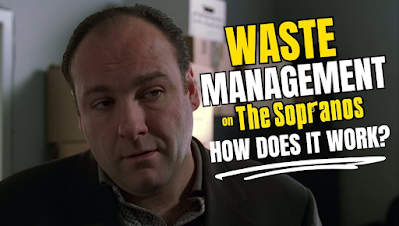

On 'The Sopranos' TV series, mafioso Tony Soprano runs a waste management business

With regard to corporations, "massive corporations are good at finding loopholes in laws and and regulations...and apply pressure to create a legislative environment favorable to their interests." For his part, Paré-Poupart likes this just fine. He says, "I hate the very idea of the over-regulated life of civil servants...it just doesn't work for me...From where I stand, none of these management systems listens to the garbagemen themselves; none of them trusts our experience, considers making us part of the actual waste management processes, or cares about our culture." Simon adds, "I dream of a world where the castoffs of society self-manage the project of managing its waste."


A waste management corporation

A whole other area of waste management is recycling, which is an industry of its own, but one that doesn't work well. In 2021, Paré-Poupart worked for a recycling company, and this is how he describes a sorting center: "Wherever I turn my head, I see mind-boggling heaps of garbage. There's glass all over the place, seagulls perched on bales, and the whole site is so cluttered that vehicles can barely get around. Trucks are driving on a layer of loose waste, crushing it...it's utter chaos."
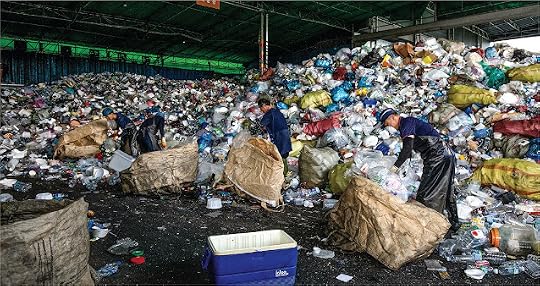

A trash recycling site

In addition, North America sends recycling to China, India, Vietnam, Indonesia, and the Philippines, where poor workers sort through paper, plastic, human waste, and other things. Recently, China curtailed imports because of contamination with useless things like cement, which increases the weight, and thus the cost to China. (There's no honor in the recycling business.)


Some Canadian trash is sent to the Philippines

Many people (including Paré-Poupart's mother) don't understand the job he's chosen. Simon writes, "The world of garbage is a Wild West, and that's exactly what I love about it. I love straddling the fine line between dirty and clean. I love the joyful chaos of garbagemen, our anarchic spirit and vague desperation...It gives me a space of freedom I can't find anywhere else." The author goes on, "It seems eminently reasonable to me to maintain a gray area, one where those who struggle to find their place in society can form a community...a universal brotherhood of trash."

Paré-Poupart is a "freegan" who collects trash even when he's not working. Simon writes, "If you pass me on the street on my day off, there's a good chance I'll have a piece of salvaged junk in my hands. I'm a gleaner, a picker, a collector...When there's something I need, I'll often put off buying it...[and] I'll find exactly what I'm looking for on the side of the road." The salvaged items are used, sold, given away, or recycled. In fact, Simon has bought fewer than five pieces of clothing in the last twenty years. LOL
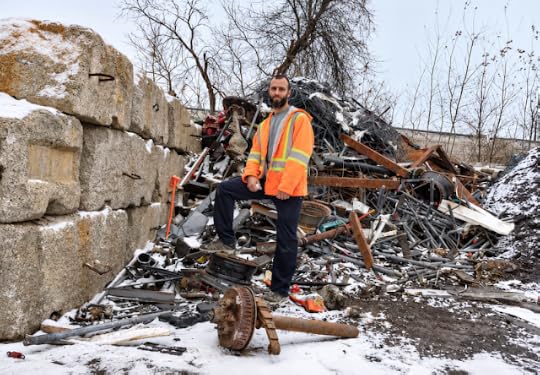
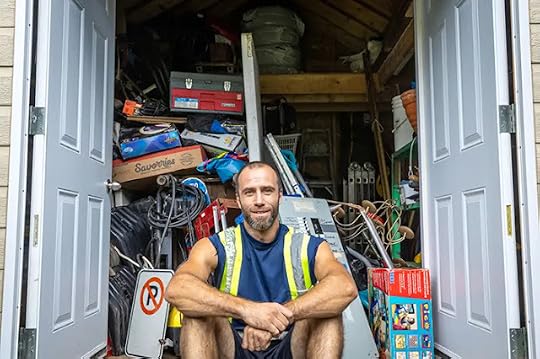


Simon Paré-Poupart is a freegan who scavenges trash for his own use

Paré-Poupart mentions other aspects of garbage pickup as well, such as the disrespect of the public; working in storms, snow, cold, and heat; overloaded/overweight bins and bags; injuries on the job; and so on. The author also provides a brief discourse on the HORRIFIC STINK of cities in the middle ages, where the streets were repositories for every kind of refuse...and there were no garbagemen.
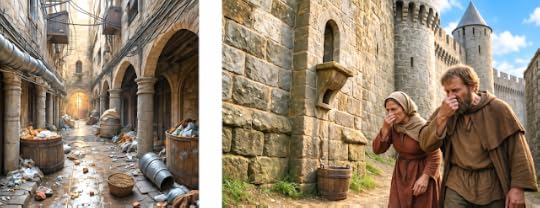

Cities in the Middle Ages had sanitation problems

For a quick overview of garbage, you can't go wrong with this book, which is informative and fun.

Simon Paré-Poupart wrote the book in Quebec French and it's been translated into English by Pablo Strauss.

Thanks to Netgalley, Simon Paré-Poupart, and Melville House for an ARC of the book.

Rating: 4 stars 

Saturday, September 19, 2026

Review of "A Murder in Springtime: A Bruno, Chief of Police Mystery" by Martin Walker


In this 19th book in the 'Bruno, Chief of Police' series, Bruno investigates the murder of a woman who works in a nursing home.

*****


French policeman Benoit Courreges has been elevated from chief of police of St. Denis to chief of police of the Vézère Valley. The chief, who's known as Bruno to everyone in the community, loves to garden, cook, ride horses, socialize with friends, have romances, and of course, keep the peace in his district.

Unlike previous Bruno novels that I've read, this book focuses more on Bruno's personal life than the murder mystery, which is rather mundane. For much of this story, Bruno is concerned with reviving the Tuesday market in St. Denis, which has lost business to other towns; socializing with his friends and acquaintances; making delicious meals for company; spending time with his girlfriend Laura Segret, who's busy with her concierge service;


going for runs with his basset hound Balzac - whom EVERYONE loves; and more.


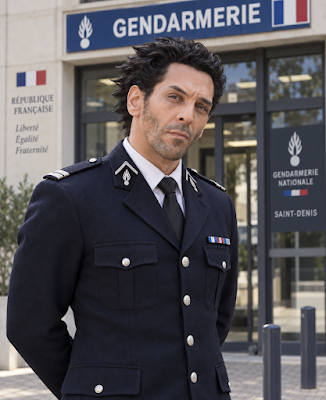
The mystery begins when Bruno's friend Pamela comes home from a quick trip to the boulangerie for bread, and finds her lodger Josette Quirit murdered, bashed in the head with a rock. Since Pamela is a possible suspect, Bruno must recuse himself from the investigation. The Police Judiciaire assigns officer Fabien Panton to the case, who stays in St. Denis for the duration. Fabien's 'Sonic the Hedgehog' hairstyle causes amusement in St. Denis, but he turns out to be a capable policeman.


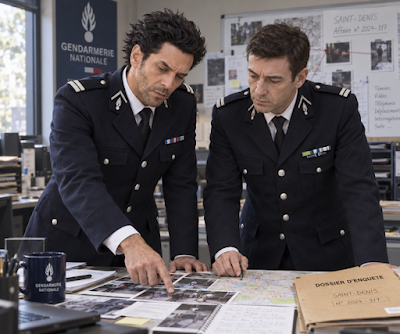
Though Fabien is in charge of the investigation, Bruno gets nervy being left out, and unobtrusively (he thinks) looks into the murder. In any event, once Pamela is cleared of suspicion, Bruno and Fabien work together to track down the killer.


Bruno and Fabien learn the victim has been working in the local nursing home for a few months, and Josette Quirit isn't her real name. The investigation includes finding the dead woman's real identity; interviewing employees and residents of the nursing home that employed her; speaking to a Netflix crew that's been filming in the area; tracking a possible stalker; and so on. The usual police procedural routines.

It turns out the murder may have something to do with harsh disciplinary measures in France's Catholic boarding schools. This gives author Martin Walker the opportunity to mention the long list of abuses by the Catholic Church in France, America, Australia, Ireland...all over.


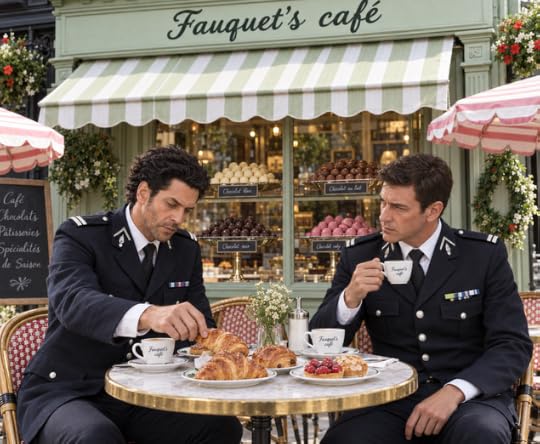
In the course of their investigation, Bruno and Fabien have many cups of coffee at Fauquet's café and luxury chocolatier, where Bruno buys Easter sweets for his friends and their children.


The detectives also take turns making dinner for each other, with Bruno's menu including: canned anchovies on thin slices of buttered toast; a truffle omelette; a salad; and bread with a variety of cheeses. The various courses are (of course) accompanied by the appropriate array of wines and spirits. The preparation and consumption of the meal is described in great detail, as are the MANY repasts in the story.


As another example, the spectacular North African-themed Easter dinner for thirty-five of Bruno's friends, which takes all day to prepare, includes: piles of veggies to dip in tzatziki and green-olive-and-walnut tapenade; bowls of crackers and breadsticks; salad; a méchoui (spit-roasted whole lamb) made with secret spices; and many appropriate alcoholic beverages.


The novel is chock full of scenes like this, as well as descriptions of restaurant meals that are fun to read about. However, the food talk - yummy as it is - doesn't add to the mystery part of the book.

To be fair, we observe Bruno and Fabien conduct police interviews and delegate elements of the investigation to other police officers, tech experts, computer aficionados, and Excel gurus. The detectives also use cell phone records and other modern investigative techniques.

As always, the author skillfully weaves the wonderful ambiance of Dordogne into the story, and the reader is charmed by the region.


By the end of the book the case has been solved and the worrisome elements of Bruno's personal life - like his romance with Laura and the declining Tuesday market of St. Denis - seem to be getting on track. Still, I miss the 'old' Bruno books, where the plots include things like neo-Nazis; corrupt politicians; French resistance fighters; genetically modified crops; etc.

That said, fans of the series would probably enjoy visiting with favorite characters and navigating rural life with Bruno.

Thanks to Netgalley, Martin Walker, and Knopf for an ARC of the book.

Rating: 3.5 stars 

Wednesday, September 16, 2026

Review of "Fury in Death: A Lt. Eve Dallas Mystery" by J.D. Robb


In this 63rd book in the 'Detective Eve Dallas' series, Eve is on the trail of an especially brutal killer. The book works fine as a standalone.


*****

It's 2061 and people communicate via video links and travel in semi-flying cars. Lieutenant Eve Dallas is a capable New York detective married to Irish billionaire Roarke - a handsome devil with wild blue eyes. Real estate magnate Roarke also functions as an expert consultant to the New York Police and Securities Department (NYPSD), and is especially helpful with financial crimes.


In the novel's prologue. set in 2048, a young scientist named Steve Redman works for Banner-Wyst, a global scientific research and development enterprise. Steve heads a project called Rainmaker, which is on the cusp of finding a way to control the world's climate, so that instead of drought and famine, instead of floods and destruction, flourishing crops would eradicate world hunger.


Steve is proud of his work until he learns the founders of Banner-Wyst plan to use Rainmaker to destroy the land, then buy up whole regions and build them up again - for power and profit. Steve is horrified to think the millions of people who would die mean nothing to the culprits.

Steve plans to become a whistleblower, but first asks for advice from his most trusted colleague and friend, Larry, who advises Steve to wait, discuss, and find a solution to the problem. Regardless, Steve prepares to spill the beans to the FBI.


Before that happens, Steve, his pregnant wife Ari, and their toddler son Luke are getting ready to move from an apartment to a brownstone. Shortly before the move, Luke goes out to buy ice cream one evening, and just as he's returning, the apartment building erupts into flames, killing Ari, Luke, and hundreds of residents. The fire inspectors attribute the incident to a gas leak.


Skip ahead 13 years, and Lt. Eve Dallas is called to the scene of a homicide. The victim is Larry Chu, a director of bioengineering science at Banner-Wyst. Eve discovers someone "beat the living shit out of Chu" until he was dead. Chu has broken fingers, a broken left arm, a broken right ankle, multiple broken ribs, and extreme facial injuries: nose, cheekbones, eye sockets, jaw, and teeth...and the beating continued after death.


Dallas and her partner Detective Delia Peabody interview personnel at Banner-Wyst.


The detectives learn everyone seemed to like Larry Chu, and to praise him as a fine scientist and boss. However, NYPSD financial consultant Roarke makes a suspicious discovery. Thirteen years ago, Chu received a secret $3 million payment from Banner-Wyst, and after that Chu got twice yearly bonuses of $250,000, deposited to his secret Cayman Islands account.


Soon after Chu's death, Dr. Ezra Dent, a retired Banner-Wyst scientist, is found brutally beaten to death in a manner similar to Larry Chu. Once again, NYPSD financial consultant Roarke discovers Dent received a $2 million payment from Banner-Wyst thirteen years ago, and annual bonuses of $250,000 in subsequent years.

When Dallas and Peabody interview Banner-Wyst founders Jacob Wyst and Calvin Banner, the men are obstructive, refuse to cooperate, and threaten legal action. It's clear they're covering something up.


Dallas and Peabody conclude something nefarious happened 13 years ago - the destruction of Steve Redman's apartment building. The fire was meant to kill Steve, but he was out at a store, and Steve's beloved family and the building's other residents perished.


The horrific tragedy put Steve in a mental hospital, from which he disappeared some years ago. It appears Steve is now getting retribution for his family's murder, and he doesn't mean to stop with Chu and Dent.

Dallas and Peabody empathize with Steve's quest for revenge, but they're cops first and foremost. Thus they set out to catch Steve and put him where he belongs.

In the coarse of the investigation, Dallas consults with profiler Dr. Charlotte Mira, who's always dressed in the height of fashion; and Dallas enlists the help of journalist Nadine Furst, to put pressure on Banner-Wyst.


A tangential storyline in this novel is a housewarming party being planned by Delia Peabody and her partner Ian McNab, who've invited their extended families and all their friends to their new home. Peabody is beyond excited, and squeals with delight when talking about the festivities. There's a wonderful surprise at the party, which takes place after Dallas and Peabody resolve the Redman case.


As always, in their personal lives, Eve and Roarke seem to be in a perpetual honeymoon phase. At home, they dine on meals like meatballs and spaghetti or pizza, cuddle, and enjoy each other's company. Roarke is an attentive spouse who picks out Eve's clothes and takes care of her bumps and bruises. The household also includes the butler Summerset and the spoiled cat Galahad, both of whom provide some of the book's more humorous scenes.


I enjoyed the story, but felt Dallas and Peabody went over the same issues, and came to the same conclusions, again and again. These repeated conversations didn't move the story along.

I listened to the audiobook, narrated by Susan Ericksen, who does a fine job with the characters' voices.

Thanks to Netgalley, J.D. Robb, and Macmillan Audio for an ARC of the book.

Rating: 3.5 stars 

Monday, September 14, 2026

Review of "Exodus The Helium Sea: Archimedes Engine #2" by Peter F. Hamilton


Exodus The Helium Sea, the second book in a duology, picks up from the end of Exodus The Archimedes Engine. This is my review of the first book.
https://www.goodreads.com/review/show...

*****

As Exodus The Helium Sea opens, we get a flashback to Kelowan 7,000 years ago. Queen Zuberi has instituted an Evolution Project headed by her daughter Countess Liliana, that will result in Zuberi’s granddaughter Khepri (who will have Zuberi's mindline) becoming the Eternal Empress of the Crown Dominion and elevate Celestials to (essentially) god-like status.



Just as the project seems to have achieved success, the other queens unite to kill Zuberi and her entire family, but - unknown to them - Zuberi's son, daughter, and granddaughter escape.

It's now 7,000 years later, and Queen Helena-Thyra of Wynid has murdered and manipulated her way into becoming the current Empress of the Crown Dominion.


Queen Helena-Thyra plans to kill the other four queens, so she can be the empress forever. Queen Helena-Thyra doesn't realize it, but she's part of Queen Zuberi's long-term plan, currently being carried out by Zuberi's son Dagon, daughter Liliana, and granddaughter Kephri.....and their minions.

Meanwhile, there's plenty more going on. The Archimedes Engine has been used to fling a small lifeless world called Boksrock at Kelowan, destroying Kelowan and forcing a mass evacuation. The Human Liberation Movement is blamed for the incident, though they're not REALLY responsible. Regardless, Finn Jalgori-Tobu, Josias Alponi, Terence Wilson-Fisher and their allies are on the run. Their ultimate plan is to prove their innocence and get the Crown Dominion to stop treating humans as servants and workers and give them autonomy over their own lives.


As things play out, the humans manage to steal thousands of tons of antimatter, used to fuel powerful weapons, from a troop of Celestials. The Celestials planned to use the antimatter for their own nefarious purposes, and chase the humans all over the universe to kill them and retrieve the fuel. This leads to one epic battle after another, scenes that are described in rich detail.


On the part of the humans, Josias Alponi plans to use the antimatter to negotiate better treatment, essentially freedom, for the humans living among the Celestials.


A part of the book I especially liked were the depictions of exotic weapons, like the Álogo suit, a Remnant Era armor suit that's described as big, very big...a walking building that has flight; artificial intelligence; responds to thoughts; has life support; has missiles that can take out a couple of squads of knights on its own; and more.


Another remnant era weapon is the Crystal Gun, which is operated by a living intelligence called Dohl’Kol. The Crystal Gun is extraordinarily powerful, and can work at great distances; destroy fleets; annihilate planets; target individuals; and more. It's used to great effect in the story.


An additonal interesting aspect of the novel is the ability of the protagonists to 'disguise' themselves in various ways. For example, Neusch, the son of Archon Makaio-Faraji - who was assassinated in book one - creates a bio-andy that looks like him and which he operates remotely. Neusch is continuing his father's investigation into the conspiracy surrounding Queen Helena-Thyra, and is in secret communication with Clavissa, Queen Helena-Thyra's companion and aide. So Neusch and Clavissa are among the 'good guys' working against the 'eternal empress' wannabes.


At the same time, the 'bad guys' have camouflage of their own. Zuberi's son Dagon has taken on the appearance of the deceased human Gyvoy Enfoe, and manipulated Finn Jalgori-Tobu into doing terrible things;


and Zuberi's daughter Liliana, a supposed supporter of Queen Helena-Thyra, is pretending to be a human mercenary. All this is meant to result in Zuberi becoming the eternal empress (after she pushes Queen Helena-Thyra aside).


There'a a great deal of political maneuvering, mind control, deception, lying, murder, and so on as the story's diverse factions try to fulfill their conflicting agendas. To me, the narcissistic Celestials who plan to live forever and control everything are insufferable. I hate to think humans evolved into these creatures.

Exodus The Helium Sea is an interesting story, but there's a lot going on. The novel has a cornucopia of characters with long names; there are huge battles every few chapters; a cadre of factions are maneuvering to outsmart each other; etc. That said, the story comes to a more or less satisfying ending. I say more or less because it’s hard to root for any of these Celestials.

For gamers, the Exodus video game is slated for release in 2027.

Thanks to Netgalley, Peter F. Hamilton, and Random House for an ARC of the book.

Rating: 4 stars