
In this historical novel, Maggie O'Farrell uses the little that's known about William Shakespeare's personal life to fashion a poignant tale of families, love, and loss. The playwright isn't named in the book, instead being called the Latin tutor, the husband, the son, etc.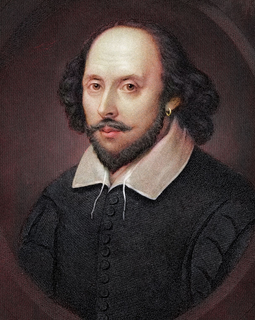
William Shakespeare
The story alternates back and forth between two time periods: In the earlier timeline, the Latin tutor (let's call him Will) and Agnes get acquainted, marry, and start a family. In the later timeline, Will and Agnes's son Hamnet dies from the bubonic plague, and the grief is intense, especially for Agnes.
The story is a credit to O'Farrell's imagination and provides a vibrant picture of 16th century England. I'll mention highlights of the narrative, and rather than toggle back and forth in time, I'll proceed in a linear fashion.
IF YOU CONSIDER THE HIGHTLIGHTS SPOILERS, STOP READING NOW.
Will and Agnes meet in the 1580s when Will is a part-time Latin tutor for Agnes's half-brothers.
Will sees Agnes in the distance, a free spirit flying her falcon, and feels an instant attraction.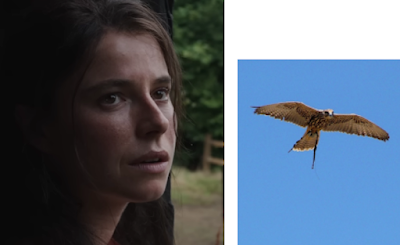
Will and Agnes begin 'courting' (taking walks in the woods), but both families oppose a union.
Will's family thinks Agnes - a naturalist and healer who has premonitions - is a witch; and Agnes's family expects her to marry a wealthy farmer, not a penniless no-account.
Will and Agnes aren't going to let their families interfere in their romance, so Agnes purposely gets pregnant.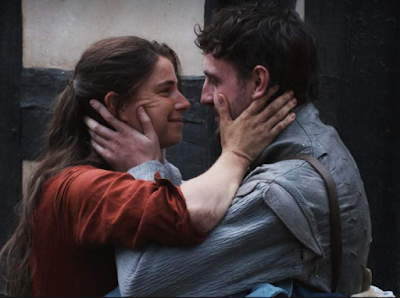
After a lot of drama, a marriage is arranged....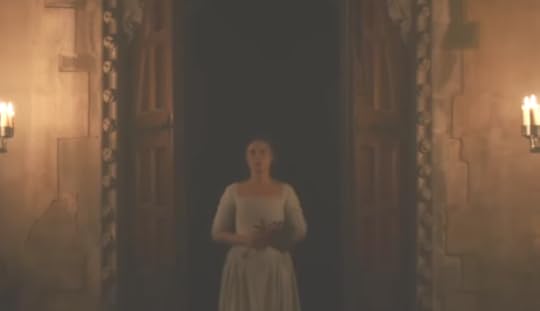
....and Will and Agnes get a tiny apartment next to the Shakespeare family home. The dual living quarters are so close, it's essentially one household.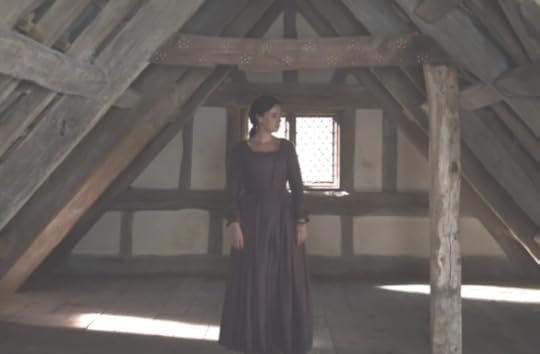
Along the way, we learn that both Will and Agnes had difficult childhoods: Will was frequently beaten by his domineering, scandal-ridden, glovemaker father John, especially when John was drunk;
and Agnes's stepmother Joan was a jealous spiteful shrew who tormented her stepchildren.
After the wedding, Will and Agnes settle down to married life. Their daughter Susanna is born....
......and Will works for his glovemaker father, but prefers to squirrel himself away to write.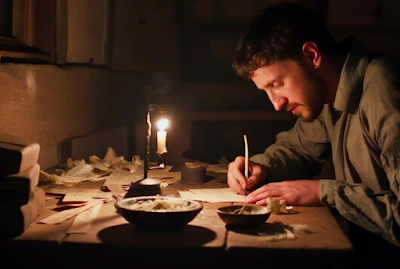
Will HATES being under his father's thumb and becomes morose and depressed.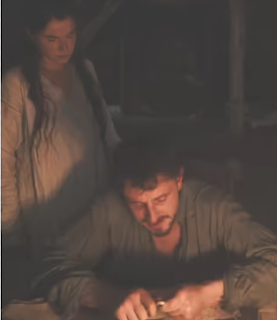
So Agnes consults her brother Bartholomew, a respected farmer and businessman, who slyly convinces John to send Will to London to sell gloves.
Agnes is pregnant when Will leaves for London, and plans to join him after the baby is born. The twins, Hamnet and Judith, are delivered by a midwife, but Judith is a sickly child and always too weak to travel. Thus Agnes and the children never get to London.
From the time Will and Agnes wed, Mary Shakespeare (Will's mother) fervently wishes her son had never met Agnes, but acknowledges her daughter-in-law perks up the household with her cooking, flowers, and homemaking skills.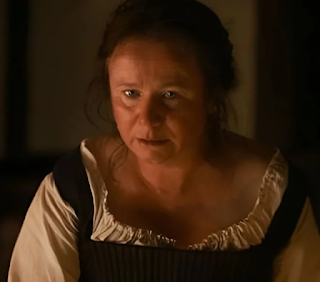
Agnes also has a side business as a healer; she uses flowers and plants to make potions and unguents, and sells them to clients who come by her home.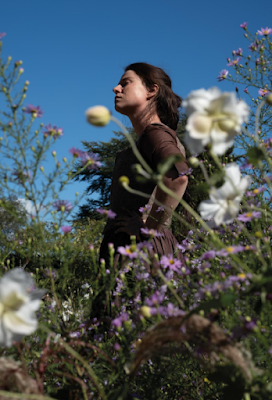
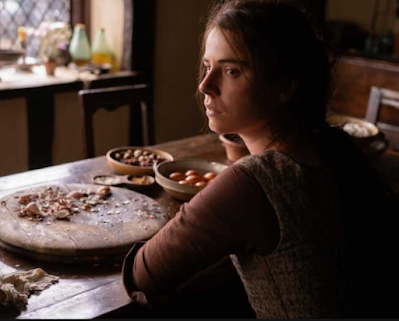
Meanwhile, in London, Will has abandoned the glove business to become an actor and playwright. The theatre is a difficult, competitive enterprise, and Will rarely gets home to Stratford.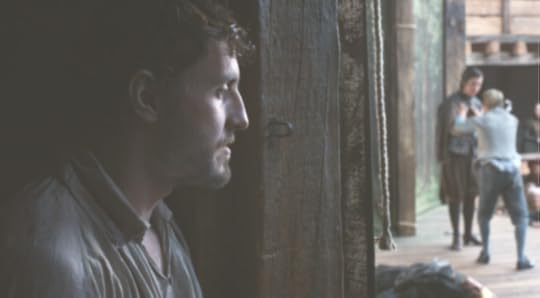
On one visit, Agnes senses Will has been with other women, and she's angry and hurt. Will manages to smooth it over, and goes on with his free-wheeling lifestyle. (Note: This didn't sit well with me, but there wasn't much Agnes could do.)
Skip ahead a decade or so, and Susanna is thirteen years old, and Hamnet and Judith are eleven years old.
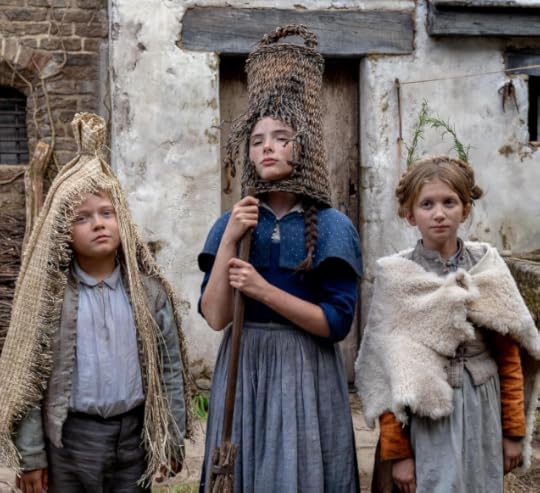
Sadly, the deadly bubonic plague has come to England, and Judith falls ill; her fever rises and buboes erupt on her body. Agnes and her mother-in-law Mary nurse Judith, but there's nothing they can do to help her. The doctor brings a dessicated frog to put on Judith's chest, but Agnes knows it's useless.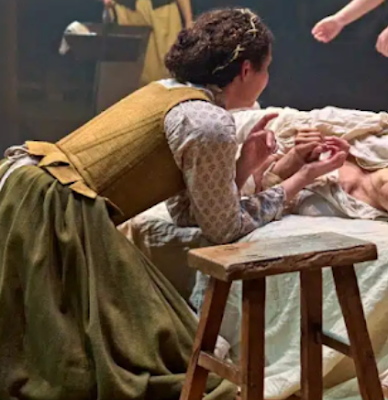
Rural women in 16th century England weren't schooled AT ALL, but Will had taught his sisters to read and write. So Will's sister Eliza writes him to say Judith is on the brink of death. When the missive finally reaches Will, he rushes back to Stratford on horseback.
Will arrives home to find Judith recovering and Hamnet dead. In his anguish over his sister, Hamnet had lain down beside Judith, hoping death would take him instead of her. Hamnet perished while Judith rallied.
The extended family's grief is intense, and Will and Agnes are inconsolable. Still, Will returns to London over Agnes's objections, and Agnes falls into the depths of despair.
Hamnet dies around mid-novel, so there's a lot of story going forward. Towards the end of the book, Agnes learns Will has written a play called Hamlet (a name interchangeable with Hamnet) and she's FURIOUS Will would use Hamnet's name for an entertainment.
Determined to confront Will, Agnes goes to London (accompanied by her brother Bartholomew), and is deeply stirred by the tragic play Hamlet.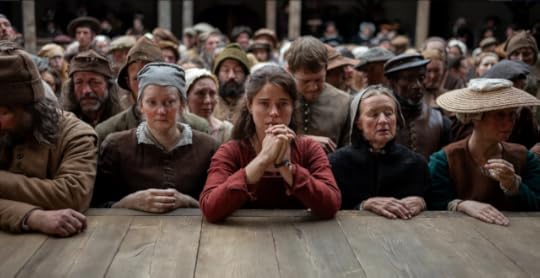
There's MUCH MORE going on in the story than I've mentioned, such as: patriarch John Shakespeare's moral and legal disgrace; Agnes's premonitions that come to pass; childbirth in the 16th century; the spread of the bubonic plague and the bizarre plague doctor; glovemaking; bee-keeping; public scrutiny and censure; death and funeral practices; the 'playhouse' world; ghostly Hamnet; and more.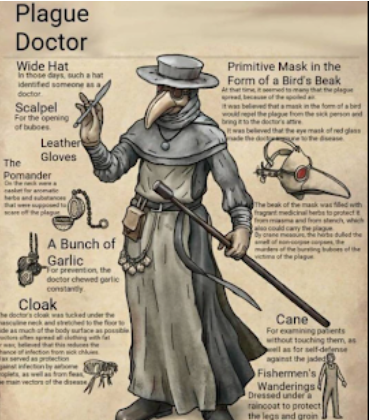
I was especially struck by the impotence of women in merry old England. For instance, I thought "Why doesn't Mary stop her husband from constantly beating Will?", but I realized she didn't have the power. (Sadly, that's the dynamic in some modern families as well). And females getting no education is infuriating!
In any case, this is an engaging, well-written book that's been adapted into the acclaimed film 'Hamnet.' I highly recommend the novel.
I had access to the digital book and the audiobook, narrated by Eli Potter, who does an excellent job.
Rating: 4.5 stars

No comments:
Post a Comment