
It's 1970s London and 27-year-old Lily is excited to have her dream job.

Lily was recently made assistant to Diana Gilden, keeper of the Tate Gallery's 'Modern Collections'. Diana is the first female keeper at any major British institution, and it's unprecedented to have two women at the top.

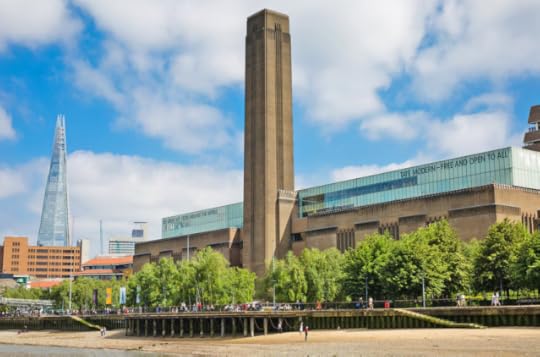
Tate Modern
Diana and Lily take the opportunity to burnish the reputation of the 'Modern Collections' when Pablo Picasso dies in 1973. Diana decides they'll install a small Picasso exhibition that will be intimate and exclusive. Some of the artist's showstoppers, but mostly an exhibit that will focus on Picasso's favorites, personal pieces with meaning.
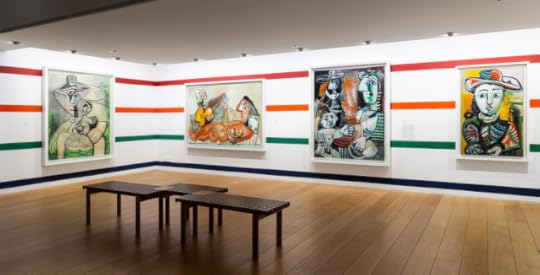
When the Picasso exhibit is ready, Lily is walking on clouds. She thinks, "This exhibit is as much my triumph as it is Diana’s. We did this together. We pulled off the impossible: a highly personal, highly curated farewell to the twentieth century’s greatest and most famous artist—within a fortnight of his death."

On opening day, Lily dons a new dress and fashionable kitten heels, takes a glass of champagne from a waiter, and happily circles the exhibition.
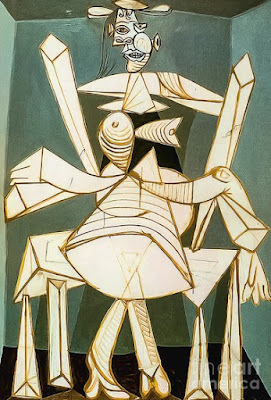
Lily pauses to look at 'Woman in an Armchair' and 'Woman Laughing' - which are hanging side by side - and she discerns an obvious truth. Indicating the latter picture, Lilly blurts out “That’s a forgery".
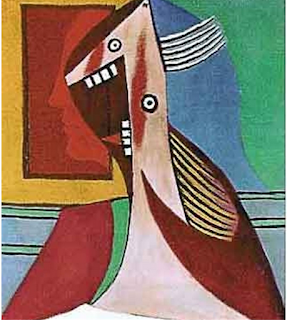
There's a sudden silence, the art patrons are shocked, and people head for the exits.

Three people are furious with Lily:
Diana Gilden, who authenticated 'Woman Laughing' and insists it's genuine;
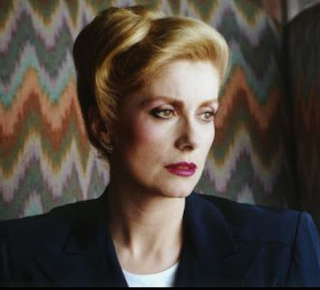
British manufacturing scion Edward Davies, who recently bought 'Woman Laughing' for a half million pounds. Davies was planning to sell the picture for a million pounds, and is embarrassed to (maybe) have a fake;

and Director Richard Browning, who's in charge of the Tate Gallery and fears for its reputation.
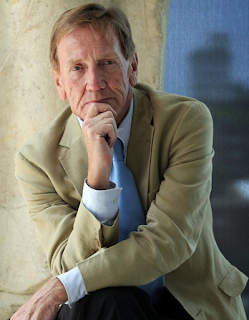
There's a big kerfuffle, Scotland Yard is called in.....
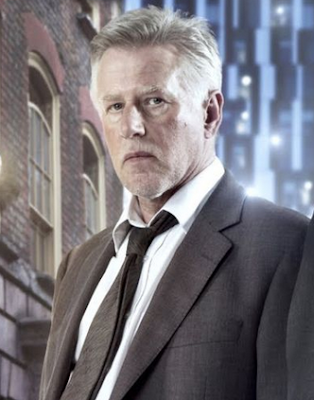
......and since Davies is making an insurance claim, an American insurance investigator shows up as well.
Lily is confronted by everyone about her 'forgery' proclamation, and fearing the loss of her job, tries to take it back. But the die is cast and the painting is sent to experts for verification. Once the Picasso forgery issue explodes, things take a dark turn for Lily, who's in danger of losing her job and perhaps more.
The chapters alternate between Lily's perspective and Diana's perspective, and as the narrative develops, we learn about both women.
Lily lives with her parents and worries about her mother, who's in a wheelchair, and her father - who's having employment issues. Lily also has a distant relationship with her older sister Daisy, who's currently pregnant with her third child. Much of Lily's fretfulness harks back to a childhood incident she can't forget.
Career-wise, Lily yearns to be a professional artist. She has talent and some training, and she hoped to show her work in Diana's upcoming 'British Emerging Artists Exhibition.' That seems unlikely to happen now.
*****
Diana was a professional painter but now devotes herself to the Tate Gallery. Diana lives in luxury with her (much older) husband Heinrich, an artist who's often up in his studio painting.

The 1970s were still very much a man's world, and Heinrich used his influence to get Diana elevated to keeper of the Tate's 'Modern Collections'. Nevertheless, Diana deserves the position and is good at it.
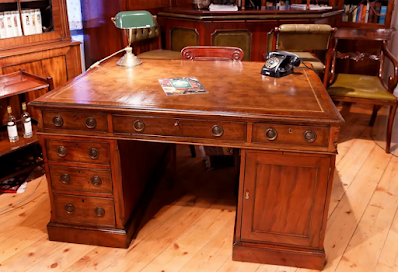
Lily provides a glimpse of Diana's personality by describing Diana's office desk: " It’s massive, imperious, and simply stunning. It’s not fluted or curved, as George IV designs aren’t frilly, but its formidable bulk, wood inlays, and detailing convey delicacy nonetheless. Power too. A dichotomy held in perfect balance by both this impressive desk and the woman who owns it."
About midway into the book we learn what's going on and why, and it's surprising and fascinating.
Note: Art forgery is a billion dollar business and the book elucidates some of the methods used by forgers, such as faking provenance and using canvases, paints, etc. that are authentic to the time period. In the book - and real life - World War II boosted the forgery industry because the Nazis confiscated jillions of artworks. Some of the paintings were lost, and - at war's end - the forgery industry could 'find' these missing pictures (created by forgers) and make millions.
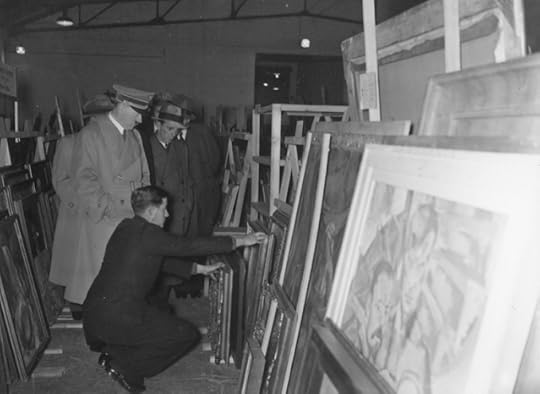
Nazi looted art
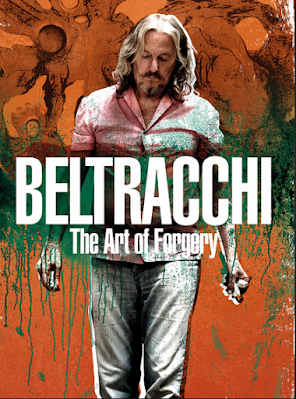
In an author's note, Katherine Reay mentions that the book was inspired by one of the most prolific forgers of all time, Wolfgang Beltracchi. If you're interested, you can watch "Wolfgang Beltracchi, the greatest art forger" on YouTube and/or the film "Beltracchi: The Art of Forgery (2014). Both are very good.
Getting back to 'The English Masterpiece', the plot is compelling but the story moves much too slowly. It needs more action and less introspection in my view. Still, the novel is worth reading if the subject interests you.
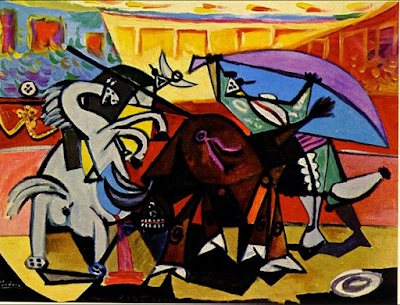
A Bullfight (1934) - Pablo Picasso
I listened to the audiobook, narrated by Fiona Hardingham and Saskia Maarleveld, who do a fine job.
Thanks to Netgalley, Katherine Reay, and Harper Muse Audiobooks for a copy of the book.
Rating: 3 stars

No comments:
Post a Comment