
To say Clint Eastwood (b. 1930) is an American actor and movie director hardly does justice to the icon. In his biography of Eastwood, film critic and writer Shawn Levy observes, 'C-L-I-N-T. In that short, sharp syllable, there is an emblem of American manhood and morality and sheer bloody-minded will, for better and worse, on-screen and off, for more than sixty years....He is a genuine box office superstar, tall and lean and handsome, with a glint in his eye and a record of hit films spanning more than five decades.'
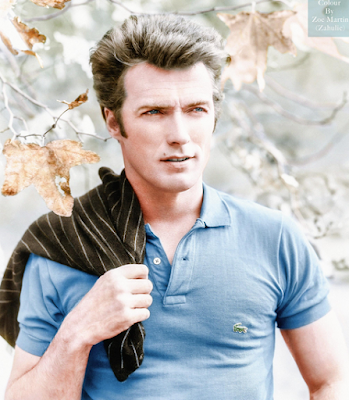
Clint Eastwood as a young man
There are other biographies of Clint Eastwood, including the laudatory book by Richard Schickel and the censorious tome by Patrick McGilligan. Levy takes the middle ground, extolling Eastwood's accomplishments while detailing his affairs and one night stands. Clint was a notorious philanderer who fathered eight children with six women, two of whom were his wives. While Eastwood's personal life was messy, his professional accomplishments were (and continue to be) legion.
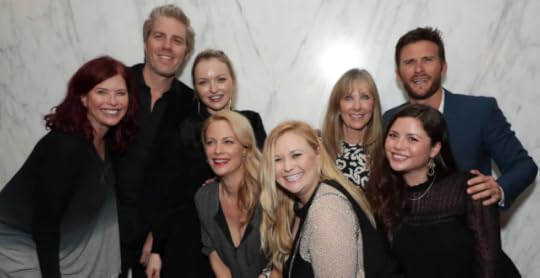
Clint Eastwood's eight children
Levy's 550+ page book seems to recount every detail of Eastwood's life and work, but I'll just give a brief overview. Starting with Eastwood's early years, Levy covers Clint's birth in San Francisco during the Great Depression and his peripatetic childhood as the family moved around for work.
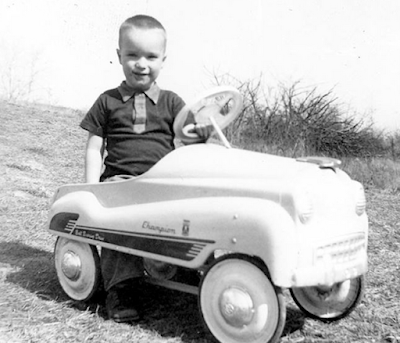
Clint Eastwood as a child
Levy goes on to write about Clint's mediocre performance in school; his attraction to girls, hot rods, and music; his early interest in movies and who made them; his passion for cars and engines; his work as a paperboy, lawn mower, grocery bagger, caddy, and pool digger to keep himself afloat; and his conscription into the U.S Army in 1950, where he became an army lifeguard at Fort Ord in California.
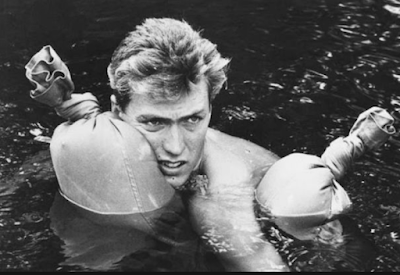
Clint Eastwood training to be a lifeguard
Levy writes, 'Among the other grunts hanging around the pool at Fort Ord were a few fellows with nascent careers in Hollywood: guys like Richard Long (The Big Valley), Martin Milner (Route 66), and David Janssen (The Fugitive), who gave Clint the idea there might be some potential for him in that line of work.'
When Eastwood got out of the army he took a few college classes, and in 1953 Clint married Maggie Johnson, who shared his passion for music, fitness, and surfing.
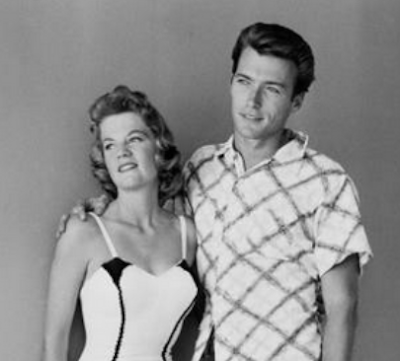 >
>Clint Eastwood and his first wife Maggie Johnson
At this time, Universal Studios had a Universal Talent School (UTS) for actors, with courses in elocution, poise, fitness, horsemanship, singing, dancing, stage fighting, fencing and acting. After one semester in college, Clint enrolled in UTS, and this is where Clint's seventy-year career in movies began.
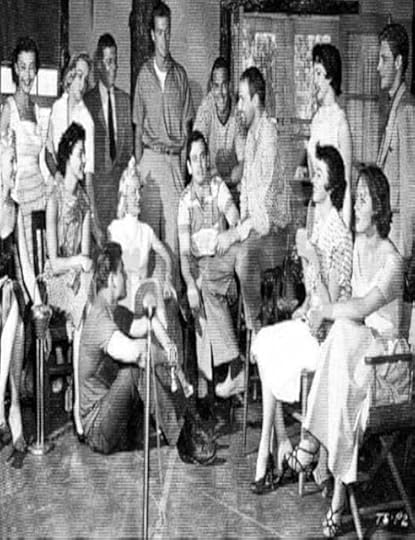
Clint Eastwood (middle of top row) at an acting seminar given by Marlon Brando at UTS
It seems Levy watched every movie and TV episode Eastwood was connected with as an actor, producer, or director, and the critic writes extensively about every aspect of Clint's work.
Eastwood's early performances were amateurish - 'he didn't know how to stand on a mark, where to aim his glance, how to inhabit his body, how to read a line' - but Clint learned. By the time Clint had a small role in 'Francis in the Navy' (1955), about an army lieutenant and a talking mule, he was getting the hang of acting, but not everything was rosy. For instance, in 'Ambush at Cimarron Pass' (1958) - which has been called the worst western ever made - 'Clint is as stiff and mumble-mouthed and emotionally shallow as in any of his least convincing TV work.'
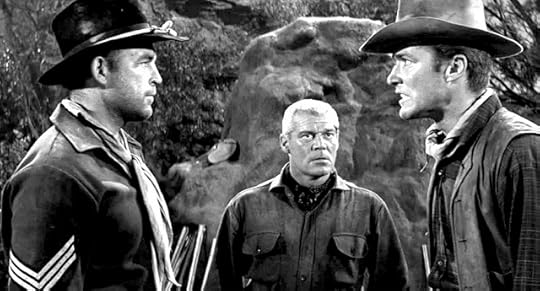
Clint Eastwood (right) in 'Ambush at Cimarron Pass'
Eastwood pressed on nevertheless, and with excellent foresight, he made good use of his downtime on movie and TV sets, 'wandering through sound stages and various post-production facilities and learning about more than just the acting side of filmmaking.'
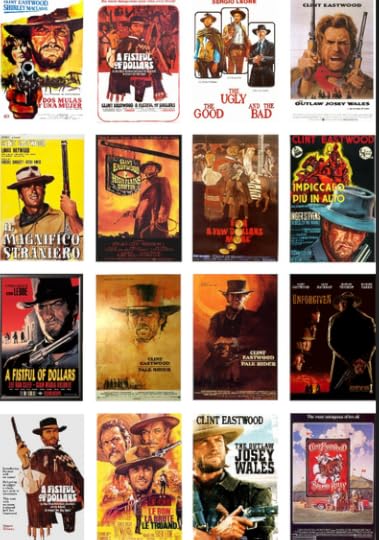
Clint got a big break when he was cast as Rowdy Yates in the television series 'Rawhide' (1959 - 1965), about cowboys leading cattle drives in the 1860s. This led to Clint being cast in Sergio Leone's three spaghetti westerns: 'A Fistful of Dollars' (1964), A Few Dollars More (1965), and 'The Good, the Bad, and the Ugly (1966), which were shot in Spain and Italy. The three films, which featured a gunman (Eastwood) dispensing his personal brand of justice, became known as 'The Man With No Name Trilogy'. From here on, there was no stopping Eastwood.
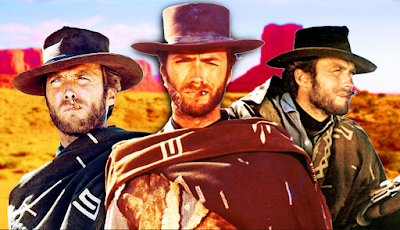
Clint Eastwood in Sergio Leone's spaghetti westerns
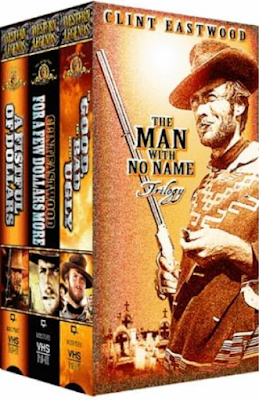
Back in the states, Eastwood and producer Robert Daley formed the Malpaso Company, to make their own movies. Daley was the businessman, Clint was the creative force, and Malpaso focused on 'sober budgets; location shoots; long-term relationships with production personnel; and new money- and time-saving technologies.'
Malpaso's early films, such as 'Hang 'Em High' (1968), Coogan's Bluff (1968), and 'Where Eagles Dare' (1968) are action-packed movies starring Eastwood, who was toiling at a brutal pace. The ability to work on one film after another - with almost no respite - helped spur Clint's success, and the Malpaso Company (with studio backing) continued to put out film after film.
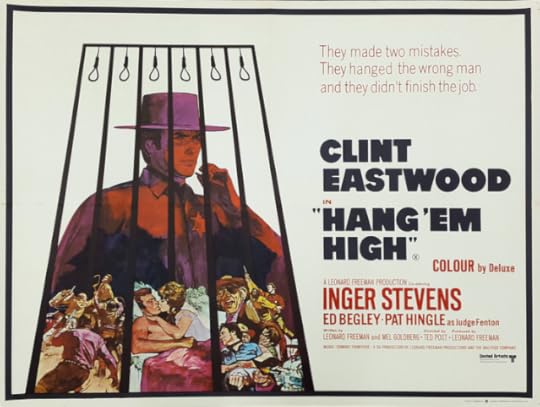
Levy mentions each of Eastwood's movies in turn, writing about the scripts, writers, actors, producers, directors, plots, locations, budgets, success (or failure) at the box office, his own opinions, and more. For films helmed by Eastwood, Levy emphasizes Clint's directing style, which is to move fast and do as few takes as possible, an approach most actors must get used to.
By the late 1960s, when Eastwood was approaching 40, he was an international film star commanding more than $1 million per movie. Levy writes, 'Eastwood now found himself among the very, very few people who could command the highest salary AND steer his own journey going forward. And he chose to go small. In many ways, Eastwood was choosing the most out-of-the-box of all the options that lay in front of him, and he was taking the very first steps on his iconoclastic path.'
Among other things, Clint made 'The Beguiled' (1971) about a wounded Union soldier healing at a girls' school, and 'Play Misty For Me' (1971), about a radio disc jockey being stalked by a disturbed woman. 'Play Misty For Me' was Eastwood's first directorial effort, and 'he demonstrated complete ability with the task: shooting, pacing, scoring, casting and working with actors, finding the spine of the story, and assembling a complete package.'
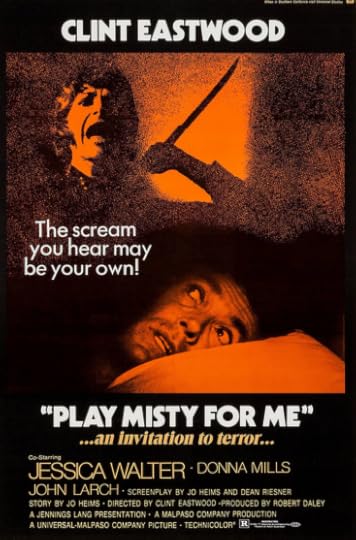
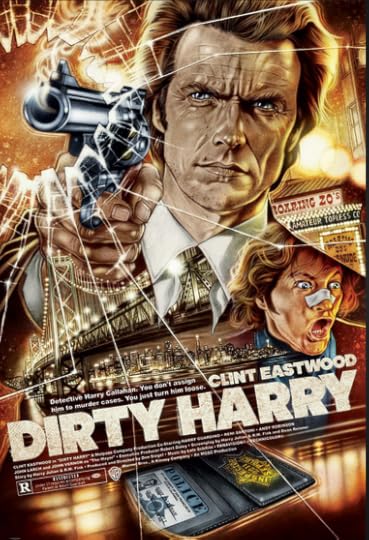
Afterwards, Clint starred in 'Dirty Harry' (1971) about a tough as nails San Francisco police inspector. 'Dirty Harry' spawned four sequels (1971 - 1988), and the franchise contains some of the most iconic quotes in film history, such as "Go Ahead, Make My Day".
During all this time, Clint was wed to Maggie Johnson, but admits he wasn't cut out for marriage. Clint comported himself as if he were a bachelor, giving himself free rein with other women, including classmates at UTS; girls at nightspots and jazz clubs; neighbors; actresses; stuntwomen; girls he met on location; etc. Maggie either didn't know or chose to ignore Clint's behavior, and the couple had two children and stayed together until 1984, when they divorced.
Clint went on to have long-term relationships with Sondra Locke and Frances Fisher, and was married to Dina Ruiz from 1996 to 2014. Afterwards, Eastwood was involved with Erica Fisher followed by Christina Sandera. As mentioned above, Clint's extended relationships and casual encounters resulted in eight children with six mothers.

Clint Eastwood with Sondra Locke
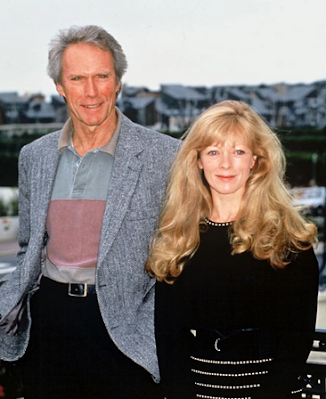
Clint Eastwood with Frances Fisher
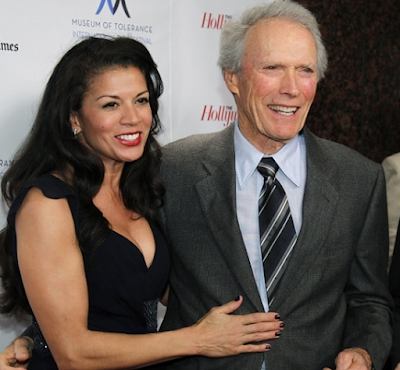
Clint Eastwood with his second wife, Dina Ruiz
Erica Fisher

Clint Eastwood with Christina Sandera

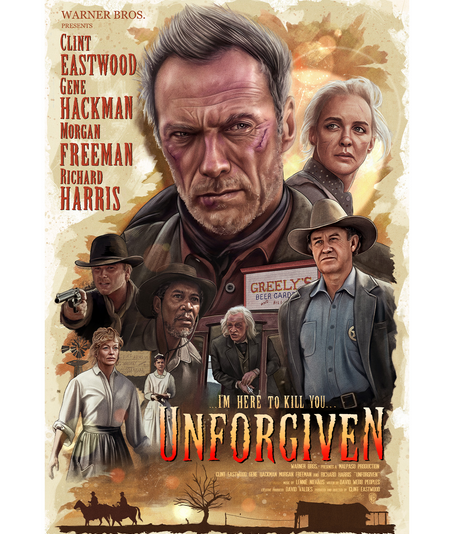
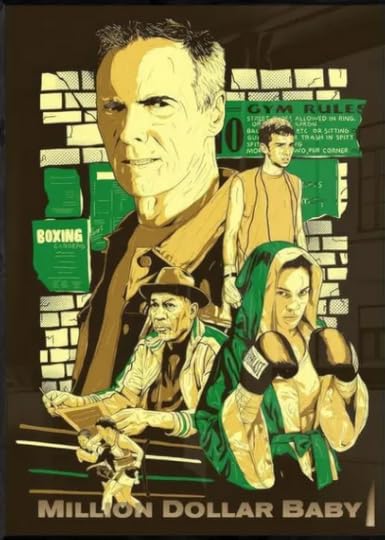
To get the scoop on all of Eastwood's movies and accomplishments, you'll have to read the book, but I will say Clint and his films were nominated for multitudinous awards and won many. Clint's most lauded films are probably 'Unforgiven' (1992) and 'Million Dollar Baby' (2004), which won Oscars for Best Picture and Best Director for Eastwood;
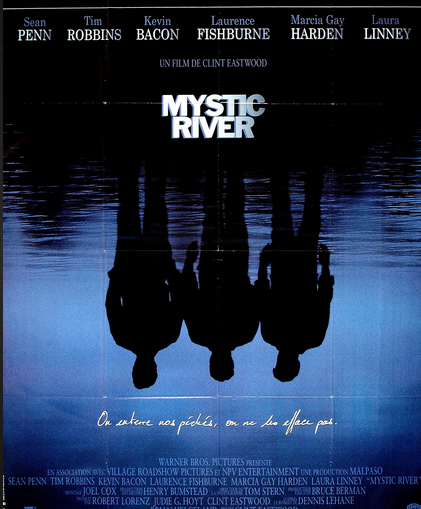
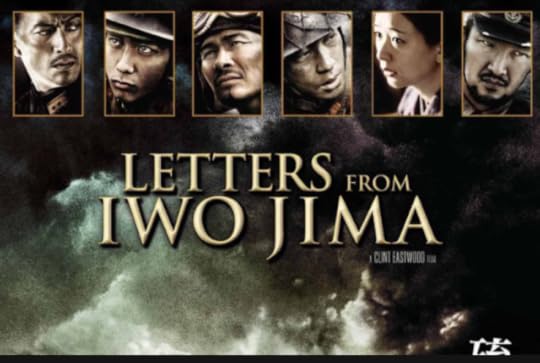
'Mystic River' (2003) and 'Letters from Iwo Jima' (2006) which were nominated for Best Picture and Best Director for Eastwood;
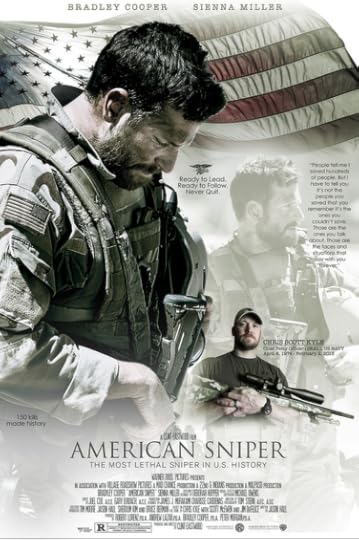
and 'American Sniper' (2014) which was nominated for Best Picture.
One might think Clint would slow down by his eighties, but nothing could be farther from the truth. At age 88, Eastwood directed and starred in 'The Mule' (2018), based on a true story, about a nonagenarian horticulturist and Korean War veteran who becomes a drug mule for a Mexican cartel; at age 91, Clint directed and starred in 'Cry Macho' (2021), about a broken-down rodeo star who rescues a boy kidnapped by his alcoholic mother, and teaches him to be a good man; and at age 94 Clint directed Juror #2 (2024), about a juror who realizes he may be guilty of the crime attributed to the defendant.
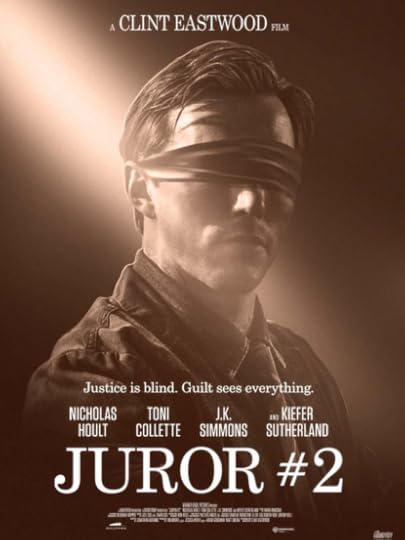
So far, Eastwood has appeared in more than 60 movies and directed 40. And rumors hint that Clint is looking at scripts and hoping to get behind the camera once again.
Eastwood has done more than make movies. Levy writes that Clint is a committed lover of nature who purchased tracts of land for preservation and (appropriate) development. Clint is a dedicated fan of jazz, blues, and country music and has lifted them into the limelight at every chance. Moreover, Clint has written the music for some of his movies. Clint became mayor of Carmel-by-the-Sea, California - where he lives - for two years, to promote business; Clint was a regular at the annual pro-am golf tournament at Pebble Beach; Clint was a dedicated Republican who supported Ronald Reagan and Mitt Romney (he's entitled to his views); Clint is a loving father to his children; and more.
Clint Eastwood was mayor of Carmel-by-the-Sea

Levy's book is a well-researched and informative biography of Clint Eastwood, highly recommended to readers interested in the show business mogul.
Thanks to Netgalley, Shawn Levy, Mariner Books, and Harper Audio for copies of the book.
Thanks to Netgalley, Shawn Levy, Mariner Books, and Harper Audio for copies of the book.
Rating; 5 stars

No comments:
Post a Comment