
Percival Everett's 'James', winner of several prestigious awards including a Pulitzer Prize, is a retelling of The Adventures of Huckleberry Finn from the point of view of the slave Jim.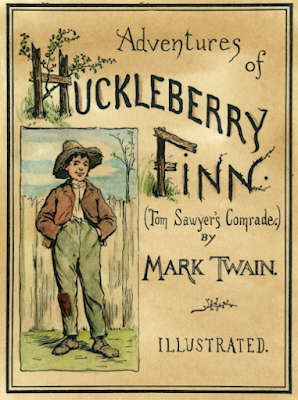
'James'
begins in Hannibal, Missouri shortly before the start of the Civil War.
Huck is the adolescent, good-natured, mischievous son of Pap Finn, a
mean drunk who beats Huck whenever he comes to town.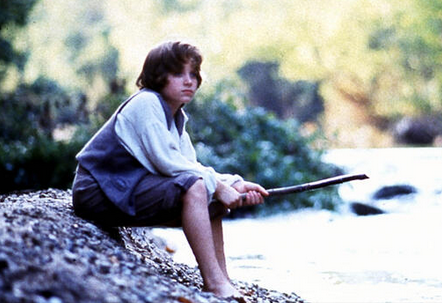
James
is a slave belonging to Miss Watson. Unlike the original book, James
has learned to read, write, and speak grammatical English, though he
code-switches to 'slave speech' in the presence of White people. 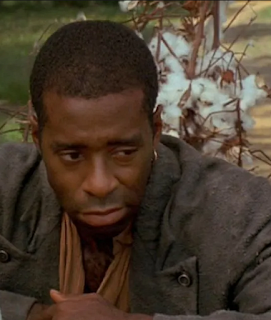
Here's an example of James' slave speech, when he knows Tom Sawyer and Huck Finn are about to play a trick on him:
Who
dat dere in da dark lak dat? I guess I just gwyne set dese old bones
down on dis heah porch and watch out for dat noise 'gin. Maybe dere be
sum ol' demon or witch out dere. I gwyne stay right heah where it be
safe.
Here's an example of James correct grammatical speech:
I
sat on the top step and leaned back against the post. I was tired, so I
closed my eyes. The boys whispered excitedly to each other, and I could
hear them, clear as a church bell.
Moreover, James has read
Jean-Jacques Rousseau, Voltaire and John Locke, and in
dreams/hallucinations, James has conversations with them about slavery -
often confronting them about their hypocrisy.
When James hears
that Miss Watson plans to sell him to a man in New Orleans, he fears
he'll never see his family again. So James runs away, hoping to earn
money to buy his wife Sadie and daughter Lizzie and get to a free state
like Illinois. 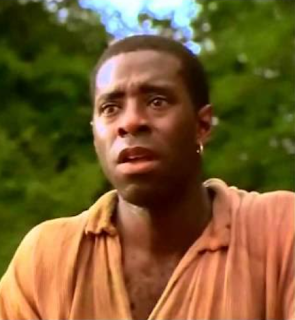
While
James is hiding on Jackson Island in the Mississippi River, Huck comes
along. After another beating from Pap, Huck faked his death with pig's
blood and ran away.
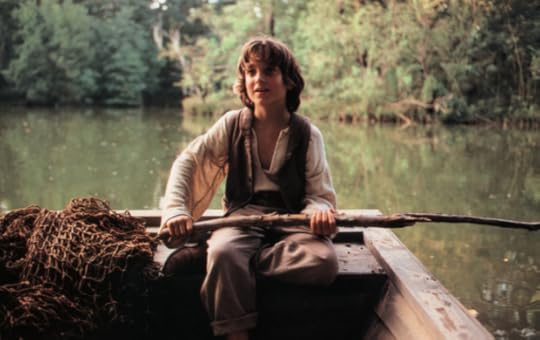
James
realizes he's now a runaway slave and most likely also a murder
suspect. Knowing they need to flee, Huck and Finn embark on a raft and
canoe journey down the Mississippi River.
Huck and James have 'adventures' along the way, both separately and together, but this retelling focuses on James.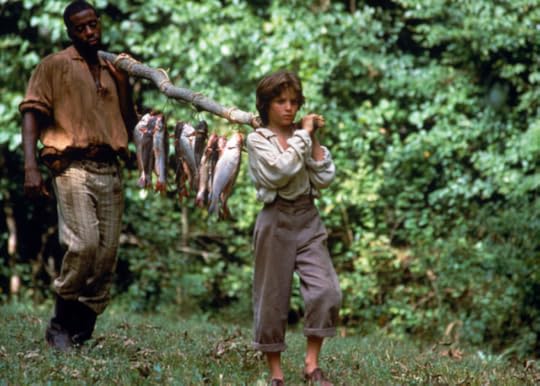
Some
of James experiences have an element of humor, but at bottom, all the
White people James encounters are exploitative and cruel. James accepts,
and even expects the brutality, because in James' experience, Whites
think of slaves as hardly human. On the rare occasions Whites happen to
hear James speak correct English, they're bamboozled, as if it's
impossible.
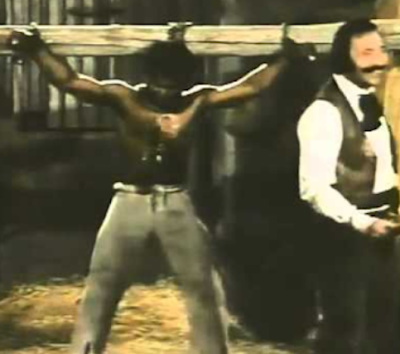
I won't rehash the story, but I'll provide a few examples of James' experiences, to give a feel for the narrative.
◙
Early in the novel James, who has taken several books from a wrecked
steamboat, comes across four slaves. James explains he's a runaway, and
to avoid endangering them, he'll go on his way. But James asks if they
can get him a pencil first.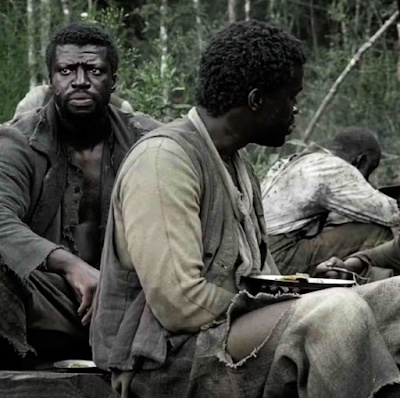
A
slave called Young George steals a small pencil stub from his master,
and James is thrilled to be able to write 'his story' in the books.
Later on, James learns Young George was lashed, and then hanged for
stealing the pencil stub, and James is haunted by the guilt.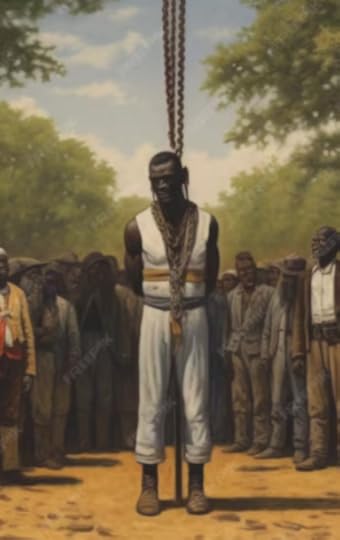
◙
Some time later, Huck and James meet two conmen, who call themselves
the Duke of Bridgewater and the King of France. The 'royals' routinely
swindle the public, and hit on a scheme of selling James, who'll escape
to be sold again and again. When James angers the duo, they whip his
legs, then scold him for limping, because he won't garner a good price.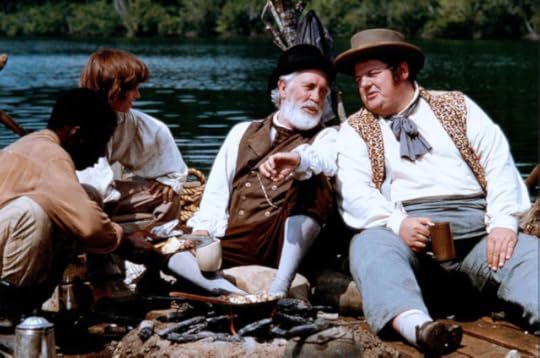
At
one point the Duke and King decide to go drinking, and because they
fear James will run off, they leave him at a livery. The shysters insist
that Easter, a slave who works at the livery, shackle James so he can't
escape.
When
the Duke and King return and find James unshackled, they whip Easter.
Easter's owner arrives, is furious, and insists he'll keep James to work
for him until Easter recovers. The entire episode is jarring. It's
abhorrent to whip any slave, much less a slave you don't know. I think
people would be more wary of whipping someone else's dog.
◙
After the livery incident, a man named Daniel Decatur Emmett, who
manages a minstrel troupe, buys James to replace a missing tenor. The
troupe performs in blackface, and ironically, James must perform in
blackface as well. An audience member is very taken with James' hair,
and can't believe how authentic 'the wig' feels. James is terrified, but
the scene is sardonically humorous. To add insult to injury, the troupe
sings racist songs written by Emmett.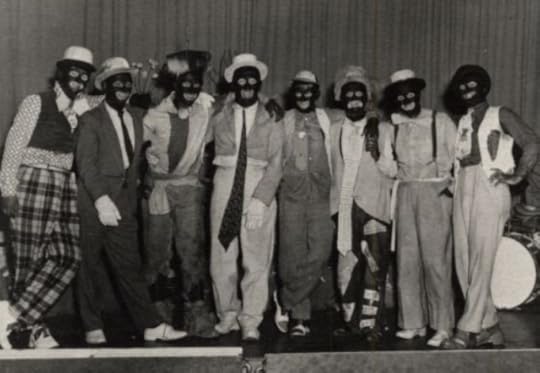
◙
James runs away from the minstrel troupe with Norman, a Black man
passing as White. The duo decide to repeat the 'sell a slave ruse', and
Norman sells James to a sawmill owner called Henderson. Henderson
doesn't maintain his equipment, and some slaves using his saws have lost
fingers.
James spends the day in a pit, sawing a log, after
which Henderson orders James to come out for his lashes. James is told
Henderson whips all his slaves, for no particular reason.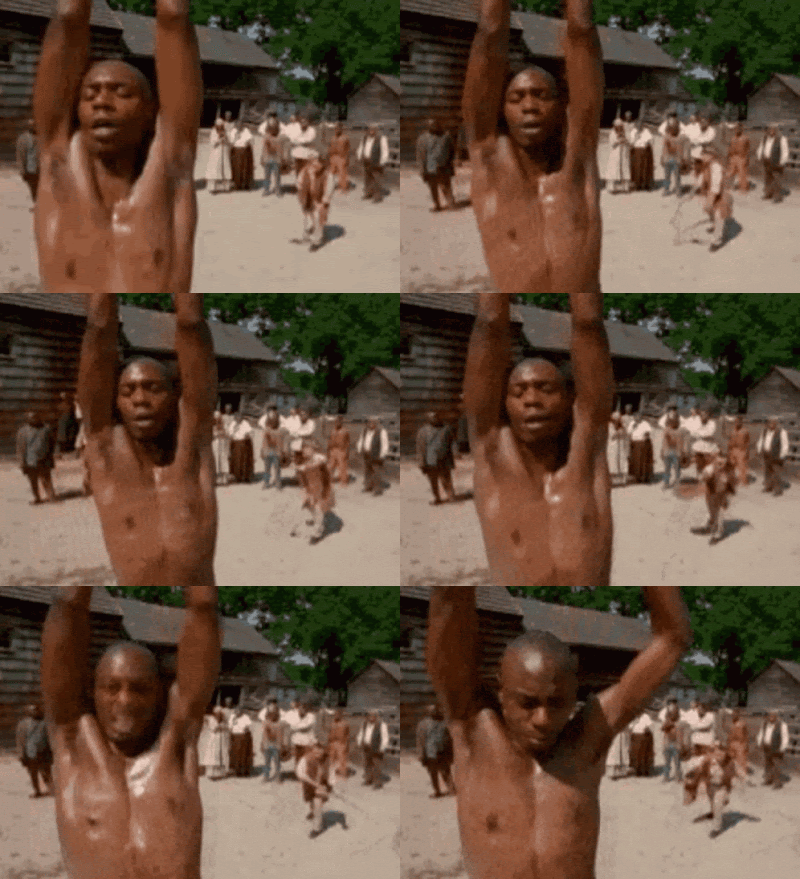
When James learns Henderson has been raping a teenage slave called Sammy, he 'steals' Sammy when he runs away. 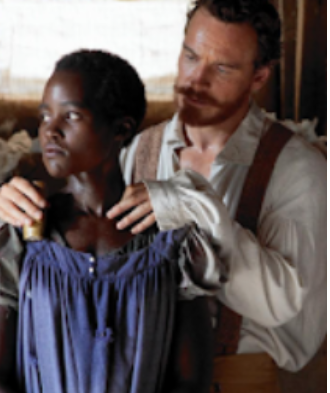
Henderson and his posse then chase them with guns and dogs. 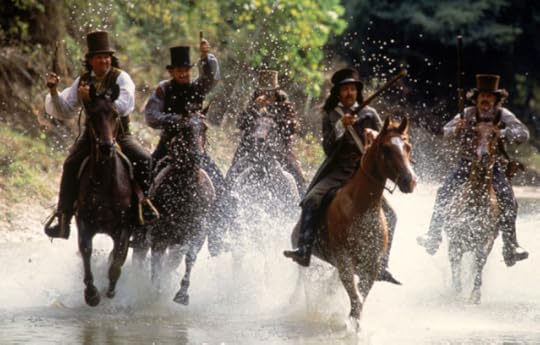
◙
Additional horrific scenes play out as the book continues, one of the
most awful being a breeding farm for birthing slaves to sell. What kind
of person would think that up?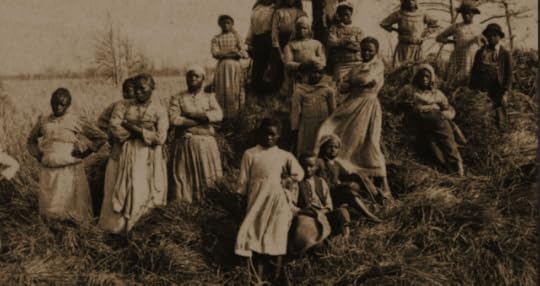
James is finally compelled to stand up for himself, to the absolute shock and horror of the White people involved. 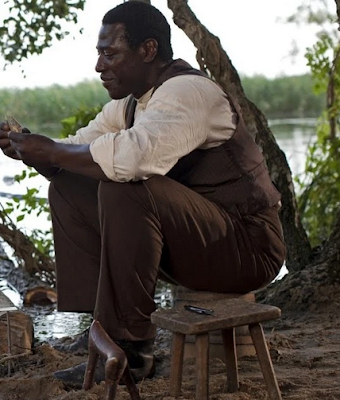
Any
book that features slavery is disturbing, and it's hard to fathom the
mindset of slaveholders. To justify chattel slavery, racists must have
believed Black people are hardly human, and have no feelings and no
rights. Moreover, to insure Blacks 'stayed in their place', reading and
writing were absolutely forbidden, thus the hullaballoo about a missing
pencil stub.
'James' presents a darker picture of Jim's life
than 'Huckleberry Finn', and I applaud Percival Everett for moving the
timeline from the 1840s to the era of the Civil War, to provide a speck
of light at the end of the tunnel.
This
novel is hard to read, but it's probably a necessary corrective to
revisionist history about the slavery era. Highly recommended.
I had access to the digital novel as well as the audiobook, narrated by Dominc Hoffman, who does a fine job.
Rating: 4 stars

No comments:
Post a Comment