Friday, January 30, 2026

Review of "Metronome (Object Lessons)" by Matthew K. Birkhold


'Object Lessons' is a series about ordinary objects. The narratives are "filled with fascinating details....and make the everyday world come to life." The series has covered many common items, such as golf balls; bread; socks; eye charts; high heels; remote controls; magnets; pubs; trench coats; blue jeans; and lots more.



I was curious about Object Lessons, and though I'm not a musician, decided to read 'Metronome'. The metronome is 'a device that produces a regular sound or motion to help with timing and tempo in music and other activities'. The metronome was invented by Johann Nepomuk Maelzel in 1815, for the improvement of musical performance.
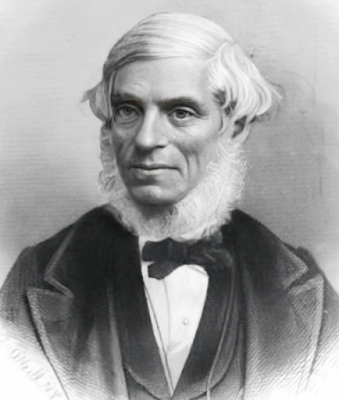

Johann Nepomuk Maelzel
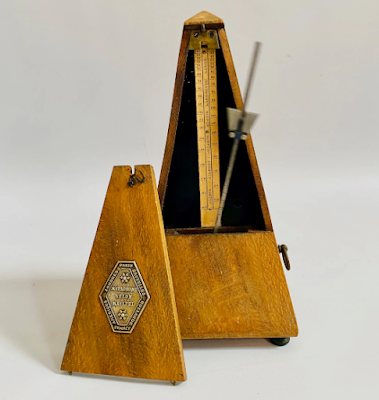

Antique Maelzel Metronome

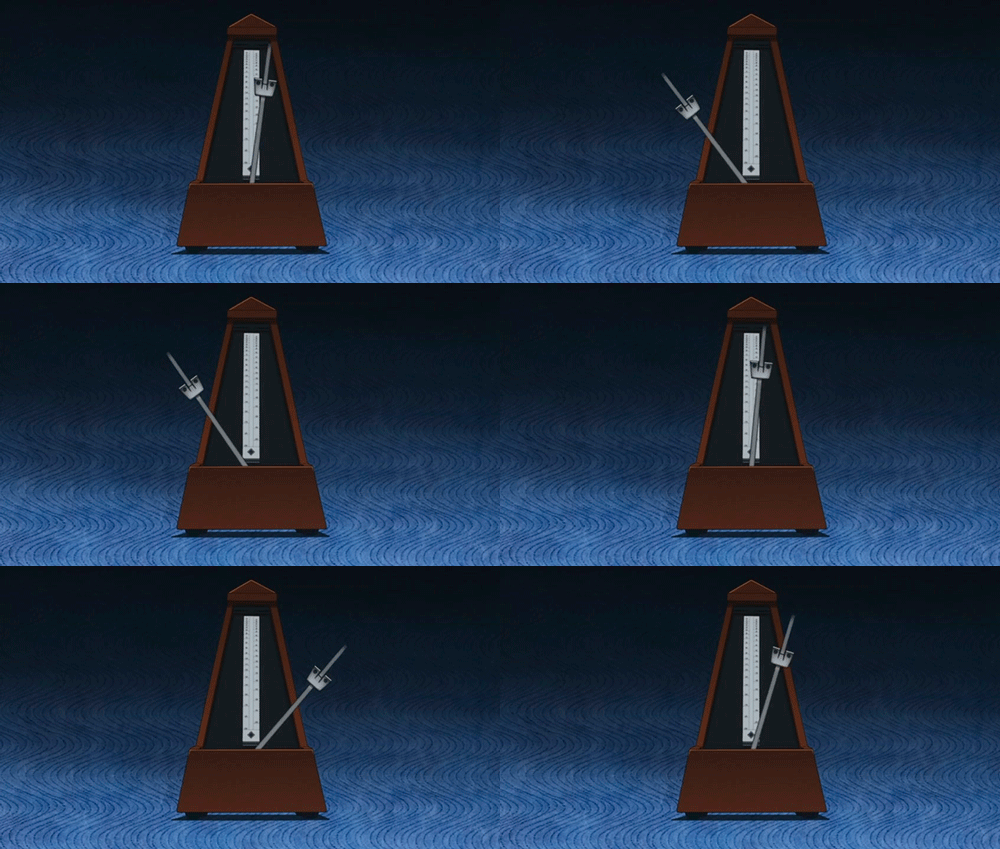
Users could adjust the Maelzel metronome to swing at a specific number of beats per minutes (bpm), from 40 bpm to 208 bpm, and the device produced a steady ticking sound to mark the chosen tempo. Users then assigned a given note value to the objective rate, for instance, quarter note = 60 bpm.


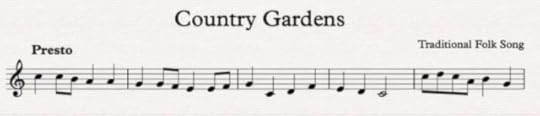
This exactitude was more specific than tempo markings described in words, such as: andante - walking pace; allegro - lively and fast; presto - very fast.


Like anything new, the metronome wasn't immediately popular, and many musicians stuck to their traditional ways. Birkhold details much of the historical controversy over the metronome. For instance, Felix Mendolssohn reportedly asked, "What on earth is the point of a metronome? Any musician who cannot guess at the tempo of a piece just by looking at it is a duffer."
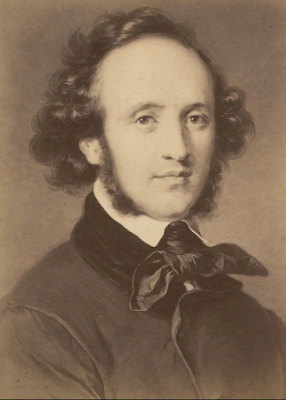

Felix Mendolssohn

Conversely, Ludwig van Beethoven championed the device. In 1817, Beethoven published a table of tempi for each of his then eight symphonies in accordance with Maelzel's metronome.
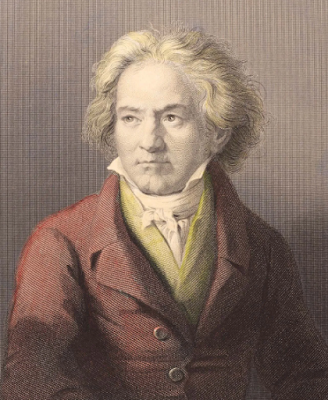

Ludwig van Beethoven

The controversy was intense because many musicians preferred their own artistic instincts to the metronome's dictatorship. However, the metronome caught on and "it has firmly rooted itself in our lives and purports to exercise absolute authority over time".

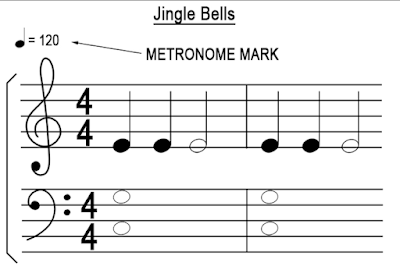
Birkhold explains how composers mark their compositions with metronome marks delineated as MM (for Maelzel's Metronome) to indicate tempo, and how conductors and musicians use the MM marks. The author cites numerous examples of historic and current composers, conductors, and players, which should interest music aficionados.



Conductor Leonard Bernstein

Interestingly, metronomes are sometimes made part of the music, as in 'Poème symphonique' by György Ligeti.
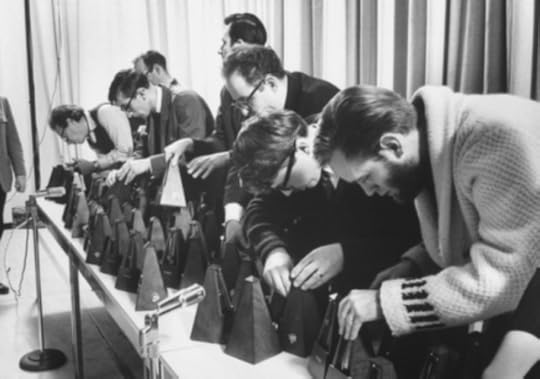

Poème symphonique performance at the Buffalo Arts Festival (1965)

Choreographer Trisha Brown even incorporated the metronome into some of her dances. As an illustration, in Brown's 'Figure 8', eight dancers move to the sound of a ticking metronome.
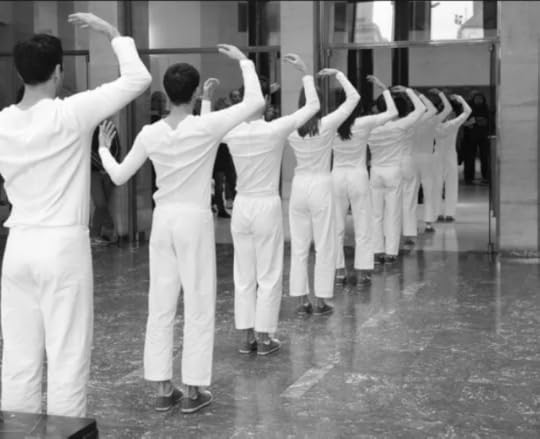

Trisha Brown's 'Figure 8' dance

Though metronomes are probably best known for their associations with music, they're now used in a variety of other disciplines, such as:

➤ typewriting schools - to improve speed

➤ factories - to train assembly line workers

➤ psychotherapy - to treat people with ADHD, PTSD, and traumatic brain injuries

➤ physical therapy - to assist the gait of patients

➤ sports - to improve golf swings, basketball shots, baseball pitches, and for football practice

➤ acting - to improve/rehearse speech and actions

.......and more.

The world's largest metronome is even a work of art, standing in Letná Park in Prague.
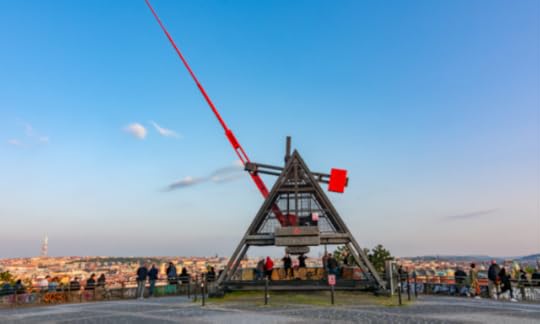

Prague Metronome

Of course, modern metronomes no longer look like the object Maelzel designed. Over the years, Maelzel's wind-up metronome morphed into electric devices, battery-powered devices, and today most metronomes exist on smartphones.
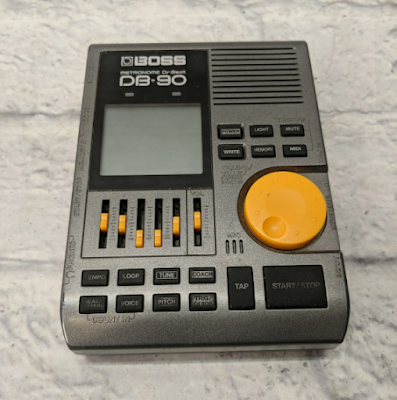

Dr. Beat Metronome by Boss

After numerous engaging anecdotes about metronomes, Burkhold winds up with an inspirational story about the Siege of Leningrad from 1941 to 1944. "After the threat of air raids subsided in early 1942, the metronome transformed from an important warning device to a social connector. Rather than letting silence fill the airwaves between scheduled broadcasts, radio operators played the sound of a metronome. Even in their cold apartments, city residents could hold on to the sound of the metronome. They were survivors. They were united."


German troops on the outskirts of Leningrad

I found the book informative and interesting, and highly recommend it, especially to music lovers.
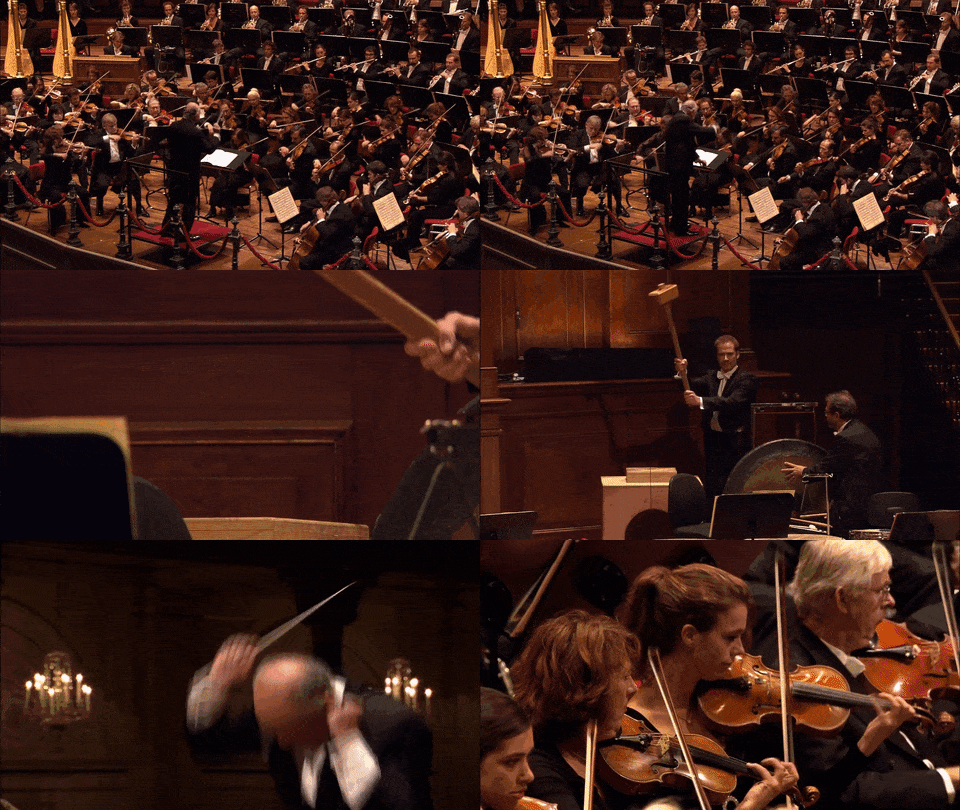

A Symphony Orchestra

Thanks to Netgalley, Matthew H. Birkhold, and Bloomsbury Academic for an ARC of the book.

Rating: 4 stars 

Wednesday, January 28, 2026

"Review of "Do Aliens Speak Physics? And Other Questions About Science and the Nature of Reality" by Daniel Whiteson and Andy Warner


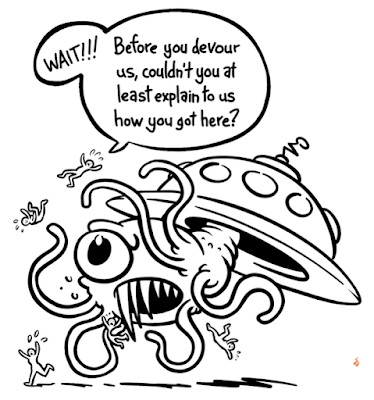
IIn this fun and informative book, particle physicist Daniel Whiteson and cartoonist Andy Warner speculate about aliens visiting Earth.


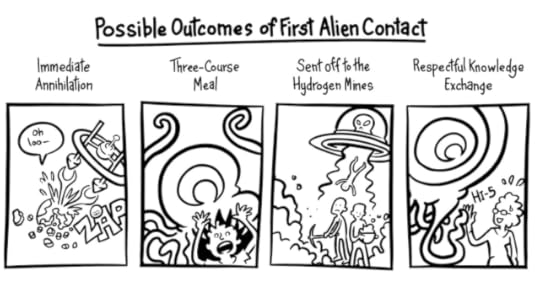
There are various scenarios for what might happen if an alien spacecraft touches down on Earth. On the one hand, snarling tentacled monsters might overrun Earth's measly defenses and fry us into human crisps by a planetwide death ray.


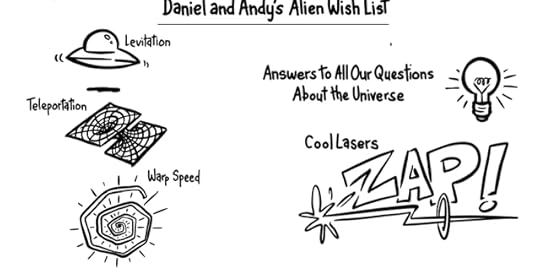
On the other hand, the aliens might come bearing gifts. They've traveled far to get here, using advanced technology, and might be willing to share. The authors speculate, "What if they could just tell us how everything works, so we don't have to blindly hack away for decades or centuries to gain this elusive knowledge?"


Many scientists, especially physicists, believe this could happen. They imagine that physics describes everything in the Universe, not just life on Earth, and so should form the foundation of alien science. Therefore, we should be able to use physics as a mental bridge between ourselves and the aliens.

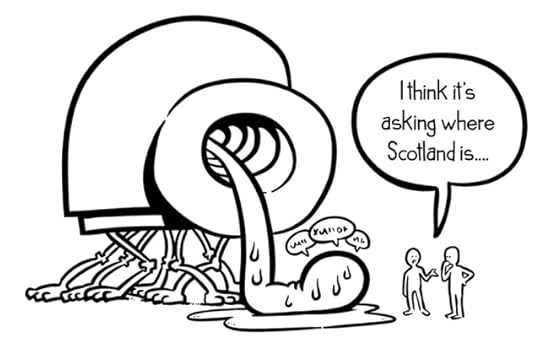
Whiteson and Warner suggest this view may be too optimistic. They think it's possible alien minds, and ideas about physics and math, are "so different from ours that asking how they do math is like asking what color Tuesday is." The authors speculate that aliens might be so unlike us, there could never be useful communication. For instance, life on Earth is based on carbon and water, but aliens might be made of silicon and ammonia.

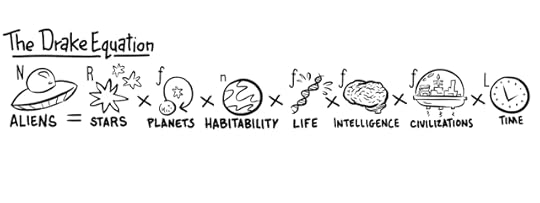
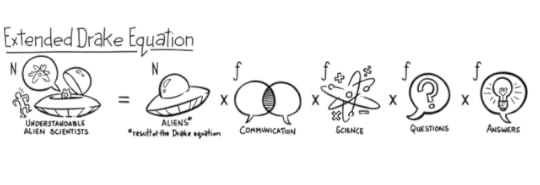
In any case, for humans to interact with aliens, many conditions must be fulfilled. Astronomer Frank Drake devised an equation to estimate the number of alien civilizations we might be able to communicate with by laying out the individual requirements piece by piece. Briefly, the Drake equation includes approximating the number of stars with habitable planets that could sustain intelligent life, and how long they've been broadcasting signals we might receive.

Whiteson and Warner devised an extended Drake equation that summarizes the concept of humans meeting - and learning from - aliens as follows:


The authors go on to discuss our hypothetical 'first contact' with aliens, whether or not they have knowledge to impart. I'll give a brief peek at the subjects covered, and encourage interested humans (or aliens) to read the book.

➤ Do aliens do science?

Though traveling through space would seem to require scientific knowledge, aliens might hit on the technology without knowing how it worked.

For instance, centuries ago, people learned to forge swords and bake bread without understanding the science. Humans WANTED to comprehend though, and they told stories, asked questions, and made observations until they figured it out.


Would aliens have the same desire to understand the universe as humanity? If so, they might have things to teach us.

➤ Could we communicate with aliens?

To learn the secrets of black holes from aliens, we'll have to figure out how to communicate in the first place.


The authors note, "Alien language might employ not only unfamiliar words and sounds, but also lights, gestures, or smells - not to mention that the thoughts an alien language expresses may themselves be unfathomable."

As it happens, scientists have already thought about communicating with aliens:

The 17th century Austrian astronomer Joseph von Littrow had a plan to write huge mathematical equations on the Earth's surface by digging trenches in the Sahara Desert, filling them with kerosene, and setting them on fire in hopes that Martian mathematicians would see them.

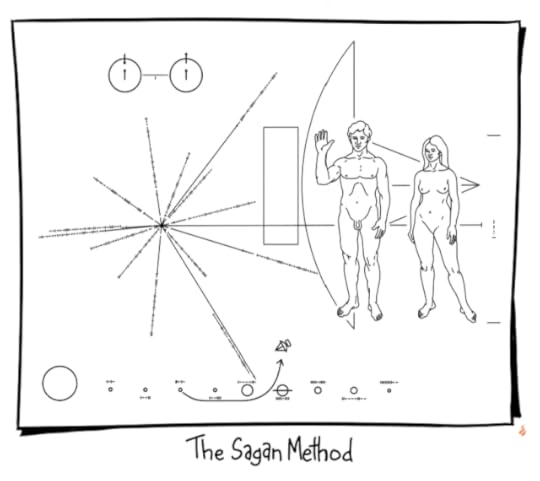
More recently, Carl Sagan designed a message that would be inscribed on plaques attached to the Pioneer 10 and Pioneer 11 spacecrafts, launched in the early 1970s. This is it:


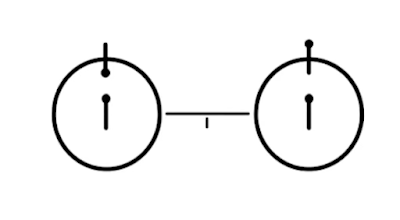
Referring to the first part of the plaque, Whiteson and Warner joke about what an alien might make of it: "All tadpoles must enter the hot tub on the left and exit on the right."


Joking aside, Sagan hoped aliens would recognize it as a depiction of the hydrogen atom. In reality, even other HUMAN physics graduate students struggle with this picture, so it's hard to imagine aliens understanding it.

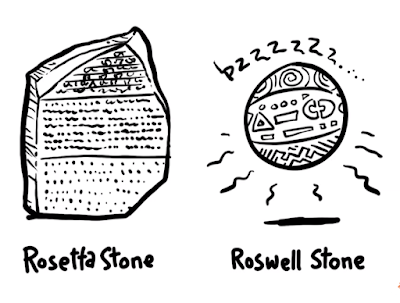
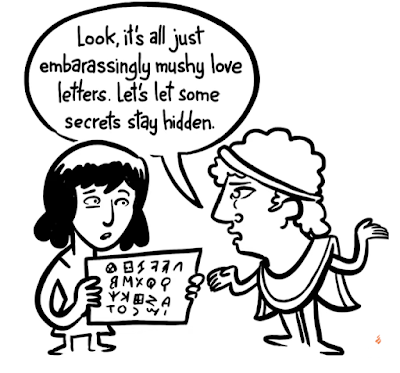
Conversely, humans would probably find it almost impossible to decipher something written in an alien language. It took about a thousand years for scholars to interpret Egyptian hieroglyphics, a HUMAN language, and they needed a cheat sheet, the Rosetta stone - a decree issued in hieroglyphics and ancient Greek - to do it.


The authors write, "If alien minds have very alien ideas, it may be impossible to decode their written language, requiring us to somehow translate a set of unknown words or symbols into a potentially unfamiliar set of concepts." However, if the aliens came here to Earth, then having human and alien brains together might advance communication.


➤ Do aliens do math?

Math is the language of physics on Earth, but can we count on math to be the foundation of alien science. If so, we have a good chance at being able to share information about the universe.

The authors present a long discourse on math, and point out that the most basic math is counting and adding. To illustrate how OUR math might not align with alien math, they present an example: If you put a piece of paper and a pencil on a table and ask an American, 'how many things are there?', they will say 'two.'

If you ask a Japanese person in Japanese, their answer will translate to 'one flat thing, one long cylinder.'

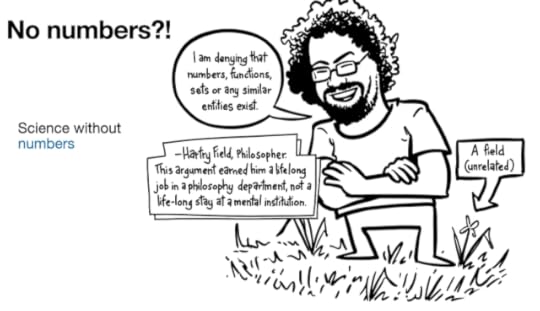
Whiteson and Warner observe that a difference between human and alien perception of math won't matter IF math is a deeply seated element of the Universe, something discovered rather than invented. Contrariwise, "many philosophers worry that math is just part of the way we think, a complex human game like checkers."


➤ What about alien perception?

Even if aliens are mathematical, scientific, and communicative, they may not be seeing the same Universe as us. Whiteson and Warner write, "If aliens have different senses, they will perceive different bits of the Universe - which will naturally lead them to ask different questions about it."

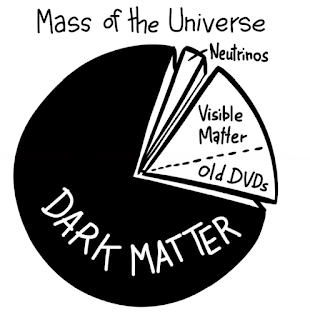
To give an example, aliens may 'see' the zillions of neutrinos passing through everything on Earth (including you) every second. Human eyes are constructed to absorb photons, not neutrinos. In fact, humans can't see most of what makes up the Universe - dark matter. Whatever this dark stuff is, "it isn't just out there in deep space; it's here with us. It's in your room with you right now."


Humans can't see, smell, touch, hear, or sense dark matter. If aliens can, they might have a vastly different picture of the universe than we do. Aliens may even have an alternate understanding of space and time.


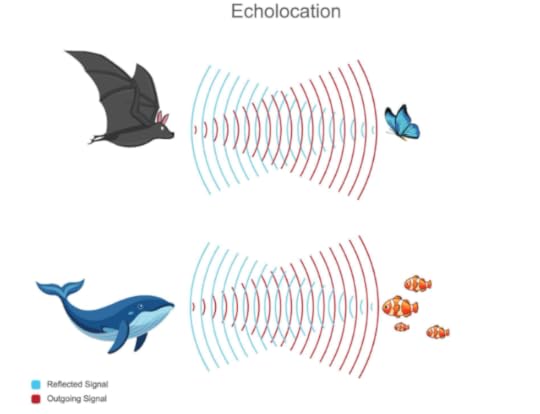
To illustrate the array of senses humans DON'T have, we need only look at other inhabitants of Earth. Some fish can sense electric fields; some birds can sense Earth's magnetic field; bats and dolphins use echolocation; and some cold-blooded animals have infrared vision.


The authors point out that human senses evolved in an Earth environment, and if aliens evolved in a completely different habitat, their senses may also be very different.

➤ What questions do aliens ask?

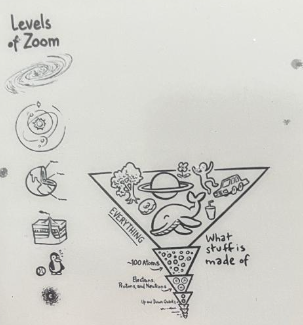
Humans are curious about everything, but (normally) only see the 'big picture.' At a tennis match, for instance, humans can observe the ball going back and forth, but not the atoms in the ball. This works for big things like planets and tennis balls because we can zoom out to determine how the objects move without referring to the atoms they're made of.


More than that, big pictures can bury details, so we zoom the other way to find the smallest objects. The world is made of tiny atoms, which in turn are composed of electrons, protons, and neutrons. Protons and neutrons, in turn, are made of quarks. Particle physicists on Earth study these miniscule entities, but would aliens also be curious about them?


Would aliens see the universe the same way? Would they notice the same things and ask the same questions? Humans live on the surface of a planet and look up into the sky, so astronomy was the gateway science for early humans. If aliens live underground, though, "they may think that focusing on orbits over what's inside is burying the lede. What's reasonable to us may be more cultural than universal."

The authors include an extensive discussion of how and why humans do science, and emphasize that our scientific knowledge didn't accrue by a 'straight path up the physics mountain', but rather by zigs and zags and branches and chance and luck. They ask, "Are aliens on the same route as us, probably further along, or are they climbing a completely different face?"

I guess we'll have to meet some aliens to know. 😊


In sci-fi movies and television shows, humans communicate with aliens rather easily, maybe using a 'universal translator.' Whiteson and Warner make it clear this is an unlikely notion. The book is fun, and the cartoons are hilarious, but it's real science, not a fluffy read (in case you need to know).

I enjoyed the book and highly recommend it.

Thanks to Netgalley, Daniel Whiteson and Andy Warner, and W. W. Norton & Company for an ARC of the book.

Rating: 4 stars