
Author Jodi Picoult is a prolific writer who doesn't shy away from controversial or moral issues. In this book Picoult addresses the Holocaust, and whether a perpetrator can be forgiven for monstrous crimes.
*****
Twenty-five year old Sage Singer attends the 'Helping Hands' grief therapy group every week. Sage lost her father when she was in college, and Sage's mother died three years ago, after a car accident. The crash left Sage with a silver scar rippling her left cheek and brow, which Sage tries to cover with long bangs.
Still, Sage thinks she unsettles people, and having learned to bake, Sage is now the master baker at 'Our Daily Bread' in Westerbrook, New Hampshire. Sage works alone, at night, and leaves when the shop opens in the morning.
Before departing, Sage exchanges greetings with the barista Rocco, who only speaks in haikus. So Rocco might say, "Ran out of baguettes. Gave angry folks free coffee. Tonight make extra."
Sage's boyfriend, who's not really a boyfriend because he's married with children, is a funeral director called Adam, whom Sage met at her mother's interment.
Sage also has a new friend, a nonagenarian gentleman named Josef Weber, from the grief therapy group.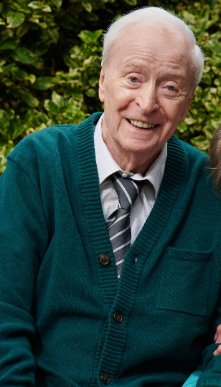
Sage's boss, Mary DeAngelis, tells her, "Josef Weber is as close as you can get to being canonized while you're still alive - he used to coach kids' baseball; he organized the cleanup of Riverhead Park; he taught German at the high school for a zillion years. He's everyone's adoptive cuddly grandfather."
Josef stops by the bakery every evening, just before Sage starts her shift, for coffee and a roll - which he shares with his dachshund Eva.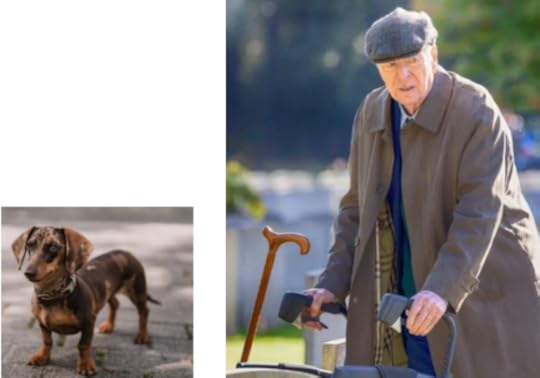
Sage also visits Josef at his apartment, with fresh baked rolls and homemade dog biscuits, to chat and play chess. During their conversations, Sage mentions that her family is Jewish, but she doesn't practice the religion. Then one day, Josef tells Sage, “I would like you to help me die.”
Josef ultimately discloses that he was a Nazi SS officer; and he wants Sage to forgive him on behalf of the Jewish people. To prove he's being truthful, Josef shows Sage a photo of himself in an SS uniform.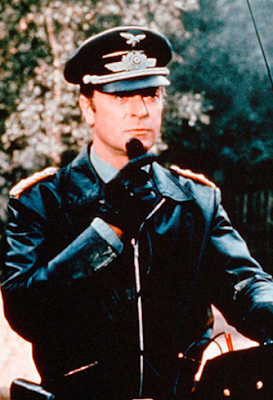
Josef eventually confesses that his real name is Reiner Hartmann, and he goes on to relate his story. In a nutshell: Reiner and his younger brother Franz grew up during the Weimar Republic in Germany, when inflation was rampant and middle-class families struggled to get by. Hitler held out hope by uniting the German people against a common enemy: the Jewish people.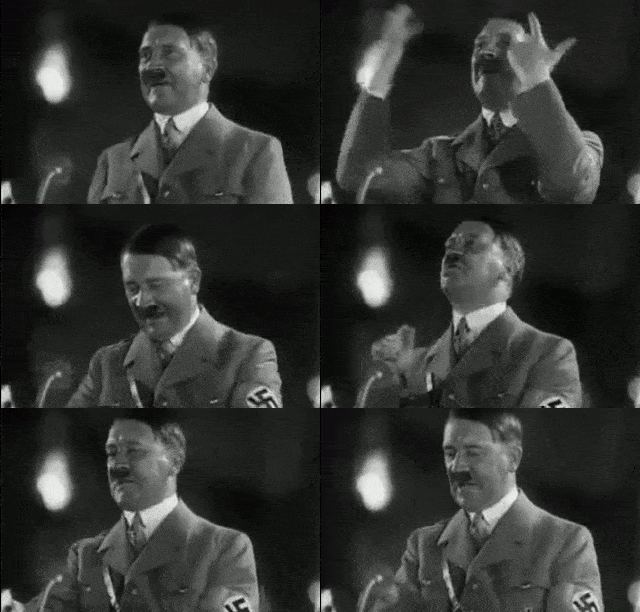
Reiner and Franz joined the Hitler youth, which encouraged violence, and Reiner's inner bully happily emerged. Reiner got so drawn in, he viciously beat up his own brother during a training session.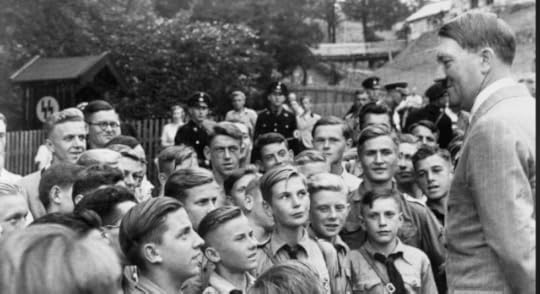
Josef/Reiner goes on to talk about being a Nazi officer, and details the numerous horrendous atrocities he perpetrated against the Jewish people in Germany and Poland, and his ongoing brutality when he was a guard in the women's concentration camp at Auschwitz. Josef/Reiner's story is explicit and appalling.
Unknown to Josef/Reiner, Sage goes to the police with his story. Sage is directed to call the U.S. Department of Justice in Washington D.C., where she speaks to Leo Stein, a lawyer who helps prosecute Nazi war criminals.
Leo soon arrives in New Hampshire to interview Sage, whom he finds very attractive. (Note: Leo is 37-years-old and single, and his matchmaking Jewish mother provides some light moments in the book.)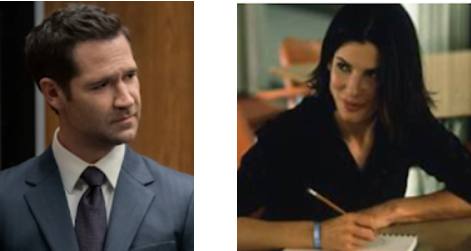
Leo tells Sage that Josef/Reiner's story will need to be verified, and he gives the job to his research team in Washington. When Leo learns Sage's grandmother Minka is a Holocaust survivor, he asks to hear her story as well.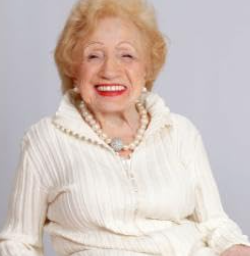
Minka has never told Sage about her past, but she agrees to relate the tale now. In a nutshell: Minka grew up in Poland, with her parents and sister. Minka's family had a good life until Hitler invaded Poland, and Jews were horribly persecuted and forced to move to ghettos.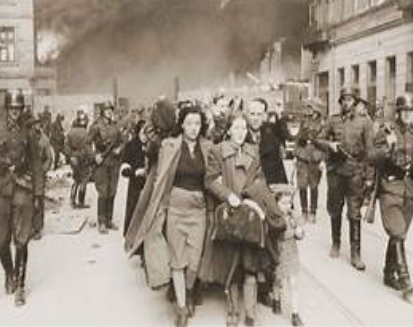
From there, Jews were sent to concentration camps, and Minka and her father ended up in Auschwitz.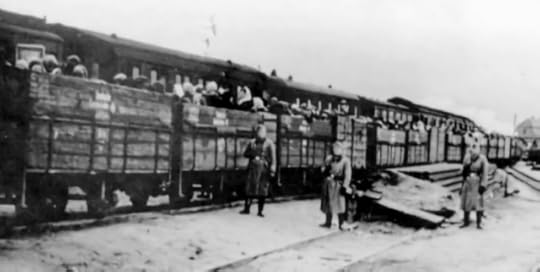
Minka's father was gassed, but Minka became a worker in the camp's 'reclamation center.' Her job was to comb through Jewish belongings to find things that were useful or valuable to the Reich. The Jewish prisoners were treated abysmally, starved, and beaten, and many died. Minka relates all this in excruciating detail.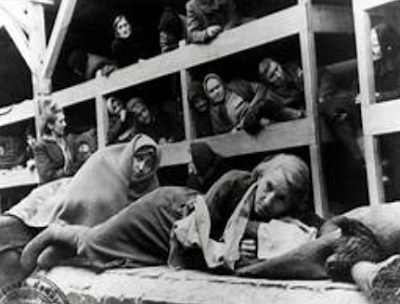
Still, there's a tiny bright spot in Minka's tale. Minka always liked to write stories, and she entertained the women in her barracks with an ongoing fairytale about a young woman, Ania, who falls for a young man, Aleks, who's an upiór (Polish vampire). Aleks bemoans his need to kill and drink blood, but he can't help himself.
When a literature-loving SS officer learned about Minka's story, he insisted she tell it to him in installments, while he ate lunch. Afterwards, the officer always left some food behind. This may have saved Minka's life.
(Note: Picoult includes the entire upiór story in the book.)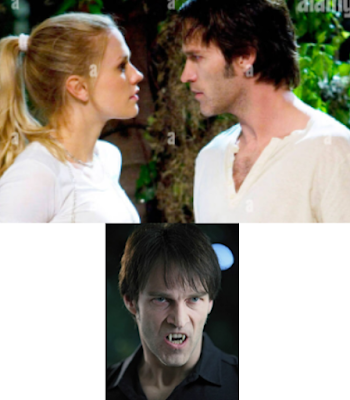
Much of the novel is about the lives of Josef/Reiner and Minka during the WWII era.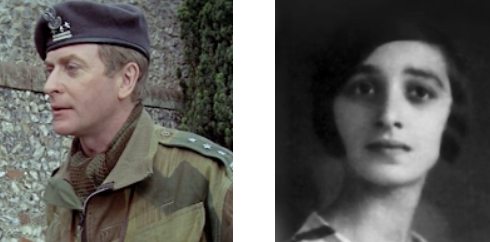
We also follow Sage as she obsesses about her scar; goes to work at the bakery; hangs out at home; sees her married boyfriend Adam; spends time with the attorney Leo; talks with friends, family, and acquaintances; considers what to do about Josef/Reiner; and just goes on with her life.
The characters in the novel have many discussions about redemption, forgiveness, assisted suicide, and other moral issues. One opinion is that you can only get forgiveness from the person you wronged, not a proxy, which makes sense to me.
My only criticism of the novel is that parts of the climax feel 'off' in my view. Is it worse to murder a thousand Jewish people you herd into ditches, or one Jewish person you purposely target?
All in all, however, this is another fine book from Jodi Picoult. Highly recommended.
Rating: 4 stars

No comments:
Post a Comment