
Author Sharon Spaulding became interested in overlooked historical women when she learned her husband was descended from Mary Ware Dennett - one of the pivotal members of the women's rights movement. Spaulding dove into Dennett's papers and discovered the lady's remarkable achievements, unrelenting courage, and sacrifices.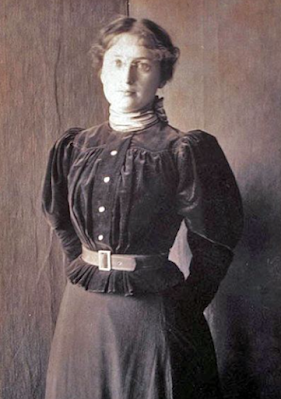
Mary Ware Dennett
Spaulding went on to research other 'forgotten' women, some of whom were previously written up in the New York Times series, 'Overlooked: A Celebration of Remarkable, Underappreciated People Who Broke the Rules and Changed the World.'
Spaulding's research led to her newsletter "Women Make History: Stories We Should Have Learned in School", and to this book.
Numerous women featured in Spaulding's book were suffragists, and advocated equal rights, equal pay, equal opportunities, and reproductive rights for women. Many of the crusaders also championed causes related to abolition; Blacks; Native Americans; Mexicans; poverty; child welfare; etc., but women in other fields are included as well.
A number of the women featured in this book were denied entry to college, law school, medical school and so on - under the premise their brains were too small and they weren't bright enough to enter a profession. As proof of this folly, women now comprise more than 50% of the student body in American law schools, medical schools, and veterinary schools.
Spaulding notes, "People may have heard of some of these women, but I also included a lot of the lesser-knowns, ones who nobody’s ever heard of...I’m so passionate about sharing these stories because, for the most part, [the women] have been swept aside by history, or maybe they had their moment of fame and then were forgotten....At the end of the day, I wanted women who were representative. I wanted a kaleidoscope of backgrounds - Asian-Americans, Native-Americans, Hispanic-Americans, as many voices representing different perspectives and contributions as possible. I wanted to span from the colonial era all the way up to the end of the 20th century.”
Spaulding concentrates on women from the United States, and it would be wonderful to see books featuring women from around the world.
I'll provide brief excerpts from some of Spaulding's entries, to familiarize readers with the book.
❀❀ Mary Ware Dennett (1872 - 1947) was an officer of the National American Woman Suffrage Association, co-founder of the National Birth Control League, and a leading activist for women's reproductive rights.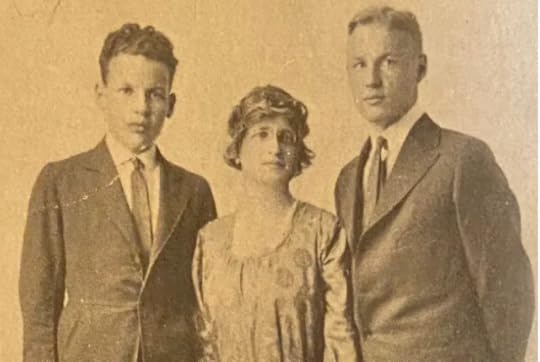
Mary Ware Dennett and her sons
In 1929, Dennett was tried and convicted of obscenity for mailing a 28-page educational pamphlet about sex entitled, "The Sex Side of Life: An Explanation for Young People." The case was overturned on appeal.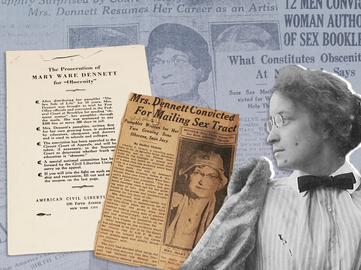
Dennett believed birth control should be available to all women, and to draw attention to her cause, Dennett recommended a 'birth strike' - calling on women to refuse to have children for five years. Due to the work of Dennett, Margaret Sanger, and other proponents of birth control, legalization of pregnancy prevention in the U.S. happened gradually through court decisions, legislative action, and public policy.
❀❀ Zitkála-Šá (1876 - 1938) was a Sioux Indian who advocated for Native American rights.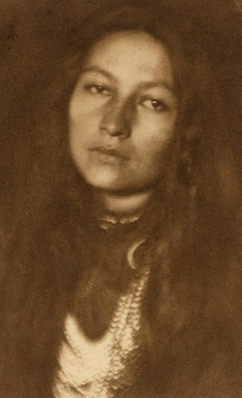
Zitkála-Šá
When she was growing up, Zitkála-Šá (baptized Gertrude Simmons Bonnin) was forced to pray as a Quaker, speak only English, cut her long hair, and practice White customs. As a result, Zitkála-Šá became an advocate for Native Americans. After attending college and pursuing graduate studies at The New England Conservatory of Music, Zitkála-Šá collaborated on 'The Sun Dance', the first opera about Native American life.
Zitkála-Šá wove music, writing, and political activism into her fight for Indian equality, and the celebration of Native cultures. Zitkála-Šá is featured on a quarter with her likeness.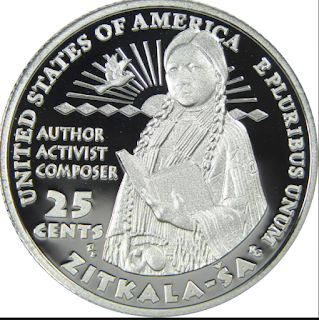
❀❀ Jovita Idar ( 1885 - 1946) was a Mexican-American woman who supported Mexican-American civil rights and championed bilingual education as a means of preserving Mexican heritage and culture.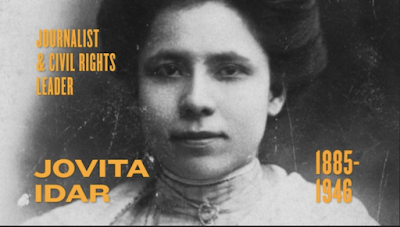
Idar's father owned the Spanish-language newspaper La Crónica, which covered Mexican affairs in Texas, and exposed Jovita to political activism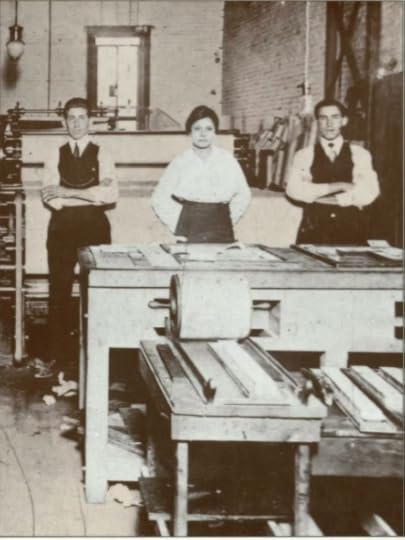
Jovita Idar and her brothers worked for La Crónica newspaper
Later, when Jovita published an editorial in the newspaper El Progreso, criticizing President Woodrow Wilson's interference in the Mexican Revolution, the Texas Rangers ransacked El Progeso's office and destroyed its printing presses.
Idar formed La Liga Feminil Mexicanista (The League of Mexican Women), which focused its efforts on educating Spanish-speaking children about their heritage, and helping women achieve economic, social, and political parity. Idar is featured on a quarter with her likeness.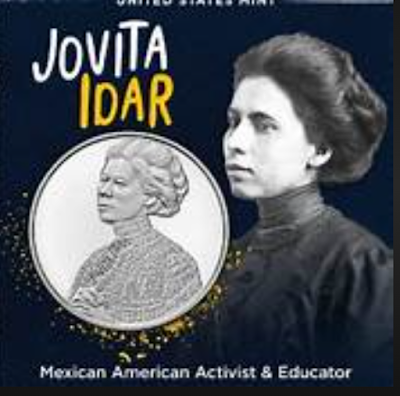
❀❀ Maggie Lena Walker (1864 - 1934) was born into slavery, and later became an important philanthropist and civil rights activist.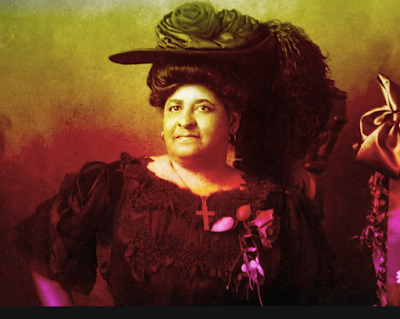
Maggie Lena Walker
After the Civil War, Walker went to school while helping her mother, who took in laundry. Walker later joined her local chapter of the Independent Order of St. Luke, an African-American fraternal organization dedicated to improving the social and financial lives of Black people. Walker opened a bank and launched a series of businesses that provided jobs for Black women and offered quality, less expensive products to the African-American community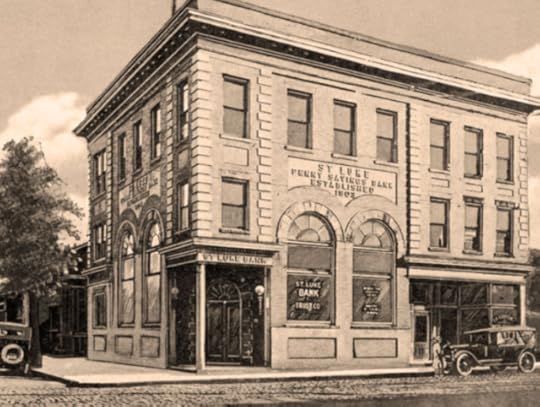
Maggie Lena Walker's bank
Walker was a strong civil rights activist who helped organize a boycott against Richmond, Virginia's segregated streetcars; this resulted in a new streetcar company. Walker was also a frequent speaker at civic, business, and educational events across the country, and invoked biblical themes to inspire self-reliance and racial pride.
Walker's home is now a National Historic Site, and serves as a museum and a tribute to her contributions to Black enterprise.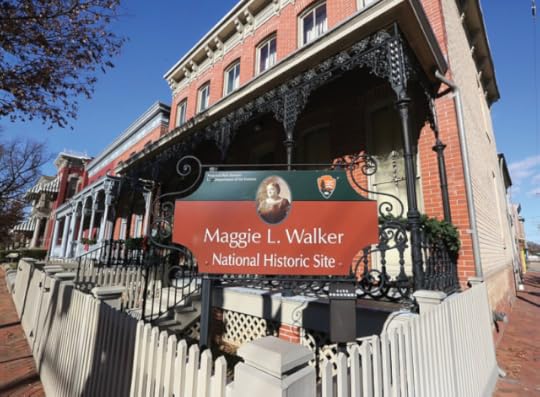
❀❀ Minerva Hamilton Hoyt (1866 - 1945) was a champion of desert ecosystems, and responsible for the creation of three national landmarks in Southern California.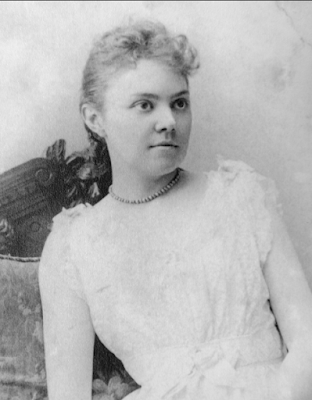
Minerva Hamilton Hoyt
When the population of Southern California began to grow in the early 1900s, Hoyt became concerned for the desert's fragile ecosystem. Desert plants were ripped up for gardens of the wealthy, and large swaths of the desert were destroyed to make room for homes and highways.
Hoyt founded the International Deserts Conservation League, and served on a commission tasked with recommending new state parks in California. To write her report for the commission, Hoyt hired and supervised teams of biologists and ecologists to gather scientific data, and she worked with photographers to document landscapes.
Hoyt recommended the creation of parks in Death Valley, the Anza-Borrego Desert, and the Joshua Tree forests. Eventually, Anza-Borrego became a national landmark, and both Joshua Tree and Death Valley became national parks. A mural of Hoyt standing amid the desert landscape graces the Joshua Tree National Park headquarters.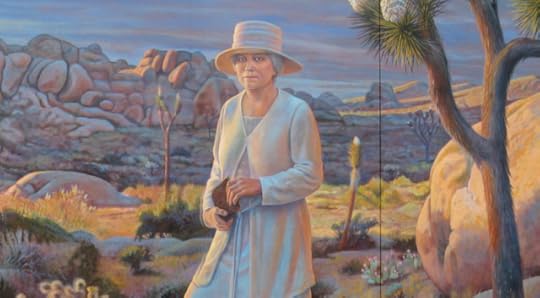
Mural of Minerva Hamilton Hoyt at Joshua Tree National Park
❀❀ Eunice Newton Foote (1819 -1888) was the first person to discover the effect of greenhouse gases on Earth's atmosphere.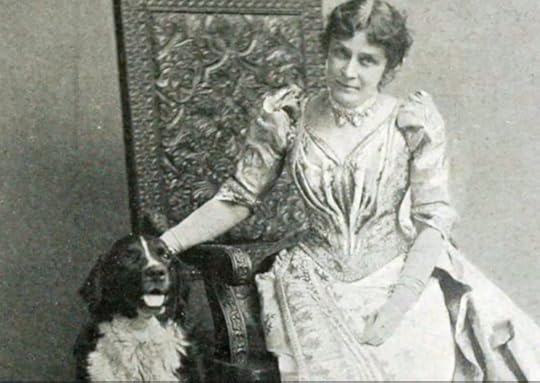
Eunice Newton Foote
Foote attended the Troy Female Seminary, where she studied astronomy, chemistry, geography, meteorology, and general science. Later, Foote built a home laboratory where she conducted experiments on the effects of sunlight on different gases.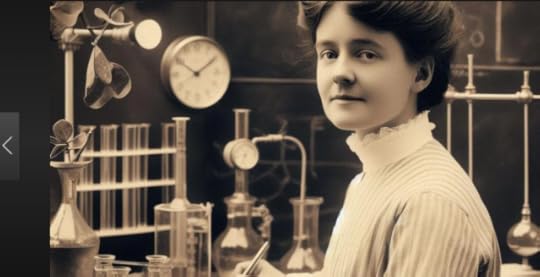
Foote found that the amount of moisture in the air affected the temperature and she discovered that the tube with carbon dioxide became hotter than the others. Foote concluded, "An atmosphere of that gas would give to our earth a high temperature", which made her the first person to warn that increased levels of carbon dioxide could lead to global warming.
Foote was also an inventor, and received patents for devices that prevented shoes and boots from squeaking; for a strapless skate; and for a paper-making machine.
In 2022, the American Geophysical Union instituted 'The Eunice Newton Foote Medal for Earth-Life Sciences.'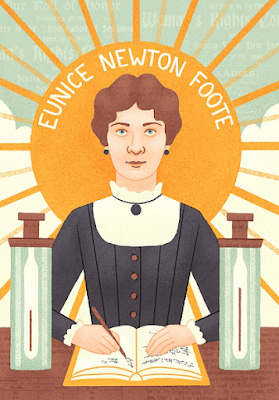
❀❀ Florence Price (1887 - 1953) made history when she became the first Black woman to have her symphony performed by a major American orchestra.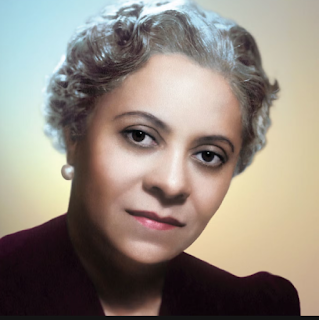
Florence Price
Price's mother was a singer and pianist who began teaching Florence at an early age. Then in 1906 Price graduated from the prestigious New England Conservatory of Music in Boston, one of only a few schools that admitted Black students.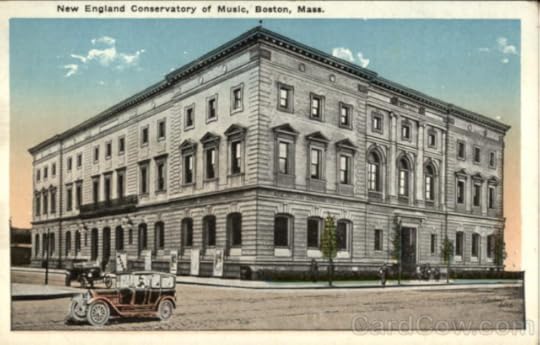
Price moved to Chicago in 1927, where the mingling of artists, musicians, writers, and dancers influenced her work, which was rooted in classical tradition, African melodies, gospel, blues, and jazz.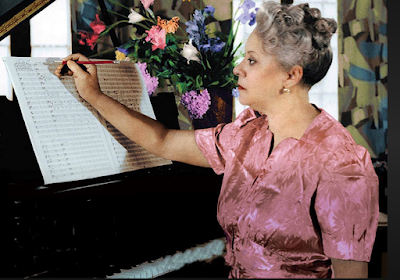
In 1939, Conductor Frederick Stock of the Chicago Symphony Orchestra premiered Price's 'Symphony No. 1 in E Minor' at the Chicago World's Fair, and the performance was widely praised.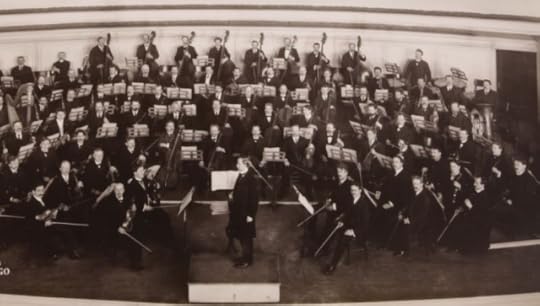
Chicago Symphony Orchestra
Despite many successes, Price struggled, and she lamented, "I have two handicaps. I am a woman and I have Negro blood in my veins." Despite hardships, "[Price] loved doing what she was doing. She never stopped, she never stopped writing music."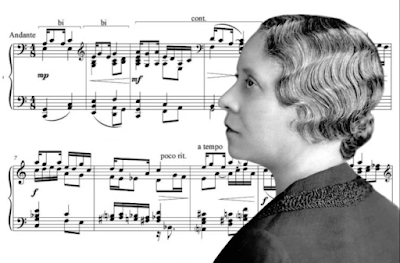
If these samples whetted your appetite, you'll find many more inspiring stories about accomplished women in the book. Highly recommended.
Thanks to Netgalley, Susan Spaulding, and Outside the Box, LCC for an ARC of the book.
Rating: 4 stars

No comments:
Post a Comment