
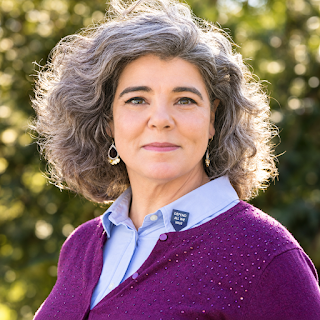
Celeste Headlee
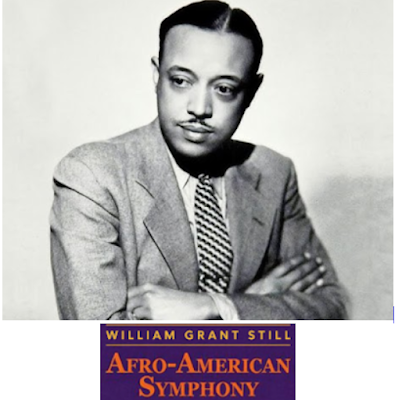
Headlee's grandfather is the African-American composer William Grant Still;
and Headlee's great-grandmother is Carrie Still Shepperson (William Grant Still's mother), one of the previously forgotten African-American women who dedicated her life to educating and uplifting Black people after emancipation. This book is about Carrie.
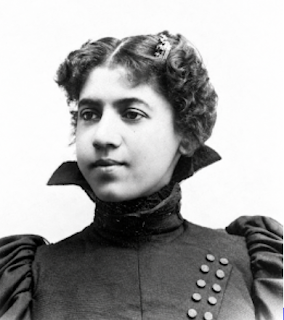
Carrie Still Shepperson
To round out Carrie's tale, Headlee also discusses slavery, emancipation, Reconstruction, the Jim Crow Era, race relations, and people of the time - good and bad - who left their marks on history. For my review, I'll provide some highlights surrounding Carrie's life, and I'd encourage interested readers to peruse the entire book.
Headlee spent nine years researching this narrative. She traveled around the country; dug into archives; read old newspapers; scoured census records; interviewed people; hired a genealogist; and more. After an extensive search, Celeste learned her great-grandmother Carrie was born on a Georgia plantation in 1863. Carrie's parents are Anne Fambrough - an enslaved woman, and Lindsey Fambrough - the plantation owner's White rapist son.
Headlee writes, "Enslaved Black women...were always under threat of sexual violence from any white man who felt inclined to touch them without consent. In most states, it was not illegal to rape an enslaved woman, leading some to refer to Black women as “unrapeable.”
African-Americans celebrated emancipation, but soon discovered freedom didn't bring everything they'd hoped.
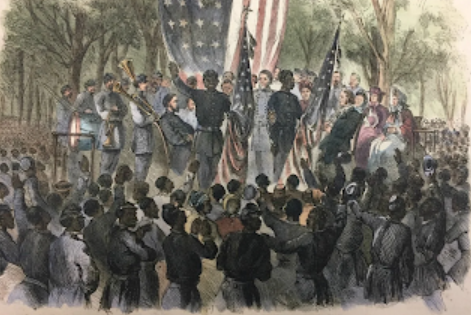
Emancipation Day in South Carolina
Some time after emancipation, Anne Fambrough and her daughters Ocia, Laura, and Carrie made their way to Atlanta, where Anne used her dressmaker skills and did other jobs to support her family. Even with 'freedom' though, the lives of African-Americans were mired in hardship. Headlee observes, "In the waning days of the antebellum South, millions of African-Americans were suddenly released from enslavement. But they soon realized that 'freedom' was not free; they were subject to hundreds of laws aimed at preventing them from voting and, in many cases, learning. Were it not for the work of an exceptional group of women—activists, educators, mothers, organizers—the foundations for Black education might never have been laid.
Contrary to common assumption, Black women took the lead in establishing schools for African-American children after the Civil War. Headlee reflects, "The familiar profile depicts a kindly young white woman from the North, an abolitionist driven to educate poor African-American children because of her liberal religious views. Statistically, though, teachers who fit that description were in the minority. Black people, especially women, always understood the power of literacy, and recent research has revealed the extent to which they built schools without the assistance of benevolent Northerners."
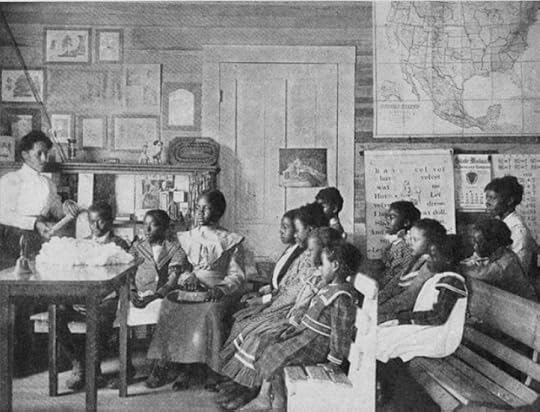
After emancipation, most schoolteachers in African-American schools were Black women
Carrie was among the women who, among other things, spent decades educating African-American children. Carrie's previously enslaved mother Anne was illiterate, but adamant about her girls going to school and getting a good start in life. There are no records of Carrie's early education, but Headlee notes, "Carrie undoubtedly studied in [Noah Webster’s] blue-back speller while training to be a schoolteacher at Atlanta University." Carrie would be following enslaved Blacks, who - if they were lucky enough to have the book - carried it everywhere they went, "stealing glances at it when they finished plowing a row or were given a few minutes to eat."
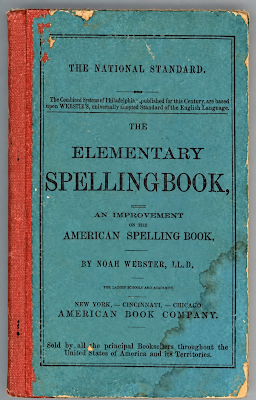
After graduating from Atlanta University, Carrie taught students in Alabama, Mississippi, and Arkansas, joining in the footsteps of African-American teachers who preceded and followed her. These females risked beatings, whippings, and worse if they were caught instructing others. Headlee includes anecdotes about some of these ladies, such as Lily Ann Granderson, Jane DeVeaux, Mary Ann Woodhouse, Susie King Taylor, and Mary Smith Peake.
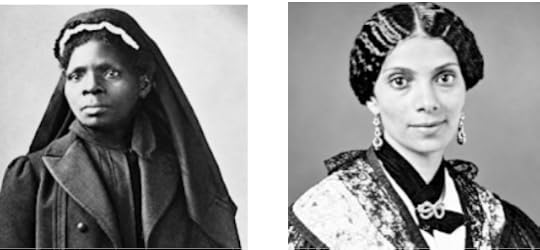
Susie King Taylor (left) and Mary Smith Peake
Headlee reflects, "Some themes begin to emerge in the tales of all these women, themes that would later resonate in my great-grandmother’s life: education, literacy, racial uplift, self-sufficiency. And yet one more common thread: versatility born of necessity. They learned how to repair farm equipment so they could demonstrate its function, they mended their students’ clothing, tended to schoolyard gardens that helped feed the pupils, pursued philanthropic dollars with single-minded focus. They wrote letters for community members who could not write themselves, who could only sign their names as an “X.” These women were devoted to their communities, shockingly capable, and seemed to believe nothing was beyond their powers to accomplish—a belief they proved correct multiple times over the course of their lives."
Unfortunately, education of African-Americans following emancipation led to a backlash among furious Whites. Headlee writes, "Enthusiasm for schooling within the Black community was met with hatred and resentment in many White Southern hearts. Newly built Black schools were often burned down and teachers threatened with assault or even death if they didn’t stop instructing Black pupils.”
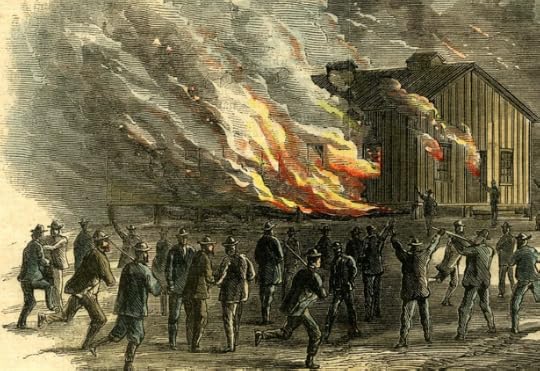
White people burned Black schools in the South
Southern Whites wanted freedpeople to keep working on farms, and many emancipated Blacks complied. Headlee notes, "Even if African-Americans could get hired for non-agricultural jobs, White employees almost universally refused to work alongside them... Even most Northern abolitionists didn’t wish to mingle with the Black citizens for whose freedom they fought...This is one reason so many freedpeople chose to remain in the South." Regardless, freedpeople and their descendants had dreams. Dreams that were often crushed by the end of Reconstruction in 1877, twelve years after the Civil War.
Headlee writes, "I strongly suspect that spending her formative years [until age 14] during Reconstruction contributed a great deal to Carrie's later achievements...She grew up surrounded by the dream of freedom and equality." Then Reconstruction ended; Northern troops left the South; and a nightmare for southern Blacks ensued.
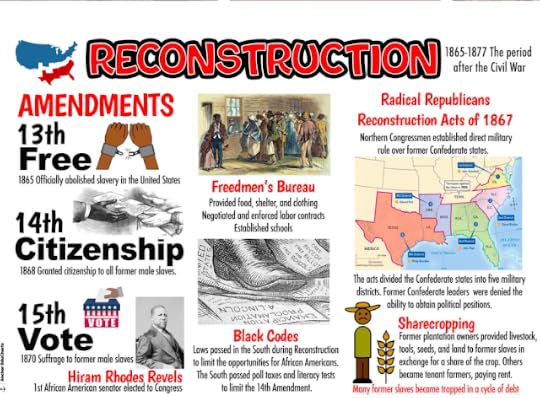
The end of Reconstruction dampened notions of Black freedom and opportunity. Without Northern militias to enforce proper behavior, many states quickly passed Jim Crow laws that disenfranchised Blacks; enforced racial segregation, and empowered the Ku Klux Klan and other White supremacist organizations.
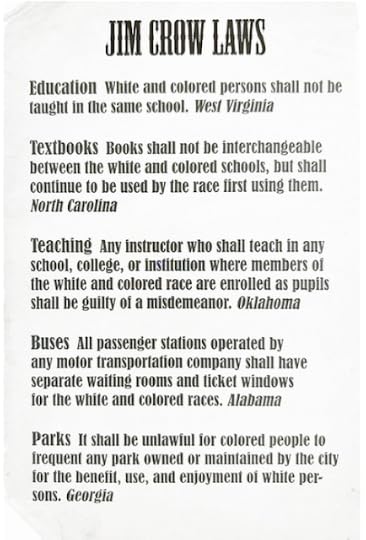
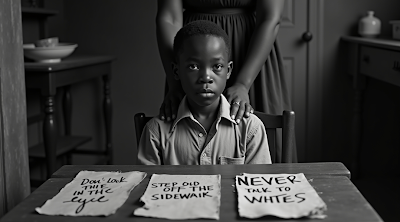

Headlee describes numerous instances of hate-filled Whites lynching Blacks and burning down their homes, businesses, and schools. The wholesale murder of African-Americans - WITHOUT CONSEQUENCES - continued unabated for decades, and these scenes are painful to read about.

Ku Klux Klan
When Carrie was teaching at Huntsville Normal School in Alabama, she met charismatic fellow instructor William Grant Still, who taught music and bookkeeping.
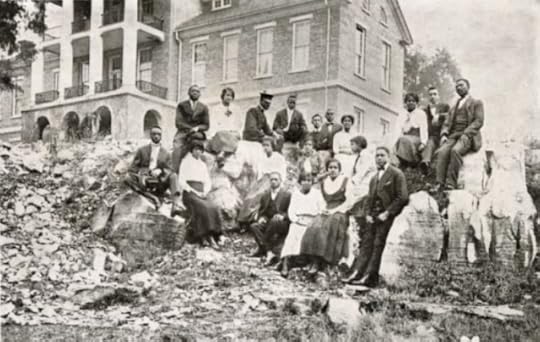
Huntsville Normal School
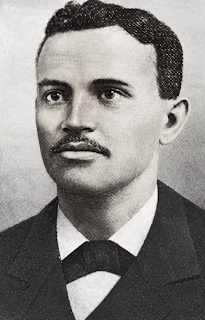
William Grant Still
Carrie and William became engaged, got married in 1894, and settled in Woodville, Mississippi, where they both continued teaching. The couple's son William Grant Still Jr. was born in 1895, and tragedy soon followed. Carrie's husband was killed by the Ku Klux Klan when Black teachers protested their low pay. Carrie fled Woodville with her 4-month-old baby, and joined family members in Little Rock, Arkansas.
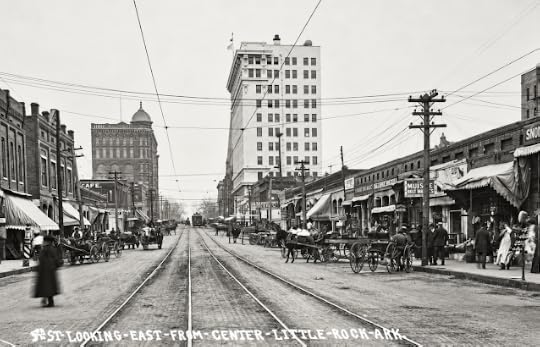
Historic Little Rock, Arkansas
Her husband's murder galvanized Carrie, and in the following years Carrie worked nonstop to help Black people. In addition to teaching English at a series of schools in Little Rock, Carrie raised money for the city's Black schools; established a library for African-Americans; joined activist clubs and organizations; served on a committee to build a hospital for Blacks; became a leader of the NAACP, and organized numerous fund-raisers for the organization; worked to free Black farmers who were wrongly incarcerated; and more. In addition, Carrie spent her summers in the rural town of Olmstead, teaching the residents (who had no schools) to read and write.
Besides doing all that, Headlee writes, "Carrie believed in celebrating the high arts, and arranged for many famous writers, artists, and musicians to visit Little Rock...In addition to her full time job as a teacher and her civic work with a dizzying number of clubs and organizations, plus the hours she spent raising and disciplining her son, Carrie somehow found time for hobbies. She won first prize for embroidery at the Pulaski County Fair, and painted bone china with a deft hand...Carrie also organized a choral group that performed spirituals and sewed her own clothing...Carrie read multiple newspapers and magazines as well, intent on keeping up with news."

Reading many newspapers meant Carrie was aware of the opposing views of W.E.B. DuBois and Booker T. Washington. DuBois believed Blacks should push for immediate civil rights, higher education, and professional jobs. Washington was more of an appeaser, saying African-Americans should settle for vocational learning and 'take the jobs Whites wanted to give them, like field hand or maid.' In time, Carrie came down on the side of DuBois.
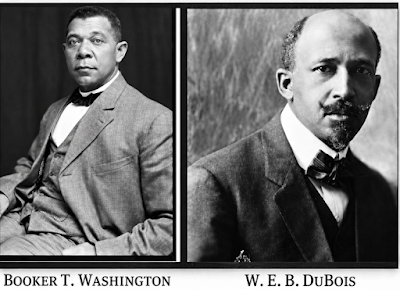
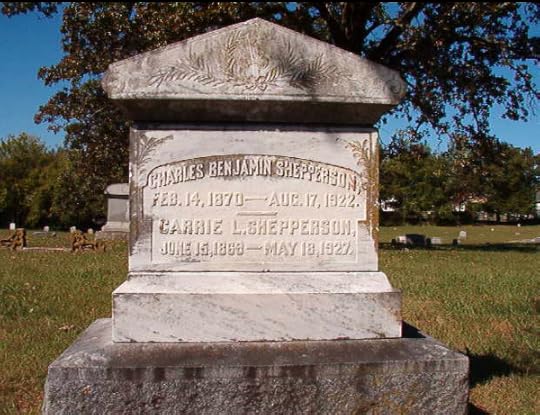
In addition to her activism and leisure activities, Carrie had a satisfying personal life. In 1904, widowed Carrie married tall handsome rich postal worker Charles B. Shepperson, a love match that was approved by Carrie's ten-year-old son Billy.
Speaking of Billy, Headlee wryly explains that the boy - by his own admission - was a handful. Billy helped his grandmother Anne feed the chickens, did his chores, and completed his homework, but was also a rambunctious boy who got a whipping most days - which he later admitted he deserved. Headlee's anecdotes about Billy illuminate his personality: For extra money, Billy worked in an ice cream factory, but ate too much of the product and was let go; Billy liked Zorro and Zane Grey novels more than the literary and Horatio Alger books Carrie gave him; Billy once fired his stepfather's pistol in the street, and got the whipping of his life; Billy was expelled from college for breaking the rules; and so forth.
Of course Billy grew up to be the famous musician William Grant Still, who composed "nearly two hundred works, including five symphonies, four ballets, nine operas, and more than thirty choral works, art songs, chamber music, and solo works."
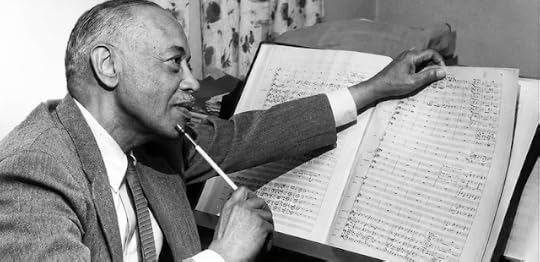
Composer William Grant Still
Headlee relates more of Carrie's story, which is well-researched and compelling. Carrie's husband Charles died tragically, by accidental drowning, in 1922; and Carrie passed from cancer in 1927, with her son Billy at her side.
Headlee notes that (until now) Carrie's story, like that of most historical women, has been ignored by scholars and largely forgotten. Almost all of Carrie's personal letters and papers, including a novel she planned to publish, have been lost. Being that's the case, Headlee deserves accolades for spending almost a decade to bring us Carrie's tale.
Note: As an added bonus, Headlee includes song suggestions in her acknowledgments, to go along with the people she mentions. 🎶😊🎼
I highly recommend the book.
I listened to the audiobook, narrated by the author, who shows her passion for the subject.
Thanks to Netgalley, Celeste Headlee, and Macmillan Audio for an ARC of the book.
Rating: 4.5 stars

No comments:
Post a Comment