Tuesday, December 14, 2021

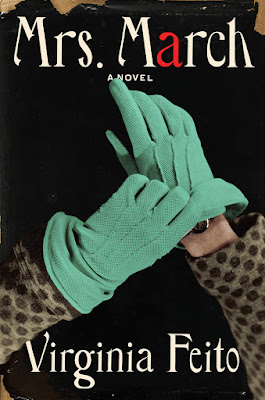
Review of "Mrs. March: A Novel" by Virginia Feito


This review was first posted on Mystery and Suspense. Check it out for features, interviews, and reviews. https://www.mysteryandsuspense.com/mr...


Mrs. March grew up in an upper class American home with a cold withholding mother who had little time for her children, especially young Mrs. March. (The protagonist is referred to as Mrs. March throughout the narrative). The time period was the mid-20th century, when well-dressed women wore skirts, pantyhose, and gloves; indoor smoking was acceptable; and men were the breadwinners.

Mrs. March irritated her snobby mother even more when she married George March, a divorced English professor who gave up teaching to become a novelist.


Mr. March admitted writing was a chancy profession, but - against all odds - George's books were popular and he did well. Thus the Marches live in a ritzy apartment on Manhattan's Upper East Side.....


.....and employ a full-time housekeeper named Martha, who's competent but a little intimidating.
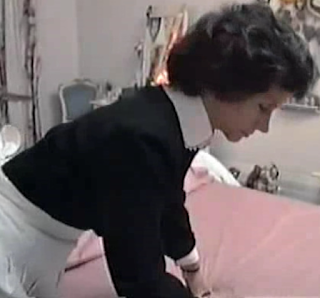


Mrs. March is very conscious of appearances and revels in her husband's success. To celebrate George's new book, which is a smash hit bestseller, Mrs. March is throwing a cocktail party for the couple's friends and George's publication team.


Mrs. March goes to her favorite pastry shop to buy macarons for the soirée.....


....and the patisserie owner, Patricia, mentions that she likes Mr. March's new book and that Mrs. March must be proud to have the main character - a homely despised prostitute called Johanna - based on Mrs. March herself.

Mrs. March goes numb, feels her insides liquifying, and gets a pain in her chest. When Mrs. March asks Patricia what she means, the pastry chef observes that Mrs. March and Johanna have similar mannerisms, speech, and dress. Mrs. March is horrified and races from the shop without her purchases, vowing never to return.

Mrs. March doesn't know whether Patricia's observations are correct because she hasn't read the book. But if people believe George's wife is the model for Johanna, Mrs. March dreads the impending gossip, snickering, and humiliation.


If the situation was reversed, Mrs. March would be thrilled to learn unflattering news about someone else, because she's mean-spirited, spiteful, and envious.


In fact Mrs. March had a child, who's now eight-years-old, just to show up Mr. March's daughter from his first marriage, whom Mrs. March resents.


As Mrs. March contemplates the horror of being linked with Johanna, she fantasizes about buying all the books and destroying them. However Mrs. March settles for ripping up one copy of the book in George's study and stealing another from a woman's shopping cart and throwing it away.


Mrs. March can't escape the novel. She sees a billboard alluding to it;


gets a phone call asking if she's Johanna;


sees a row of beauty salon patrons reading the book;


hears the audiobook being read over speakers in a restaurant bathroom;


notices her cocktail party guests tittering about it; and more.


It's not clear how much of this is real and how much is Mrs. March's imagination.

To add to the problem, Mrs. March starts seeing things, like a fish on her dinner plate come alive;


a bloodied woman who looks like Mrs. March in an apartment window;


and cockroaches scurrying across her bathroom floor. Mrs. March is embarrassed to even call an exterminator, because the doorman will see the serviceman going to her apartment.


To top things off, Mrs. March finds a newspaper clipping in George's notebook, about the body of a missing woman named Sylvia Gibbler being found. It turns out Sylvia was found in Gentry, Maine, where George sometimes goes hunting with his editor. Mrs. March becomes convinced George murdered Sylvia, and sets out to prove it.

The book is an arresting portrait of a woman sliding from neurosis to psychosis, with hints that Mrs. March's childhood foreshadowed her later descent into madness.

Actress Elisabeth Moss and her production company are making a movie of the book, with Moss playing Mrs. March.

Rating: 4 stars

Monday, December 13, 2021

Review of "The Boys: A Memoir of Hollywood and Family" by Ron Howard & Clint Howard


Authors Ron Howard (left) and Clint Howard

Ron Howard is an award-winning American director, producer, screenwriter and actor. Ron began his Hollywood career as a child actor, playing - among other parts - little Opie Taylor on the Andy Griffith Show and teenage Richie Cunningham on Happy Days.


Ron Howard as Opie Taylor


Ron Howard as Richie Cunningham

Clint Howard, a character actor, is Ron's younger brother. Clint also began his career as a child actor and - among other things - is well-known for portraying the alien Balok on an episode of Star Trek and young Mark Wedloe on Gentle Ben.


Clint Howard as Balok


Clint Howard as Mark Wedloe

Ron and Clint wrote this book to pay homage to their beloved mother and father, Jean Speegle Howard and Rance Howard, who selflessly guided their sons through the ins and outs of show business while keeping the boys grounded in everyday life.


Rance Howard and Jean Speegle Howard

Native Oklahomans Jean Speegle and Rance Howard aspired to be actors themselves, and moved to New York City in 1948 to start their fledgling careers. Jean and Rance married in 1949 and relocated to southern California, where opportunities were opening in television and movies. When Rance began to advance professionally, Jean gave up most of her acting ambitions to support her husband and raise a family.


Jean Speegle Howard and Rance Howard with little Ronny

Ron Howard (called Ronny as a youngster) was born in 1954, and started to show acting talent as a toddler. Rance used his contacts to get Ronny auditions, and the boy was soon launched as a child performer. Clint, born in 1959, had a similar jump-start to his acting career, assisted by his dad.


Young Ronny Howard


Young Clint Howard

To steer Ronny and Clint's vocations, Rance had to sacrifice some of his own ambitions, but he never complained. Ron writes, "Our parents' own show business aspirations were never realized as fully as ours, yet neither of them ever articulated or even telegraphed any bitterness or resentment."

Having occupations as children wasn't easy and Clint recalls, "We inherited the farmers' work ethic our folks brought with them from Oklahoma. We were grinders and scrappers...We spent our nights doing two sets of homework: our assignments for school and our run-throughs of the next day's lines with Dad."

The Howards were also a 'normal family', doing everyday things like Little League, rassling on the living room floor, and dinners out at the Sizzler. According to Clint, Jean thought of herself and Rance as sophisticated hicks - "Worldly enough to broaden their horizons through travel and the performing arts, yet homespun enough to live simply and humbly."


The Howard Famly: Rance, Jean, Clint and Ron

Ron has fond memories of his childhood and recalls early escapades like feeding gum to the family dog Gulliver, who promptly puked all over the floor. Recounting an admonition from Rance to stop giving Gulliver gum, Ron says, "I guess I was a repeat offender." In another childhood memory, Ronny is watching a western called Frontier Woman with his parents. Rance had a big part in the film, Jean was an extra who played a villager, and Ronny (an infant at the time) was the villager's baby, who was made to cry on cue.
/


When Ronny got bigger he scored speaking parts, and by his sixth birthday was cast as Opie Taylor in The Andy Griffith show. Ron remembers being on set, "Walking barefoot down a dirt path in L.A.'s Franklin Canyon Park with Andy at my side and a fishing pole on my shoulder." In a rock-throwing shot for the show's opening sequence, where a stronger arm than Ronny's had to hurl the stone, Ronny began his education in the "wizardly craft of creating moving-picture illusions" - which would stand him in good stead when he became a director.


Ronny Howard and Andy Griffith on The Andy Griffith Show

Rance functioned as Ronny's overseer and coach, giving up his chance for major stardom to help his son. Rance continued to audition - and got parts in movies and television - but most of his time was devoted to his children. Ron writes, "Somewhere around the time I got the Andy Griffith show, [Dad] made a choice...He chose to be a great parent - to support his children's opportunities with everything he had. His priority became me, and a little later, Clint."


Rance Howard with Clint and Ronnie

Ron tells many amusing stories about being on the set of The Andy Griffith show, where the crew swore like sailors, drank like fish, smoked like chimneys, and shared racy yarns. Ron speaks fondly of the cast, and relates anecdotes about some of his favorite people - like Hal Smith, who played Mayberry's town drunk Otis Campbell. After a time, The Andy Griffith Show became something of a Howard family affair, with Rance and Jean being on set, and Clint playing a little boy named Leon, who wore a cowboy outfit and didn't speak.


Hal Smith as Otis Campbell


Clint Howard as Leon

Ron learned a lot about acting during the run of The Andy Griffith Show, but - even as a child - he watched EVERYTHING, and started to acquire the skills he would need as a filmmaker. For Ronny's eighth birthday, Andy Griffith and Aaron Ruben (the show's producer) gave Ronny a Bell & Howell Zoomatic 8 mm movie camera - to encourage the boy's movie-making aspirations.

Rance gave his sons more than acting tips; he gave them life skills. Clint recalls that his dad taught Ronny and himself fighting techniques, so they could defend themselves. Clint writes,"Dad knew that we would be perceived as being different, being show-business kids...And he didn't want us to live in fear or be intimidated by anyone or anything."

For Clint's first big acting role he was a cast member on The Baileys of Balboa, after which he guest-starred on Bonanza and - at the age of seven - played Balok on (what was then) a little show called Star Trek. The Balok character was six-hundred-years-old but looked like a child, and Balok is still a favorite among Trekkies. Clint tells entertaining stories about his early career, especially his role as Balok and then as Mark Wedloe, a boy with a pet bear in the TV series Gentle Ben.


Clint Howard (with Michael Landon) in Bonanza

Ron and Clint were close-knit brothers, and in addition to (occasionally) acting together, they hung out together. Both boys loved basketball, and Ron coached Clint's basketball team, the Howard Hurricanes, for years. Moreover, when young Ron started to write and direct his own short films, he usually cast Clint in the lead role. And Clint, being no fool, demanded payment. 🙂 Ron and Clint also admit to teenage peccadilloes and rebellious behavior, such as relentlessly teasing (one might say tormenting) their mom, though they loved her dearly.

Ron Howard coached Clint's basketball team
Jean Speegle Howard with Clint and Ron


After The Andy Griffith Show, which wrapped when Ronny was fourteen, he had a hard time getting good parts. Ron observes, "There was no Opie Bounce...The work I was getting was pretty underwhelming...I somewhat smugly assumed that the industry would always be eager to take me back. It wasn't." This is a problem experienced by many child actors. Ron writes, "[Child actors are] in demand when they're prepubescent and cute, but less so when they enter adolescence. Just as these kids are entering the most vulnerable years of their childhoods - self-aware, awkward, and hormonal - their livelihood and sense of identity are pulled out from under them."

Luckily for Ron and Clint, their acting careers weathered their pubescent years, and they continued working in Hollywood. Clint got parts in westerns, sitcoms, TV dramas, and films. And Ron eventually went on to play Richie Cunningham in the hit show Happy Days. Both boys had life-altering experiences in their teen years. Ron met Cheryl Alley - whom he later married; and Clint met marijuana, alcohol (and later) cocaine, and became an addict. Clint talks a good deal about his addiction and eventual recovery, and how it affected himself and his family.


Teenage Clint Howard (third from left) in The Cowboys


Ron Howard and Cheryl Alley


Ron Howard and Cheryl Alley got married

Happy Days taught Ron some hard lessons about show business. Though the show was built around Ron's Richie Cunningham character, the Fonzie character - played by Henry Winkler - became wildly popular. The network wanted to rename the show Fonzie's Happy Days, but backed down when Ron threatened to quit.


Henry Winkler as Fonzie

Ron writes, "In a way, this incident served me well, in that I was reminded, as I had been after The Andy Griffith Show, that the entertainment industry had no investment in my well-being. It's a cold business, and no one in Hollywood felt sentimentally obligated to advance my career and keep me happy." Ron realized he needed a long-term plan, and took steps to become a filmmaker.

Ron Howard became a young filmmaker


Ron's first big movie was 1977's comedy Grand Theft Auto, about a rich girl who steals her dad's Rolls Royce and takes off for Las Vegas with her boyfriend. The girl's parents offer a reward for her return, and a bunch of hilarious bounty hunters take up the challenge. The movie was a true family venture: Ron and Rance wrote the script; Ron, Rance, and Clint acted in the film; and Ron's wife Cheryl and mother Jean catered food for the film set.

Ron Howard's first big movie was Grand Theft Auto


Ron went on to become an award-winning director; Clint and Rance continued to work in show business; and Jean got back into acting as well. Ron writes, "I wasn't the only Howard to take flight. In the 1980s, Mom returned to acting...It started with me putting her in Cocoon as a featured extra who worked on the film for several weeks." Jean then cornered the market on little-old-lady roles in sitcoms and shone in Ron's movie Apollo 13, where she played astronaut Jim Lovell's mother.


Jean Speegle Howard got many 'little old lady' roles

Ron's parents kept a close eye on their boys into young adulthood, but knew when to let go. Ron observes, "What a gift that was to let me fly away...It was their final act in raising me and positioning me for success in our shared field of work - a tremendous act of love and grace." And Clint and his dad became best friends. Clint recalls, "[Dad and I] went to ball games together, hung out together, engaged in shoptalk..I treasured our ritual of discussing the work and Dad clearly appreciated that I solicited his input."


Ron Howard achieved success as a director


Clint and Rance Howard became best friends

In the acknowledgments the authors conclude, "What a gift it is to be able to look back at our lives with such love, respect, and appreciation. So, thanks, Mom and Dad."

I enjoyed the book, which is a great story about Ron and Clint and their parents, with lots of nice photos.

Rating: 4.5 stars

Thursday, December 9, 2021

Review of "The Lost Boys: A Decker/Lazarus Novel" by Faye Kellerman


In this 26th book in the 'Peter Decker/Rina Lazarus' series, former LAPD homicide detective Peter Decker - who's close to retirement age - is now working for the Greensbury Police Department in upstate New York.


Peter's detective partner is Tyler McAdams, a Harvard Law School graduate who's preparing for the Bar Exam.


And Peter's wife Rina, as always, gives advice about her husband's cases and prepares delicious kosher meals and snacks.


The book can be read as a standalone, but familiarity with the characters is a plus.

*****

As the story opens an intellectually disabled man named Bertram Lanz disappears from a field trip organized by his 'Loving Care' assisted living facility. The residents were taken on a gentle hike, then to a diner, after which Bertram failed to return to the bus.


Detective Decker and his team scour the woods near the diner, but find no sign of Bertram. While searching for the missing man, however, the police find the remains of a college student named Zeke Anderson, who vanished ten years ago. Zeke and two of his college buddies had gone camping, and never returned. Finding Zeke's bones, which have sustained severe damage, leads to new inquiries about the three missing students.


Meanwhile, Decker and McAdams interview the director and residents of the Loving Care facility, and learn that Bertram was moved there from another home, where he had a girlfriend named Catherine.


Moreover, Bertram had been friendly with a Loving Care nurse named Elsie, who recently quit.


Decker and McAdams want to speak to Catherine and Elsie, but this is easier said than done.

As all this is happening, Decker's wife Rina has a little drama of her own. Peter and Rina's foster son Gabe, a 24-year-old concert pianist.....


.....got a call from his biological mother, a manipulative woman who probably wants something. Gabe asks Rina to accompany him to see his mom, and Rina agrees.

It's always a treat to visit with favorite characters but this book is disappointing. The narrative consists largely of Decker and McAdams going here and there to interview people again and again, which gets a bit dull. Moreover, of the three plotlines, only one is completely resolved. On the upside, Peter and Rina plan a rather significant change in their lives, which may well play out in future books.

Rating: 3 stars