
Author Matt Kaplan studied paleontology at the University of California before he became a science correspondent for The Economist, so Kaplan knows how science is supposed to work.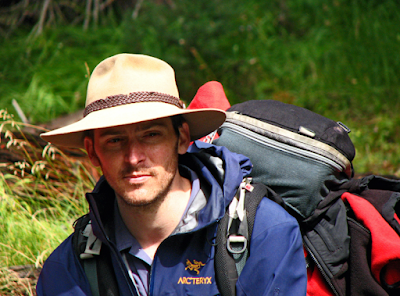
.Author Matt Kaplan
At the beginning of the book, Kaplan mentions a controversy among paleontologists about soft tissue preservation. In the early 21st century, paleontologists announced that they'd found tiny melanosomes (structures that produce color) in fossils of dinosaurs. Paleontologists published paper after paper with artistic renderings of dinosaurs in vibrant hues, and were praised for their work. "So, any suggestion that what people were seeing were not melanosomes was going to be met with considerable resistance."


Paleontologists pictured dinosaurs in various hues
Then PhD student Alison Moyer displayed research showing the 'melanosomes' were actually microbes. Kaplan notes, "In short, Alison was presenting evidence that powerful scientists in her field, who had achieved considerable prestige by publishing papers about color in extinct animals, were wrong." The renowned paleontologists became incensed, and Alison found herself at the center of angry naysayers.
Kaplan suggests, 'Whether or not the structures were melanosomes is not the point. Scientists are supposed to ask questions about the world around them, test these questions with experiments, and then present their results to their peers. When new findings contrast with older findings, scientists are supposed to run more experiments to study the matter, and present their findings to the research community. This is known as the scientific method.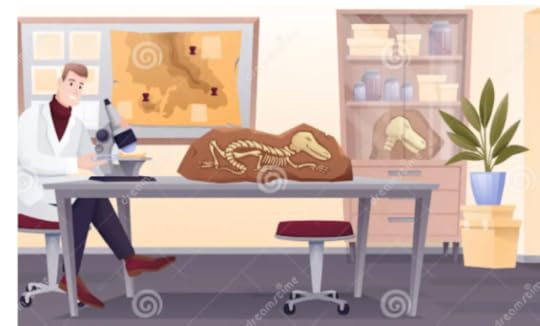
Of course, resistance to fresh ideas isn't a new phenomenon. Nicolaus Copernicus feared how the outside world would respond to his discovery that the Earth went around the sun; Charles Darwin worried that the academic community would disdain him for his theory of evolution; and Joseph Lister - who proposed using carbolic acid for antiseptic surgery, and Louis Pasteur - who created vaccines, had to deal with skeptical reactions from the government and the scientific community. The list goes on and on.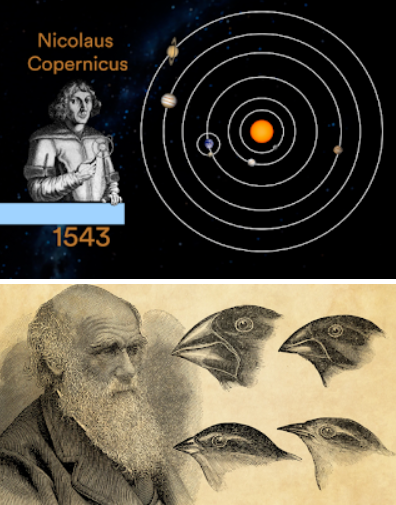
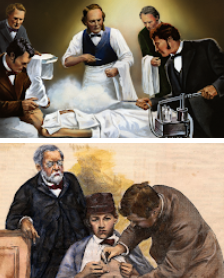
Top to bottom: Nicolaus Copernicus, Charles Darwin, Joseph Lister, Louis Pasteur
Kaplan is concerned that even now, science is being stifled, and that we NEED GOOD SCIENCE to solve the energy crisis, defeat cancer, counter climate change, feed eight billion people, and deal with other problems.
From here, Kaplan goes back to discuss historical defiance in the face of new ideas.
The ancient Greek physician Hippocrates, who lived around 460 BCE, believed that illness had two broad causes: astrology (seasons, winds, planets, and stars) and humors. Hippocrates thought that four humors - phlegm, gall, bile, and blood - existed in a delicate balance within the body, and that people became sick when the balance was disrupted. Treatment required drawing out excess humors, so equilibrium was restored. These notions about astrology and humors really caught on during the Renaissance, when epidemics were becoming a serious problem.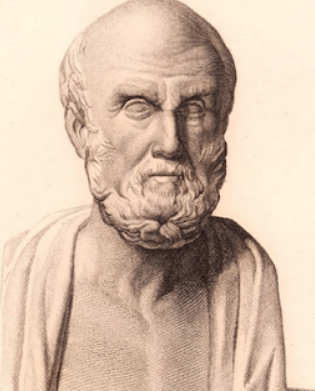

Hippocrates and the Four Humors.
Sadly, Hippocrates' beliefs were a disaster for medicine. Kaplan writes, "Rather than consider the possibility that two patients with exactly the same symptoms might be struck by the same malady, doctors started looking to the sun, the weather, and the stars to discern the nature of their illness before draining them of whichever humor they thought was being produced in excess."
Worse was to come.
The Hungarian physician Ignaz Semmelweis (b. 1818) worked in the maternity ward of the Vienna General Hospital, and was troubled because so many women died from puerperal fever after giving birth. Kaplan writes, "While those running the Vienna General Hospital went about recording wind direction, barometric pressure, temperature, and planetary positions to help them ascertain what it was that gave rise to this miserable disease, Semmelweis started making notes.....and studying the corpses of women at the hospital who had succumbed to the disease."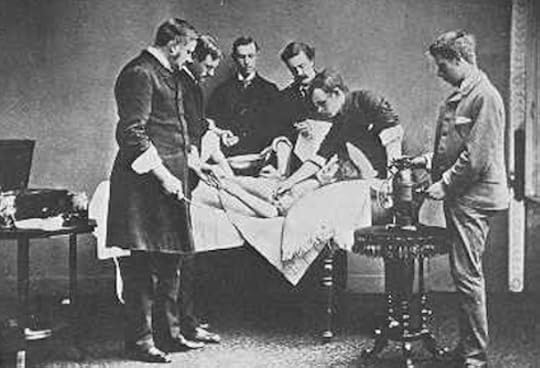
Ignaz Semmelweis studied corpses
Semmelweis quickly determined that the sun, stars, and weather did not cause puerperal fever, and told his colleagues, who refused to entertain the idea. Regardless, Semmelweis tested many theories about what might cause the disease, including things like noise; touching cadavers; food; heating; the women's position during delivery; and others. Finally, Semmelweis worked out that hospital routines were part of the problem, and that doctors going straight from dissecting corpses to the delivery room - without washing their hands - were spreading puerperal fever. Thus Semmelweis championed a hand-washing regimen for doctors.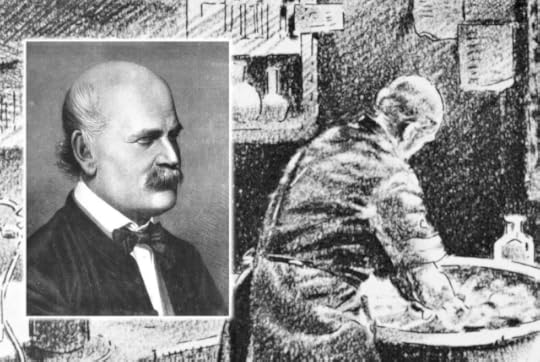
Ignaz Semmelweis recommended hand-washing for doctors
Unfortunately, the head of obstetrics at the Vienna General Hospital, Johann Klein, disliked Semmelweis and didn't want his own reputation besmirched. So Klein did everything in his power to shut Semmelweis up, stifle his research, and ruin his career. Sadly, Semmelweis's proposals were pooh-poohed, and opportunities to save women's lives were stifled for a time.
Something similar happened even earlier, in Aberdeen, Scotland, where a doctor named Alexander Gordon (b. 1752) studied puerperal fever. Gordon noted that the disease only struck women who had been treated by doctors, nurses, or midwives who had previously attended patients with the illness. Gordon published the names of these 'disease spreaders' (including himself) and was forced to leave town amidst the declamatory backlash.
In short, the medical community in the 1700s and 1800s - not understanding that puerperal fever was caused by a microbe - refused to believe they themselves had disseminated the disease and killed countless women.
Other instances of "I told you so" include Hungarian scientist Kati Karikó, who was studying mRNA at the University of Pennsylvania - where her work was denigrated and she was dismissed. Kati went on to work at BioNTech, helped develop the Covid-19 MRNA vaccine that ended the pandemic, and won a Nobel Prize. So there UPenn!!😊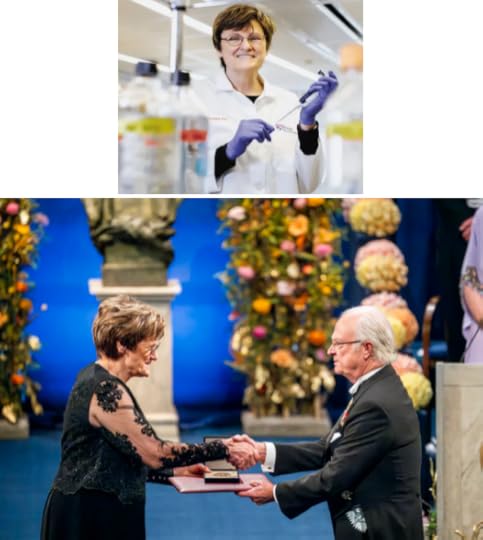
Top: Kati Karikó in the lab; Bottom: Kati Karikó accepting the Nobel Prize
Kaplan points out areas where medical research hasn't been used to best advantage. He writes, "The structure of the modern medical system in America makes it such that doctors, hospitals, and pharmaceutical companies make most of their money by treating people who have fallen ill...The notion that money should be spent to keep people from becoming ill only comes up when the threat to the economy is particularly great....It takes the likes of measles, polio, or Covid-19, which had seriously damaging economic effects, for big spending on preventative measures to even be considered."
Preventive measures for disease usually involves inoculating people with mild forms of the sickness. This primes the immune system to respond, and forestalls serious illness later on. Inoculation (aka vaccination) against smallpox may have begun in China in the 1500s, using material from smallpox pustules. The procedure slowly spread from there.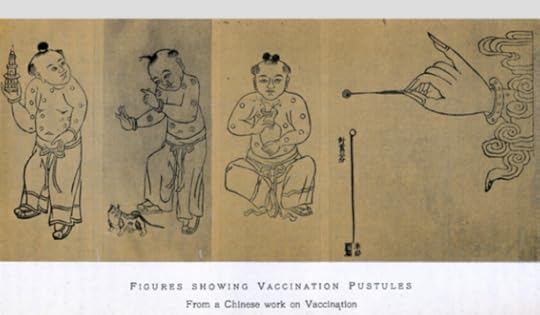
Vaccination was a hard sell, however. For instance, during the Revolutionary War, George Washington wanted his soldiers inoculated against smallpox, but the Continental Congress banned the procedure. Washington wrote to the Director of Hospitals for the Continental Army and said, "Should the disorder infect the Army in the natural way and rage with its usual virulence we should have more to dread from it than the sword of the enemy." Washington won and his soldiers were vaccinated.
Vaccinating the Continental Army against smallpox turned the course of the Revolutionary War
Kaplan writes much more about vaccines in the book, including scientists who developed vaccines, how they did it, and rivalries that resulted in skullduggery and backstabbing. For instance, Louis Pasteur was fiercely competitive and known to sabotage other researchers. As an example, Pasteur was working on a vaccine for anthrax, and learned that a veterinarian named Jean-Joseph Henri Toussaint had beat him to the punch. Pasteur made it his business to falsely discredit Toussaint and take all the credit for anthrax vaccine himself. (Note: As common wisdom says, never meet your heroes. 😪)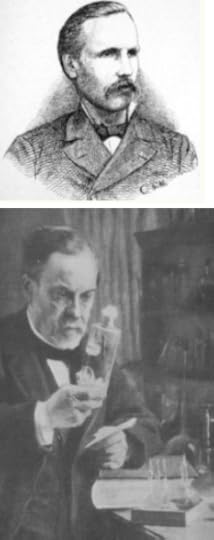
Top: Jean-Joseph Henri Toussaint; Bottom: Louis Pasteur
Getting back to the present, Kaplan notes the atmosphere in science research hasn't changed much from the past. Established scientists (e.g. oldies with tenure), and the grant agencies that fund them, resist new ideas. This makes it almost impossible for young scientists with bright new theories to get funding. Thus progress is stifled.
Kaplan mentions possible ways to help advance science, such as: lotteries for awarding grants; golden tickets for novel ideas; long-term grants; identifying and prosecuting individuals who publish fraudulent data to get grants; encouraging researchers past their prime to retire; blind peer reviewing to eliminate discrimination against minorities, foreigners, women, and so on; funding scientists rather than ideas; resisting pressure from the pharmaceutical industry; and more.
The book is filled with interesting, enlightening, and entertaining tales about science research, interspersed with Kaplan's personal experiences and views. My main cavil is that the narrative jumps from topic to topic and back again, so Semmelweis's story, and the tales of other people, are told piecemeal. That's a minor point though, and I highly recommend the book.
Thanks to Netgalley, Matt Kaplan, and St. Martin's Press for an ARC of the book.
Rating: 4 stars

No comments:
Post a Comment