
The 'Mountains We Call Home' is a standalone novel that's tangential to The Book Woman of Troublesome Creek and The Book Woman's Daughter. The novels are inspired by the 'Kentucky Blue People' and the 'Pack Horse Librarians' of the Appalachian Mountains.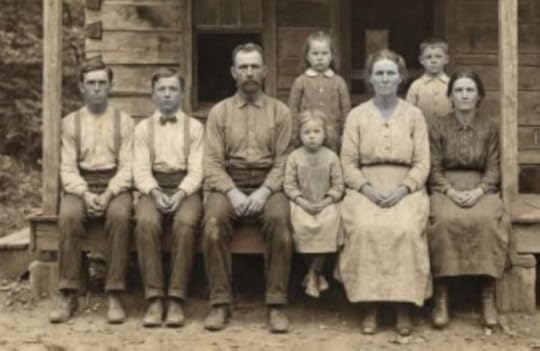
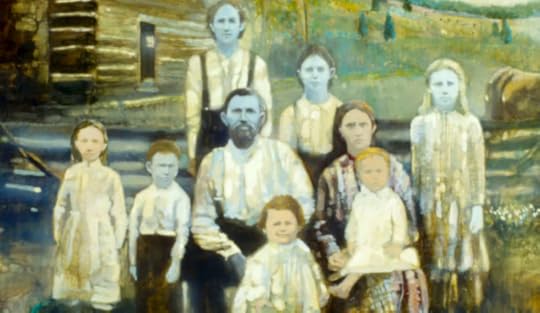
Photo (top) and painting (bottom) of the 'blue' Fugates of Perry Country, Kentucky (circa 1920)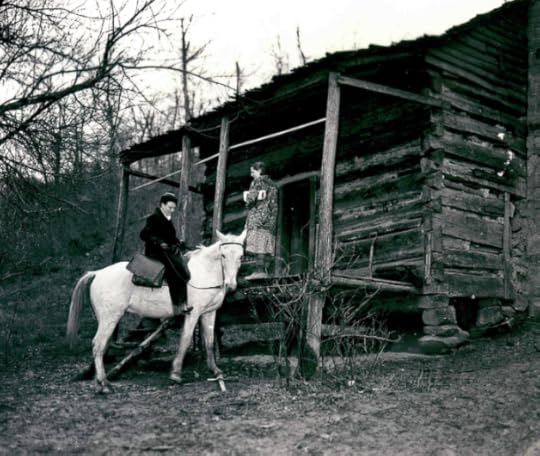
A packhorse librarian in the Appalachian Mountains
Background (no spoilers): Cussy Carter is one of the 'Kentucky Blue People' whose skin appears blue because of a genetic condition called methemoglobinemia, a non-contagious anomaly that affects red blood cells. The blue people face bigotry and discrimination and tend to isolate themselves. Nevertheless, in 1936 - at the age of nineteen - Cussy becomes a 'Pack Horse Librarian' who rides a mule to deliver books to the remote hill people of the Appalachian Mountains.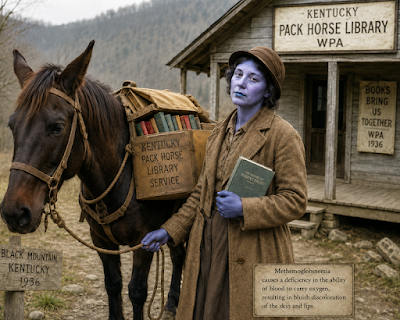
Due to a confluence of circumstances, Cussy marries, becomes a widow, adopts an orphaned baby named Honey, and gets married again - to a White man called Jackson Lovett. Cussy and Jackson's marriage breaks Kentucky's miscegenation laws, and causes big trouble for the couple.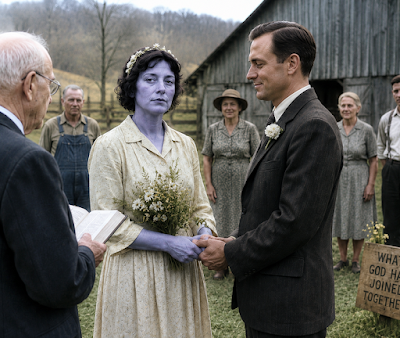
'The Mountains We Call Home' opens in 1953 when Cussy is in her mid-thirties. Cussy and her husband Jackson are arrested and imprisoned for their 'interracial marriage', and their 16-year-old adopted daughter Honey is left to look after herself with the help of kind friends and neighbors.
Cussy is sent to the Kentucky State Reformatory for Women, and Jackson is jailed in the men's prison nearby. The matron of the women's reformatory, Warden Sanders, assigns Cussy to kitchen duty under 'lifer' Waldeen Parker, who's in prison for shooting a man. Cussy's job is to keep the kitchen accounts and help with cooking and cleaning, and she does well at her tasks.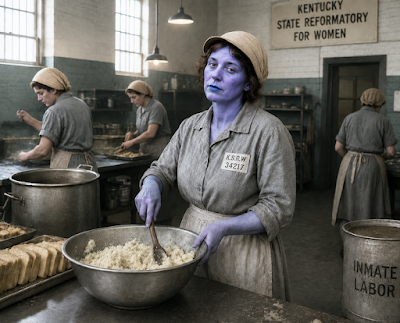
Later, when the prison librarian is dismissed, Warden Sanders gives Cussy the job. As the prison librarian, Cussy makes the rounds of the wards (general population, forensic, hospital, geriatric, death row) where she distributes books and reads to the inmates, many of whom are illiterate.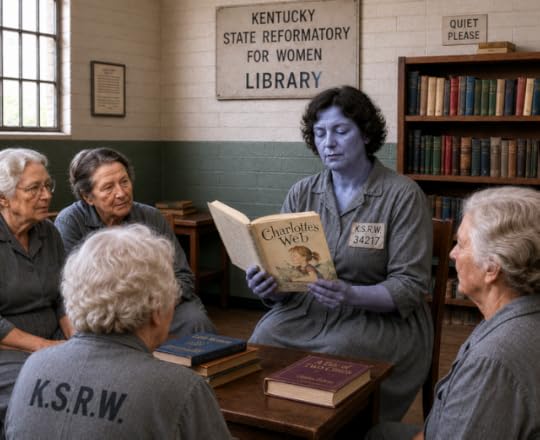
Over time, with Warden Sanders' encouragement, Cussy makes improvements to the prison library; writes letters soliciting more books; and teaches convicts to read and write, so they can exchange letters with their loved ones. The exposure to books and learning has a salutary effect on all parts of the penitentiary, which pleases the warden and the guards.
On the downside, Cussy's rounds expose her to some horrible conditions in the jail, like elderly women being left in their own excrement for hours; troublesome inmates being lobotomized; and women undergoing forced abortions and sterilizations.
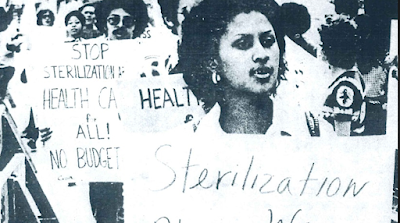
Protest against sterilization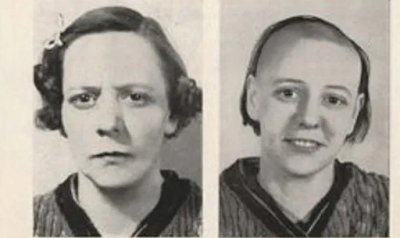
Lobotomized woman
Cussy's exemplary work as prison librarian earns her a brief furlough. Mrs. Effie Claxton, director of the Western Colored Branch Library in Louisville, Kentucky, wants to start a literacy program so more Black people can register to vote. Mrs. Claxton asks Warden Sanders for assistance, and Cussy is sent to stay with the Claxtons and help teach local residents to read and write.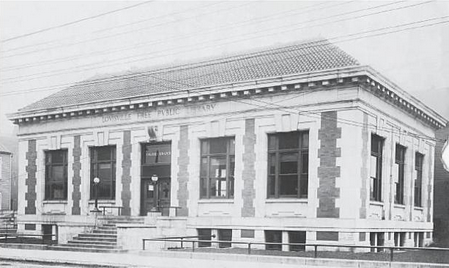
Western Colored Branch Library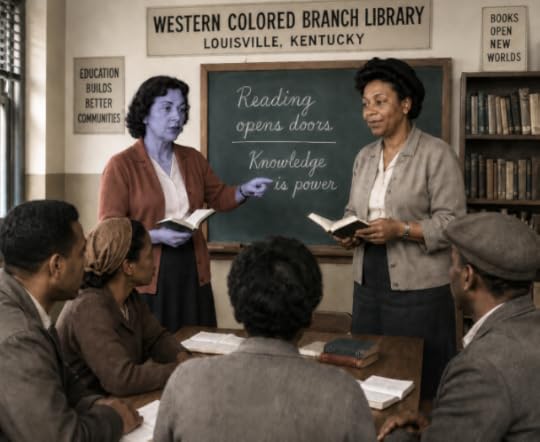
I need to be circumspect to avoid spoilers, but I can say Mrs. Claxton and Cussy embark on a road trip, and Cussy gets her introduction to the Green Book and sundown towns. The Green Book is 'The Negro Motorist Green Book', a travel guide for African Americans during segregation, and sundown towns exclude Black people after dark.
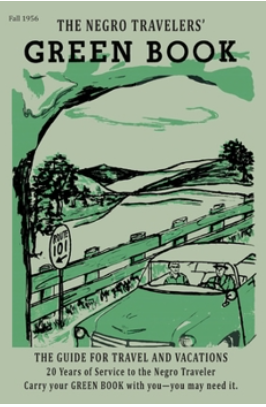
Sundown communities enforce segregation with intimidation and violence, and Mrs. Claxton and Cussy have an unfortunate experience when they need to fill the car's gas tank.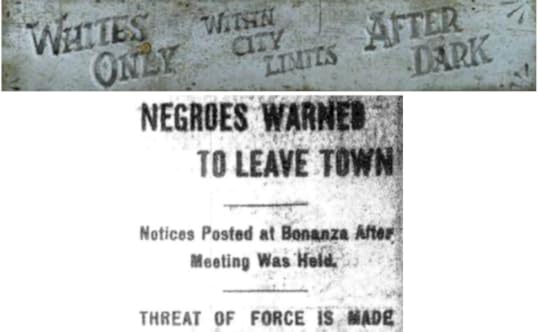
To Cussy's surprise, Mrs. Claxton explains that Black people even keep chauffeurs' hats and maids' uniforms in their car trunks, to don when they need to drive through 'hostile territory'.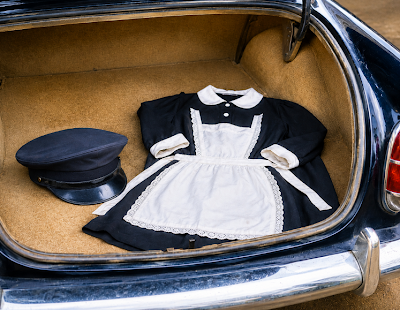
Through all this, Cussy desperately misses her husband Jackson and daughter Honey. Sadly, Cussy can't even write them letters for a time, because - until Cussy makes extra money as the prison librarian - she can't afford the 3-cent stamps.
As the story proceeds, we follow along as Cussy and her husband Jackson are out of prison, but can't live in Kentucky because Jackson is banned from the state for 25 years. The couple's peregrinations eventually take them to Detroit, Michigan, where industrialization, crowding, and crime contrasts with beautiful rural 'Kaintuck' where they grew up and which they miss with all their hearts.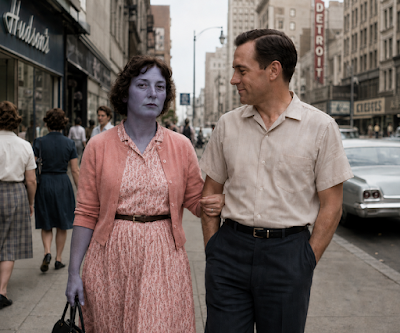
For me, the most interesting parts of the novel are the chapters about the Kentucky State Reformatory for Women. The 'rights' of the prison to lobotomize inmates, and enforce eugenics laws by forced abortions and sterilizations is appalling. The story of a death row inmate, who's in prison because she killed two husbands who regularly beat her, also tells us something about society in the mid-20th century. (Note: In 1967, the U.S. Supreme Court ruled that miscegenation laws are unconstitutional.)
The book has a recipe for Old West Walnut Street Chile with Tamales, a new dish for Cussy that she finds delicious.
I found the novel compelling and enlightening. Highly recommended.
I listened to the audiobook narrated by Katie Schorr, who does a fine job.
Thanks to Netgalley, Kim Michele Richardson, and Sourcebooks Audio for an ARC of the book.
Rating: 4 stars

No comments:
Post a Comment