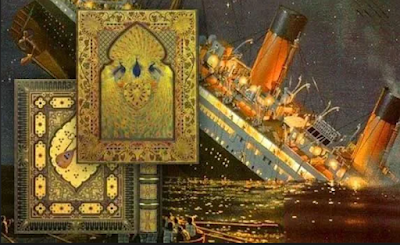
This 5th book in the 'Holland Family Saga' focuses on Bessie Mae Holland, a smart, brave, righteous teenage fireball. The book works fine as a standalone.
*****
It's 1914, and fourteen -year-old Bessie Holland is living on a Texas ranch with her sixteen-year-old brother Cody and her father Hackberry.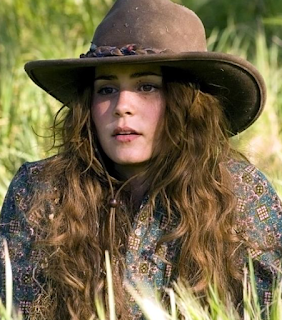
Hackberry's other children have long since scattered to the winds and disappeared, driven away by Hackberry's behavior and negligence.
Before liquor got him, Hackberry was a Texas Ranger, a rodeo star, and a hero in the state of Texas.
Now - when he's home - a hungover Hackberry is likely to be found doing backbreaking work on his ranch, unshaved, dressed in his long underwear, canvas britches, colorless boots, and sweat-ringed battered Stetson hat. Bessie observes, "I cannot believe the degree to which he punished his body and still managed to do the physical labor of an elephant. I always had the feeling he nursed his pain in order to absolve himself of the great harm he had done to his family, particularly my mother, who bore him one child after another until she died in a wagon trying to make the hospital."
To make thing's worse, Hackberry's gambling debts and tax arrears have put the ranch in jeopardy.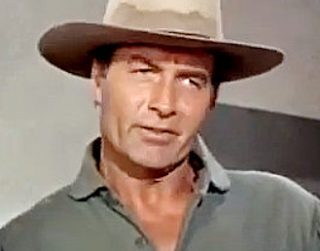
Bessie is also distressed by Hackberry's weakness for women. "He wasn't just a womanizer, he had them on the brain all the time, drunk or not, every race, thin as clothes hangers or fat women who ate Goo-Goo Clusters around the clock." Bessie especially dislikes Hackberry's friend, Bertha Lafleur, a wealthy madam who visits the ranch sometimes. Hackberry and Bertha met years ago, when Hackberry was a Texas Ranger and rescued Bertha from sadistic cowboys who were tormenting her. The cowboys ended up dead.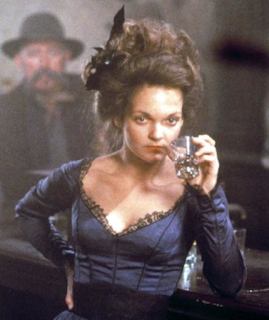
In truth, the Hollands are a brutal family. Hackberry's father was Sam Morgan Holland, a violent man who rode the Chisholm Trail and shot and killed nine men, and Hackberry followed in his footsteps. Bessie knows that Hackberry and his friends still carry guns, though they're no longer lawmen, and have no remorse about taking a human life if they consider it legal.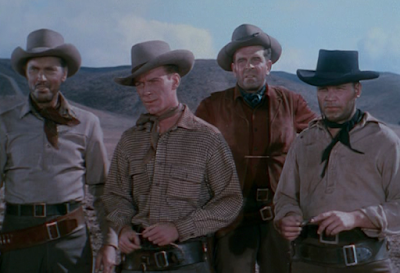
The drama in this book starts with a fight. Bessie's brother Cody.....
.....beats up Jubal Fowler, the roughest boy in the schoolyard, for peeking at Bessie in the outhouse.
Jubal retaliates by shooting a marble into Cody's eye with a slingshot. A furious Hackberry goes to confront Jubal's white trash father at his job in the slaughterhouse, and Bessie goes along. Things go sideways, and Bessie ends up shooting Mr. Fowler twice, and injuring him badly.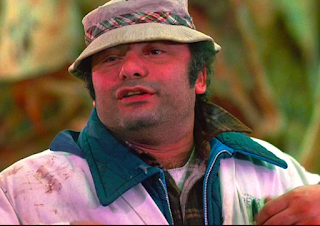
When Bessie is arrested for shooting an unarmed man, a spirit called Mr. Slick comes to the rescue. Mr. Slick tells the sheriff he saw Mr. Fowler hide a gun after the kerfuffle, and lo and behold, the sheriff finds a gun - a weapon planted by Mr. Slick.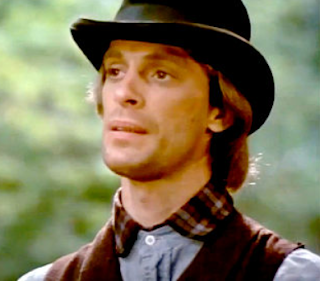
Mr. Slick is a unique spirit. He's solid rather than ghostly, he eats and sleeps and so on, and he's always visible to Bessie. Other people, though, may or may not see Mr. Slick. Bessie also has a mystical connection with a girl who was raped and murdered years ago, and whose body has never been found.
In addition to Mr. Slick, Bessie is friendly with the schoolteacher, Miz Ida Banks. The school's textbooks are tattered, dirty, and useless, so Miz Banks brings her classics to school and reads to the class - works by Hawthorne, Homer, Keats, and Emily Dickinson.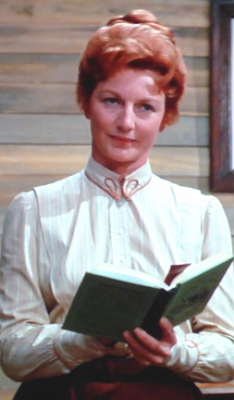
Miz Banks is a spinster, a northerner and a suffragette, and she rubs local politicians the wrong way. Thus she's fired, and newspaper editorials rail about the 'filth' being taught in Texas schools. However Bessie admires Miz Banks and wants to be like her and to have her knowledge and manners.
James Lee Burke's villains are always repellent scum, and in this book we have crooked sheriffs, devious lawmen, and bigoted misogynistic riffraff. The worst offender is evil sadistic Indian Charlie (so called for killing Indians), who has a grudge against Hackberry from way back. Indian Charlie is bent on vengeance, and is further inflamed when drugs, money, and oil wells enter the scene.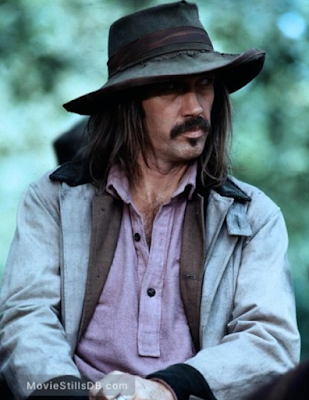
As events progress, teenage Cody leaves Texas for New York City, where he lives on Manhattan's Lower East Side, works in a boxing gym, and hangs out with a rough crowd. After Bessie experiences a violent incident in Texas - and Hackberry goes off to fight Pancho Villa and Mexicans - Bessie joins Cody in New York.
There Bessie befriends several young boys - Benny Siegel, Meyer Lansky, and Owney Madden - who will grow up to be infamous gangsters.
(Note: Bessie also meets Davy Crockett in this book, when he's on the way to the Alamo, and Bessie makes fun of his coonskin cap.)
Trouble in New York sends Bessie back to Texas, where the Hollands' get involved in the oil business, teenage Bessie starts a film company, and the Hollands' problems with Winthrop Fowler and Indian Joe escalate.
The story is replete with violence of all kinds: shootings, beatings, rape, hangings, torture, arson, murder, etc.....and Bessie does what she feels is necessary. That aside, Bessie is a VERY smart Baptist girl who's unfailingly polite. For instance, when Bessie meets a man called Digger Dog, she addresses him as Mr. Dog. Bessie is also well-read, quotes literature and the Bible, and wields her tongue like a sword. Besse's put-downs are apt (and fun), though the low-lifes she targets often don't 'get it.'
Bessie is a memorable character, and this book is a fine addition to the Holland Saga. The story is compelling and Burke's descriptions of the Texas landscape and New York streets are colorful and detailed.
Burke is a literary treasure, and I highly recommend this novel.
Rating: 3.5 stars