Wednesday, May 24, 2017

Review of "The Dark Forest: Remembrance of Earth's Past #2" by Cixin Liu


This is the second book in a trilogy that starts with The Three-Body Problem.

As The Dark Forest opens a large fleet of hostile Trisolaran aliens is headed for Earth, destined to arrive in 400 years. Presumably this is when the 'Doomsday Battle' will occur between the human race and Trisolarans.



Humans are aware of the danger but are hampered in making preparations because the aliens have sent 'sophons' to spy on Earth. Sophons are souped up protons that (due to quantum physics) can INSTANTANEOUSLY transmit every single thing humans say and do to the Trisolarans.


Thus, the aliens can 'hear' all discussions about how to combat them and 'see' all weapons being developed. To make matters even worse, the sophons have blocked technological advancements, curtailing Earth's ability to develop the most effective/advanced weapons systems.

The Trisolarans one weakness is their inability to read human minds. Thus, the United Nations institutes the 'Wallfacer Project' in which four individuals - called Wallfacers - are instructed to develop a strategy to fight the Trisolarans.

The Wallfacers are:

Frederick Tyler, former U.S. Secretary of Defense.



Manuel Rey Diaz, former President of Venezuela.



Bill Hines, Nobel Prize-winning Neuroscientist.
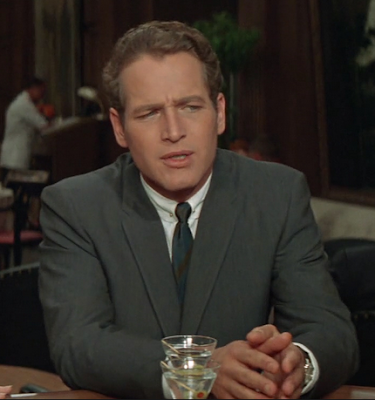


Luo Ji, Astronomer.
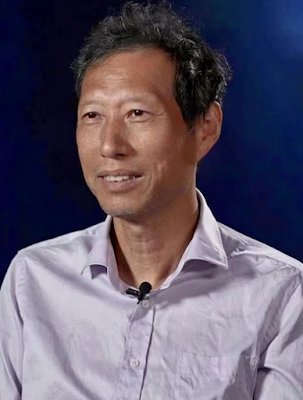


Each Wallfacer is to work alone, write nothing down, and use evasive measures to flummox the Trisolarans. The Wallfacers have almost unlimited resources with very little accountability, so they can do pretty much whatever they want. And Wallfacer Luo Ji seems more concerned with having a comfortable life in a beautiful isolated home than with fighting the Trisolarans.



The Trisolarans, in turn, designate four humans sympathetic to their cause to be "Wallbreakers" - whose mission is to sabotage the Wallfacers' plans.


The Wallfacers are very clever and inventive, but the Wallbreakers are pretty smart too. (The author has clearly done a lot of research for these books.)

Around the time this is going on some humans - including people with serious illnesses, a couple of Wallfacers, and various professionals - are put into hibernation. The plan is to awaken them at a later time when they can be cured and/or be useful to humanity.


Skip ahead two hundred years. Some hibernators have been revived and Earth looks very different. There are well-designed underground cities as well as large fleets in space, which are now considered to be separate 'countries.'



The Trisolaran fleet is due in two centuries, but the aliens have launched a fast 'probe' which will arrive any day.



Oddly enough, people seem to be relatively optimistic. Some think humanity will win the Doomsday Battle while others believe the Trisolarans might turn out to be friendly. Surprises abound after the probe enters the Solar System, and things take a rather dramatic turn...all very exciting.



There's a good deal of philosophical underpinning to some of the plot developments. For example, 'escapism' - the plan to launch some people into space to preserve the human race (just in case) - is outlawed, presumably because there's no fair way to decide who will go. Is this right?

And when there are limited resources and too many individuals, what should be done? And IF the Trisolarans are defeated, should alien survivors be treated in a 'humane' fashion? (This debate reminded me of American Indian history as well as the movie 'District 9.') All things to think about.



I found the story a bit dense and slow-moving - with few important female protagonists - but overall I enjoyed the book, which is full of inventive ideas and interesting characters. I don't think it's giving away too much to say that - at the end of book 2 - there are still humans and Trisolarans. I'm interested to see what happens in the final volume of the trilogy.

I read the book and listened to the audiobook, narrated by P.J. Ochlan, who does a fine job.

Overall, I'd highly recommend this series to science fiction fans.

Rating: 4 stars 

Sunday, May 21, 2017

Review of "Thrice the Brinded Cat Hath Mew'd: A Flavia de Luce Mystery" by Alan Bradley


In this eighth book in the 'Flavia de Luce' series, the 12-year-old budding chemist and amateur detective is sent home to England from Miss Bodycote's Female Academy.


Though the story could be read as a standalone, it would be better to have read at least a few of the previous books - to fully appreciate the characters.

*****

Flavia is sent home from school because her father, Colonel Haviland de Luce, is in the hospital with pneumonia. Flavia's sisters (Ophelia and Daphne)......


.....and cousin (Undine) are at Buckshaw - the house Flavia's mother left her.


All the girls are being looked after by Dogger (the caretaker/guardian), and Mrs Mullet (the culinarily challenged cook).


When Flavia is asked to do an errand for the vicar's wife, she discovers the dead body of ecclesiastical wood-carver, Roger Sambridge, hanging upside-down on his bedroom door.


Most people would be put off by such a discovery, but Flavia is thrilled. She adores solving murders, and hopes to get the jump on Inspector Hewitt - whom she considers her competitor in the crime-solving arena.


Flavia examines the body and the contents of the room, being careful not to leave fingerprints. Her investigation reveals a lottery ticket and a set of children's books by deceased author Oliver Inchbold. Moreover, one of the books is inscribed to Carla Sherrinford-Cameron, a girl Flavia knows.


When Flavia leaves the house she sees a curtain twitch across the street, and knows she's been seen. So Flavia hustles back to the vicarage, and - pretending to be distraught - announces Sambridge's death.

The wood-carver's demise is considered suspicious and Flavia uses all her 'abilities' - sneakiness, lying, impersonation, chemistry knowledge, etc. - to try to identify the perpetrator. Some of Flavia's escapades stretch credibility - like when she passes herself off as a biographer to a London publisher (a 12-year-old kid.....really??) - but this is a humorous cozy after all.


During her inquiries Flavia asks Carla about the inscribed book at the crime scene, and learns that Carla's late aunt, Louisa Congreve, was close to the author - Inchbold. Flavia also learns that Inchbold - whose stories were supposedly about his adorable young son - was actually abusive to the boy.

Further investigation discloses that the house with the twitching curtain belongs to Lillian Trench, who's reputed to be a witch.


Flavia is warned to stay away from her - but of course she does no such thing - and finds an eccentric middle-aged man staying at Lillian's house.....along with a cat! Could this be a diabolical witch's familiar?

It's not clear how all this is connected to the unfortunate victim, Roger Sambridge, but Flavia carries on to discover the truth.

Between investigative exploits Flavia tries to visit her hospitalized father, but Dogger reports that the Colonel is too ill for visitors. So Flavia makes do with Gladys, her bicycle, which she rides everywhere and regards as a friend. According to Flavia, Gladys likes to pretend she's being abducted and takes in the ambiance when she's waiting outside for her owner.


We don't see Flavia do many chemical experiments in this book, though she does fix bacon and eggs in her laboratory, using beakers and such. LOL

I admire Flavia's genius, but she's a bit too conceited to be totally likable (for me). Flavia is just SO gleeful when she's manipulating and fooling people - it puts me off. Still, it's fun to read about Flavia's investigations; her sisters and their beaus; Mrs. Mullet's not-so-tasty meals; and Dogger's devotion to his charge. I'll be interested to see what Flavia does in the next book.

I'd recommend the book to fans of Flavia de Luce.

Rating: 3.5 stars

Thursday, May 18, 2017

Review of "The Hanging Girl: A Department Q Mystery" by Jussi Adler-Olsen


In this 6th book in the 'Department Q' series, Detective Carl Mørck investigates a murder that occurred 17 years ago.

*****


Detective Carl Mørck heads Department Q of the Copenhagen Police Department. Department Q, a sort of orphan division that investigates cold cases, is confined to a cramped basement and staffed with police oddballs, including Carl's invaluable assistants Assad and Rose.


Carl, who was gravely injured in an incident that killed one colleague and paralyzed another, prefers to laze around, drink coffee, nap, and avoid work. Thus, when Detective Christian Habersaat asks for assistance with a 17-year-old cold case involving the death of a beautiful girl named Alberte, Carl refuses.


Habersaat, whose life was ruined by his obsession with the case, commits suicide the next day. Rose is horrified and bullies Carl into investigating Alberte's death.

Carl and his colleagues gather Habersaat's massive collection of 'Alberte files' and painstakingly go through them. They eventually find a poor, grainy photo of a man beside a van and expend great effort to discover who the man is and how he was connected to Alberte.


During their inquiry the detectives speak to Habersaat's family and colleagues, and to Alberte's relatives, friends, and teachers. Many of these people are oddly hostile and uncooperative.

A parallel story line involves a nature-worship cult headed by a charismatic leader called Atu Abanshamash Dumuzi - a man who's oddly irresistible to women.


This has unfortunate consequences because Atu's assistant Pirjo carries a huge, unrequited torch for him and will do anything to get rid of the competition.


For me, this book isn't as successful as previous books in the series. The plot is disjointed and Department Q's inquiries are too drawn out and tedious. I also feel that the characters aren't as engaging as usual. Assad - with his warm heart, confusion with idioms, crazy driving, and intuitive detective work - is still a fun, memorable character.


Rose, however, doesn't exhibit her usual kooky, multiple personality traits and Carl's interactions with his friends, colleagues, ex-wife, and ex-stepson aren't as compelling as usual. Moreover, many of the ancillary characters are too self-centered or psychopathic to be sympathetic.


The book can be read as a standalone but readers unfamiliar with the previous books may be confused about some characters and situations. All in all this is a pretty good mystery with lots of unexpected twists. The story ends with a dramatic climax that leads to a satisfactory conclusion. I'd recommend the book to people who like mystery books, especially fans of Jussi Adler-Olsen.

Rating: 3 stars

Tuesday, May 16, 2017

Review of "The Secrets of My Life: A Memoir" by Caitlyn Jenner


Note: In my review of this memoir I'm going to follow the author's lead, using male pronouns for Bruce 'pre-transition,' and female pronouns for Caitlyn 'post-transition.' I also want to note that - though I've seen the odd episode - I don't watch 'Keeping Up With the Kardashians', haven't read the Vanity Fair article about Jenner, and don't follow the innumerable stories about Jenner in the media.


In 1976 Bruce Jenner won an Olympic gold medal for the decathlon, earning the title 'World's Greatest Athlete.' In photos, it's clear the champion was well-built and movie-star handsome.


Bruce Jenner won an Olympic Gold Medal for the Decathlon

No one would have guessed that Bruce hated his body, feeling he was stuck with the wrong (male) physique. Almost forty years later, in 2015, Bruce publicly transitioned to his true female gender, becoming Caitlyn Jenner. In this book Caitlyn tells her story.


Caitlyn Jenner after her transition

From the time he was in elementary school, Bruce felt like something was wrong with him. He was dyslexic, with "massive reading difficulties", and dreaded going to school.


Bruce Jenner when he was a child

He was also drawn to female attire and - when alone in the house - would put on his mother's dress, slip on his sister's shoes, apply a dab of lipstick, and gaze into the mirror.....feeling "something was right about this."


At that time, in the 1950's - the word 'transgender' was far in the future - and Bruce had no vocabulary to describe his compulsions. Thus he was bewildered, uncomfortable, and intensely secretive.

Bruce soon discovered he was a gifted athlete and threw himself into sports, in part to distract himself from his gender concerns. As a youth Bruce took up water-skiing, basketball, football, and track and field - becoming a high school star.


Bruce Jenner was a high school athlete

It was at Graceland College, though, where Bruce set his sights on the decathlon. With the strong encouragement of college Coach L.D. Weldon, Bruce started to train for the ten decathlon events: the 100 meters, the long jump, the shot put, the high jump, the 400 meters, the 110-meter hurdles, the discus, the pole vault, the javelin, and the 1,500 meters. According to the author, "You can lose yourself in that [practice]. Whatever thoughts you have inside don't go away, but they do go numb."


Bruce Jenner was a college athlete

At Graceland College Bruce met his first wife, Chrystie Scott, who supported him emotionally and financially as he trained to be a world class competitor.


Bruce Jenner and his first wife Chrystie Scott

In secret, Bruce would don his wife's clothes, and when Chrystie discovered this in 1973, Bruce told her about his gender issues. Chrystie was shocked, but Bruce (disingenuously) told her it was 'a phase', and matters were left like that as Bruce continued training.

Once Bruce won the gold medal at the Montreal Olympics, he had many financial opportunites: he became the 'face' of Wheaties; appeared on talk shows; did a special with Bob Hope; dipped a toe into movies and TV series; became a broadcaster for a number of network sports shows; and traveled around the country giving motivational speeches.


Bruce Jenner was the face of 'Wheaties'


Bruce Jenner on the television show 'CHiPs'


Bruce Jenner in his first movie 'Can't Stop the Music'

For various reasons - including his gender dysphoria - Bruce and Chrystie grew apart and separated. Attempts at reconciliation failed, and the couple divorced in 1981, leaving their son and daughter - Burt and Casey - essentially fatherless.


Bruce Jenner with his children, Casey and Burt

Meanwhile, Bruce met Linda Thompson, an actress and songwriter who happened to be Elvis Presley's former girlfriend. Bruce and Linda dated for several years, married in 1981, and had two sons - Brandon and Brody.


Bruce Jenner and his second wife Linda Thompson

While married to Linda, in the early 1980s, Bruce was "struggling with the issue of [his] identity more than ever." The author writes about those years, "I seek every opportunity I can to cross-dress" and "[I] get my hands on a couple of wigs." Fearing Linda would catch him, Bruce told her that he identified as a woman. She didn't understand, was shocked to see him in female mode, and their marriage ended shortly afterward. Once again, Bruce essentially abandoned his children.


Bruce Jenner was largely an absentee father to his children

Bruce was very unhappy by the mid-1980s, so he isolated himself in a small house in Malibu and lowered his public profile. Bruce started seeing a therapist named Trudy Hill and got electrolysis - a long term, painful procedure - to permanently remove his facial and chest hair. Bruce's trusted friend, Wendy Roth, helped him purchase women's clothing and wigs. Bruce also started hormone therapy, which gave him womanly breasts. Jenner writes, "Obviously.....when you have your beard removed and the effects of hormones kick in, people are going to notice."


Bruce Jenner started to look more feminine

In addition, Bruce sometimes ventured out and drove around dressed as a woman. The writer states about that era, "I am now almost forty. I feel good....[having] allowed the woman inside me to live and breathe." BUT, Bruce greatly feared discovery - afraid of what his kids would think and doubtful of obtaining employment if he was exposed.

Feeling he needed to bring 'Bruce Jenner - Olympic champion' back into the public eye, Bruce discontinued hormone therapy in 1990 and started dating Kris Kardashian, who was in the middle of a divorce. Bruce and Kris married in 1991, and - according to the author - had a loving, sexual relationship (at first).


Bruce Jenner and his third wife Kris Kardashian

Jenner notes that Kris knew about his cross-dressing and permitted it.....but not at home. Thus, Bruce packed wigs, make-up, and womens' outfits when he went out of town for promotional talks, and dressed up in his hotel at night. He would then walk through the lobby and go for a drive wearing ladies' garments.....a terribly risky venture.

According to the author, Kris got him back in the gym and 'helped restore his image and credibility.' She also reveled in being married to a high profile celebrity. For his part, Bruce was a caring stepfather to the Kardashian kids - (Kim, Kourtney, Khloe, and Rob) and a devoted dad to his two daughters with Kris (Kendall and Kylie).


Bruce Jenner was close to all the Kardashians

In recent years, Jenner - who openly admits to being a terrible father to the first four Jenner children - reached out and established affectionate bonds with them as well.


Bruce Jenner with his grown sons Brody and Brandon


Bruce reconnected with his grown children Burt and Casey

Bruce, Kris, and their brood rubbed along pretty happily until 'Keeping Up With the Kardashians' - which debuted in 2007 - became a runaway hit. Jenner observes that he was depicted on the show as, "....the well-meaning but confused and helpless father and husband. I get love but little respect." Jenner also observes, "I believe that the more successful [the show] becomes, the less [Kris] needs me and "[it's] more obvious.....that Kris wants me out of the house as much as possible." Moreover, the scads of people in the house during the show's filming afforded Bruce little privacy - and he was desperately lonely amidst the crowd.


The television show 'Keeping Up With the Kardashians' became a hit

By 2013 Bruce had separated from Kris and moved into a house in Malibu. He had a tracheal shave, to reduce the size of his Adam's apple and - despite elaborate efforts at secrecy - was exposed on TMZ....to his great embarrassment.


Bruce Jenner was exposed as being transgender

Bruce contemplated suicide at this time, but spoke to his pastor and rallied. By 2015, Bruce decided to make the transition to female. At the time, the author contemplated, "How am I going to do this without being subjected to even more worldwide ridicule than I already have been? The idea of a man becoming a woman is still shocking and weird to people, ghoulishly funny."

Thus, Bruce contacted his former publicist, Alan Nierob, who arranged for an interview with Diane Sawyer and an article in Vanity Fair magazine - both respected forums in which Bruce would tell the world he was becoming Caitlyn.


Bruce/Caitlyn Jenner was interviewed for Vanity Fair magazine


Caitlyn Jenner on the cover of Vanity Fair magazine

Prior to the publicity, Bruce confided his plans to his family - sister, mother, children, and step-children - and to his management team.....all of whom expressed support (though Bruce suspected not everyone was completely sincere).

The author thought, "I want to look as physically a woman as I possibly can" and went on to have facial feminization surgery, a breast augmentation, and "The Final Surgery"
- a vaginoplasty (conversion of penile tissue into a vagina).

Towards the end of the book, Caitlyn writes, "I have written this book to help us see that there is no right way to be, no wrong way to be, or any way to be except who you are." Caitlyn talks a great deal about her support of the LGBTQ community, especially transgender individuals - who experience frequent discrimination....and even violence. Caitlyn knows that her position as a high profile transgender person gives her a platform to try and effect change.


Caitlyn Jenner supports the LGBTQ community

For people interested in the 'dishier' parts of the book, here are a few tidbits:
- During his motivational speeches, Bruce dressed in a suit and tie.....but had a bra and panties on underneath.
- Jenner says about O.J. Simpson, "[Knowing him] a litle bit goes a very long way because of his endless braggadocio" and "[O.J.] is the most narcissistic, egocentric, neediest, asshole in the world of sports I had every seen." Jenner believes O.J. murdered Nicole Simpson and Ron Goldman, and asserts that Kris's ex-husband, Robert Kardashian - one of O.J.'s lawyers - wouldn't have minded if O.J. was convicted.


Bruce Jenner with OJ Simpson

-Kris controlled all the money during their marriage (though she generously bought Bruce a Porsche) and scrutinized his credit card purchases with a fine tooth comb.
- Of the Kardashian clan, Kim is the most accepting of Caitlyn's transition, while Khloe is having the most difficulty with it, and barely speaks to her stepfather. (Caitlyn notes that she told her kids it's fine to call her 'dad.')
-Caitlyn is not particularly interested in sex with either women or men.
-Caitlyn is a lifelong Republican, though that party is not renowned for its open-mindedness towards LGTBQ issues. (On her Instagram, Caitlyn takes Donald Trump to task, telling him to 'call her.')
-Rumors that Caitlyn regrets making the transition are a complete lie.


Caitlyn Jenner doesn't regret her transition

I read this book out of curiosity. I had seen Caitlyn promoting the book on morning TV and read an excerpt in People magazine....so when I saw the book on the 'new arrivals' shelf at the library, I snagged it. In my opinion, this is a sincere depiction of Caitlyn's experiences as she remembers them. Caitlyn's story is compelling, and helped me better understand people who have gender dysphoria. I felt great empathy when Caitlyn talked about her shame, fear, loneliness, and isolation - which reverberated through the years and affected every relationship she had. I hope Caitlyn's story provides help and comfort to people who have issues similar to hers.

That said, the book's writing (I assume by co-author Buzz Bissinger) is on the lower end of adequate and the story includes a lot of fluff and padding. Still, if you have an interest in (or are curious about) the subject, you'll find something here.


Rating: 3 stars