Rabbi Dr. Leon Weissberg is a renowned Jewish educator specializing in Holocaust studies, and the former director of the March of the Living for the Southern Region and Miami-Dade County.
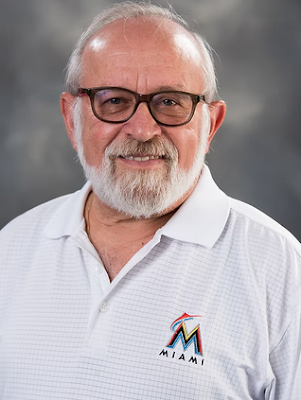
Rabbi Dr. Leon Weissberg
Weissberg's journey from being the son of Holocaust survivors to being a leader of the March of the Living (MOL) - an educational program that brings individuals to Poland and Israel to study the history of the Holocaust and the roots of intolerance and hatred - is inspiring. Weissberg attributes his journey to Divine Providence and writes, "This book is about how I've come to understand that throughout my life, I was driven by the Divine to be where I am today."
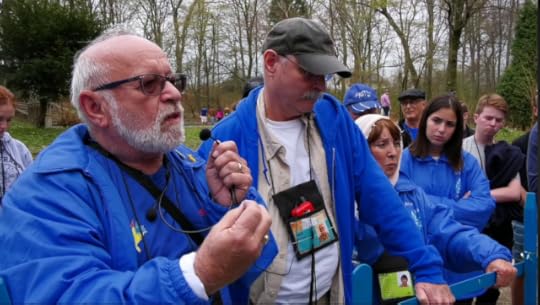
Rabbi Dr. Leon Weissberg on the March of the Living Southern Region in Tarnow, Poland (2018)
Weissberg's parents, Sam Wajsberg (Weissberg) and Eva Krufka, were Polish Holocaust survivors who resided in a displaced person's (DP) camp in Landsberg, Germany after the war. Leon was born in the DP camp in 1946, and his mother died a few months later. Sam then joined his brother in Paris, where he met and married an Auschwitz survivor named Vickie Baruch. Sam and Vickie soon had a son Albert, and the family of four lived in France until 1951, when they emigrated to America. There the Weissbergs settled in Bronx, New York, in a neighborhood containing other Jewish immigrants.
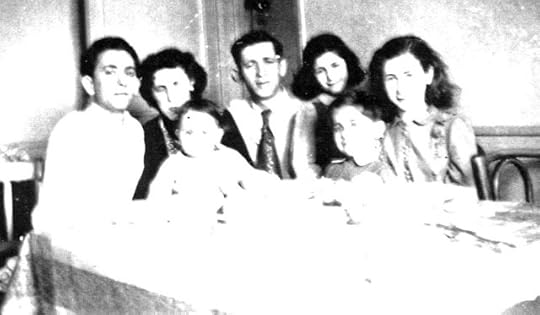
Three-year-old Leon (right) with parents Sam and Vickie and baby brother Albert (left) in Paris
Leon was ambitious from a young age, thinking of a career as U.S. Ambassador to France. This wasn't to be, however, and after attending Yeshiva Salanter, a strict Orthodox Jewish school, Leon dreamed of becoming a rabbi. It took almost seven decades, but Leon achieved his goal.
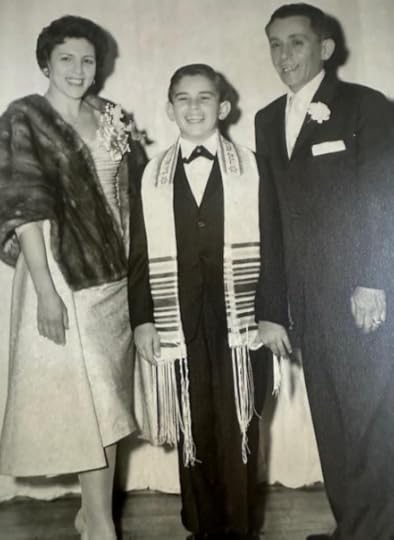
Leon's Bar Mitzvah picture with his parents Sam and Vickie
Harking back to his youth, Leon writes about attending yeshiva, then public school; achieving star status in the Boy Scouts; playing the saxophone in his Christopher Columbus high school band, and proudly marching in the Columbus Day Parade on Fifth Ave; forming a musical group called the Five Basics, which played at Bar Mitzvahs and parties; and working as a summer camp counselor, where he enjoyed interacting with the children.
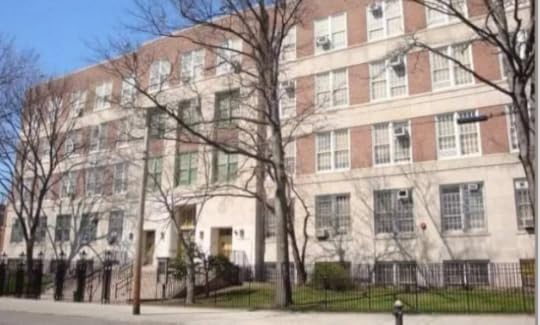
Christopher Columbus High School in Bronx, New York
Weissberg graduated from Baruch College during the Vietnam War, and set out to find work that would exempt him from the draft. Following several disappointing job searches, Leon’s wife Toni - who taught at PS 46 in Harlem - said she could help him get a position there. Though Leon wasn't trained to be an educator, he was hired to teach 4th grade, and being an inner city schoolteacher garnered an automatic military deferment.
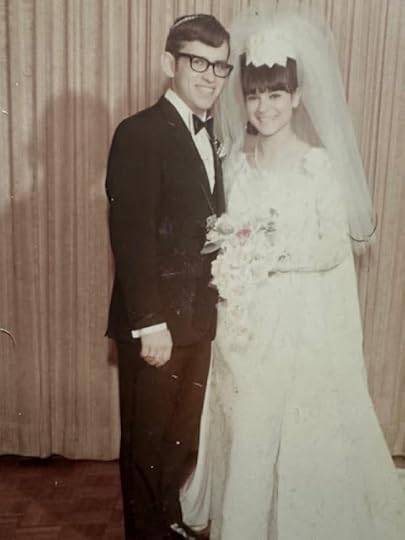
Leon and Toni Weissberg in their wedding photo

PS 46 in the Harlem neighborhood of Manhattan
The principal of PS 46 brought in a master teacher named Nettie Messinger to instruct the new hires, and Weissberg acknowledges, "Over the course of the next few months, with tremendous assistance in planning from Toni and teaching skills from Mrs. Messinger, I won over the class and truly became their teacher." Leon, who already spoke English, French, Hebrew, and Yiddish, even took a Spanish class to communicate with his pupils' parents.
Weissberg realized he loved teaching, and writes, "This was literally a godsend....I have come to the conclusion that Toni and God had masterminded a brilliant scenario for me." Weissberg determined that God's plan was for him to stay in education, and over the years he earned graduate degrees in Public Administration; School Administration and Supervision; Jewish studies; and a doctorate in Education.
Later, Weissberg proceeded to teach at a Reform congregation in New Jersey, and then to become the school administrator for a Jewish Day School in Hollywood, Florida. From there, Weissberg moved on to other administrative and teaching jobs, including head of school for the Donna Klein Jewish Academy in Boca Raton, Florida.

Students at the Donna Klein Jewish Academy in Boca Raton, Florida
In time, Weissberg developed a particular interest in researching and teaching Holocaust studies, and with his wife Toni, developed curricula in that area. Weissberg observes, "At this writing, my teaching career has spanned fifty-two years. During that time, God saw to it that I was exposed to many different teaching venues in order to hone my skills and develop my character as an educator specializing in Judaica. What started out as a method of avoiding the Vietnam War became my raison d'etre."
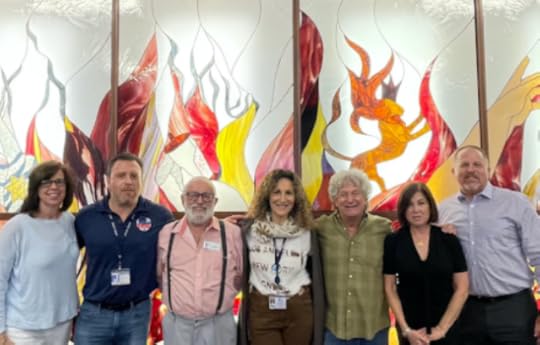
Holocaust learning center at Posnack JCC in Davie, Florida. Rabbi Dr. Leon Weissberg is third from the left
In the course of time, Weissberg - who grew up in a 'casually observant' Jewish home - also deepened his Jewish faith. After starting their family, Leon and Toni decided to follow the precepts of Conservative Judaism, which included keeping kosher, observing the Sabbath, and regularly attending synagogue services.
Weissberg also studied Torah, and shared his learning with colleagues, students, and parents. Weissberg notes, "In recent years, spirituality has become a more and more important part of my existence....spirituality to me is about seeking a meaningful connection with something greater than myself, which results in positive emotions including acceptance, peace, contentment, gratitude, and awe."
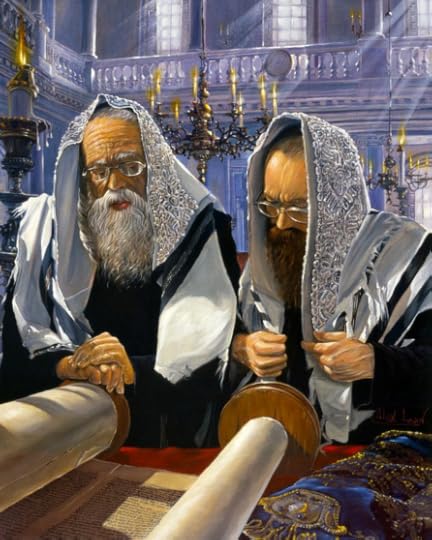
Jewish Painting: Torah Reading by Alex Levin
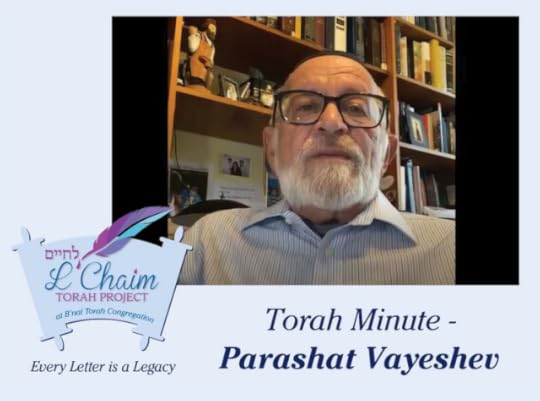
Torah Minute - Parashat Vayeshev with Rabbi Dr. Leon Weissberg
The March of the Living was started in 1987, by individuals who wanted to teach the Holocaust to high school students by taking them to Poland to visit the relevant historical sites, and then on to Israel to celebrate Israel's Memorial Day and Independence Day. Weissberg got involved with the MOL early, and recalling a trip in 1994, Leon observes, "It was an amazing sight to see, as Jewish teens from more than 30 countries joined together for an amazing Holocaust memorial ceremony. At the culmination of the ceremony, everyone is asked to stand and join in the singing of Israel's national anthem 'Hatikvah.' Hearing the thousands of voices singing that song was an emotional moment for everyone, but no more than me. I couldn't control my tears. It was spectacular."
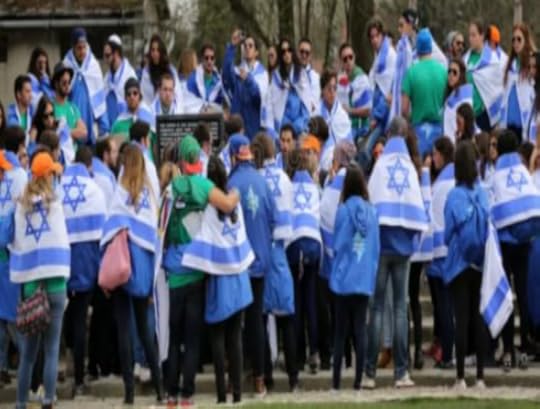 March of the Living at the Auschwitz-Birkenau concentration camp in Poland (2015)
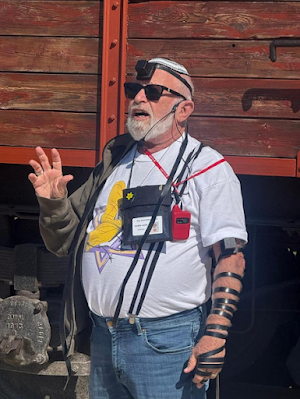
Rabbi Dr. Leon Weissberg wearing tefillin at the Auschwitz concentration camp
For Weissberg, the MOL heightened his interest in Holocaust education. Leon taught Holocaust classes to both children and adults, and - with many others - developed a Holocaust curriculum for newly independent Poland, which wanted to teach the truth about the Holocaust rather than Soviet propaganda. After taking thousands of teenagers on the MOL over the years, Weissberg began leading groups of adults on the MOL, with participants from all over the world.
Weissberg credits many people who had a positive effect on his professional and personal life, and especially lauds his wife Toni - an educator and principal who advised, encouraged, assisted, and collaborated with him on all important undertakings.
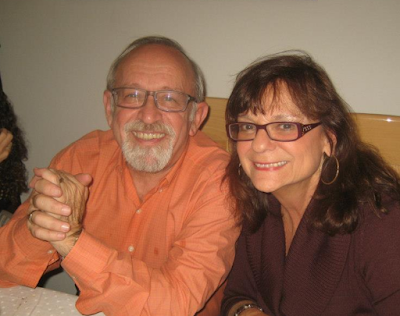
Rabbi Dr. Leon Weissberg and his wife Toni
Leon also expresses deep appreciation for Rabbi Pinny Andrusier, the founder of Chabad of Southwest Broward. Weissberg writes,"Connecting me to Rabbi Pinny was God's way of engaging me into a greater depth of Judaism, and over the course of thirty years with Rabbi Pinny, I became much more engaged in traditional Judaism, following more and more of the Torah's commandments."
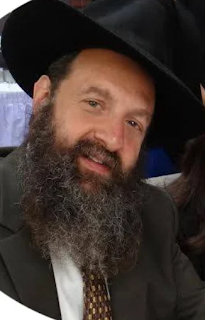
Rabbi Pinny Andrusier
Weissberg's ambition to become a rabbi was realized when he was in his seventies, and applied to be a candidate for rabbinical ordination with Chabad. This required a three-year course of study with Rabbi Nachman Wilhelm, and tutoring from Rabbi Aryeh Schwartz, the assistant at Rabbi Pinny's synagogue. Afterwards, at the age of 74, Rabbi Dr. Leon Weissberg was ordained at a ceremony in Brooklyn, New York, with his family looking on. Weissberg continues to study with Rabbi Pinny every day, reading and discussing Kabbala and Talmud scripts.
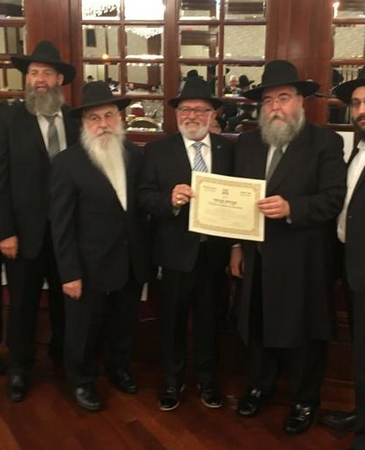
After 3 years of studying, Rabbi Dr. Leon Weissberg (center) was granted “Smicha” (ordination) from Chabad
Weissberg's wife and daughters are blessings in his life, and all family members maintain they're one another's keepers. In a touching anecdote, Leon writes, "When my wife came down with Covid [and was hospitalized], our daughters rallied around....Elana made sure that the nurses and staff were taken care of by sending them bagels and cream cheese or pizza pies, as an offering on Toni's behalf. Shari made sure that the doctors and nurses gave Toni 100 percent of their attention and excellent medical care. And the daily blessings I offered God on my wife's behalf are beyond measure....God accepted our blessings such that after four months in the hospital, Toni returned to us."
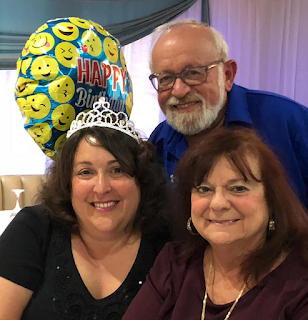
Rabbi Dr. Leon Weissberg with his wife Toni and their daughter Elana
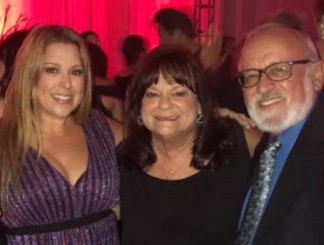
Rabbi Dr. Leon Weissberg with his wife Toni and their daughter Shari
Toni's recovery meant - among other things - that Leon and Toni could continue their world travels. Weissberg notes, "During much of our life together, Toni and I made a point of traveling the world, particularly to where Jews lived throughout history....Some cities, particularly in Europe, had many Jewish sites, while others had few if any.....We came to learn just how much Jews in those remote cities maintained their connections to the Divine by building synagogues, observing rituals and raising Jewish children despite discrimination, animosity, antisemitism, and many other anti-Jewish behaviors."

Synagogue in Porto, Portugal
Sadly, anti-Jewish behavior continues to be a scourge, and Weissberg is outraged at the murder of 1,400 men, women, and children when Hamas invaded Israel in October, 2023. Weissberg believes the Torah advocates extreme measures in these circumstances, and concludes by saying, "What will happen? Who knows? God knows, And God has given us a direction. We need only see it, hear it, understand it, and act upon it. This is my prayer for the future of Israel and the Jewish people. That we simply and humbly abide by God's word."

Tel Aviv, Israel
Weissberg's heartfelt story is especially meaningful for observant Jews, but could encourage anyone searching for purpose and direction in life. Leon suggests, "Just listen. Listen to what God asks of you. It has made all the difference in the world to me."
Rating: 4 stars