Tuesday, November 25, 2025

Review of "Wild Instinct: A Suspense Thriller" by T. Jefferson Parker


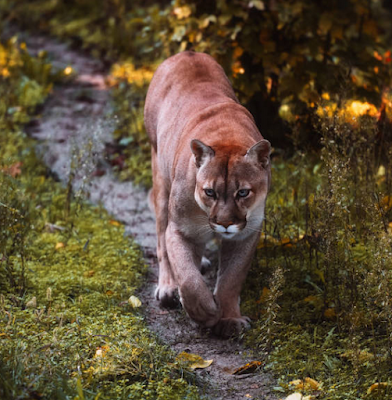
When police in Orange County, California get a radio call about wealthy Bennet Tarlow III being killed and eaten by a mountain lion, the hunt for the beast is on.


The Tarlow Company develops properties across the southwest, and handsome Bennet Tarlow III's picture......



.....usually with a beautiful woman, is often seen in newspapers and magazines.



Detective Lew Gale is sent to help track the murderous mountain lion in Caspers Wilderness Park, where Tarlow was killed.


Before the animal is found, though, an autopsy reveals Tarlow was shot in the head twice, and the mountain lion chewed but did not kill him.

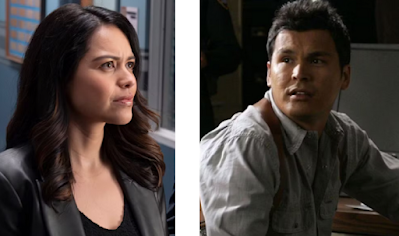
So Detective Lew Gale and his new partner, Detective Daniela Mendez, have to catch a human murderer.



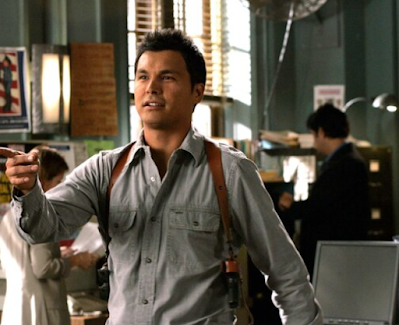
Detective Lew Gale, age 43, is the son of an Acjacheme Indian mother and a Spanish father. Gale was a tracker in New Mexico and a Marine sniper in Afghanistan before becoming a cop, and he has PTSD and drinks too much.


Detective Daniella (Dani) Mendez, age 37, is the single mother of 18-year-old Jesse, a senior at Tustin High School. Lately, Jesse has been hanging out with the wrong crowd, so Dani installed TeenShield on Jesse's phone, to secretly track his whereabouts, emails, texts, etc.



In the course of their inquiries, Lew and Dani learn Bennet Tarlow III was trying to get government clearance for a project called Wildcoast, outside San Juan Capistrano, California. Wildcoast would be a five-square-mile city with single-family homes, condos, apartments, schools, churches, synagogues, mosques, shopping centers, a library, public pools, shopping, dining, an equestrian center, and a small airstrip.



Wildcoast is a controversial program opposed by many people, including Californians who think of Wildcoast as a NIMBY (not in my backyard), and Acjacheme student activist Geronima Mills and her followers - who consider the area their ancestral land.



Lew and Dani follow police procedures to identify a suspect, whom they believe was a hired hitman. But who hired him? The possibilities are legion.



There are startling developments as the investigation unfolds, which (to me) stretch credulity a bit too much.

A large swatch of the novel is about the personal lives of Lew and Dani, which are just as interesting as the investigation.

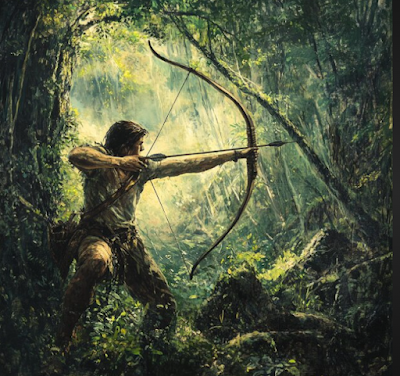
◍◍ Lew lives with his Indian mother and resents his Spanish father, a philanderer who deserted the family. Lew cherishes his Indian heritage, and has a favorite book called 'Blood & Heart' (1815). The book tells the story of Luis Verdad, a 21-year-old Achacheme who's tracking the mountain lion that carried away his young sister. As Lew reads 'Blood & Heart', we get to see scenes from the book.


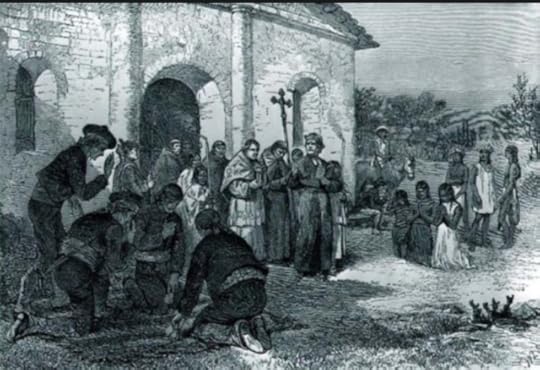
In a corollary storyline, Lew resents the Spanish priests who came to San Juan Capistrano in the 1700s, and decimated the Indian population with conversions, suppression of Indian culture and language, name changes, lashings, confinement, poor diet, diseases, and so on.


◍◍ Dani is an attractive woman with a secret that's affected her entire adult life. Dani is desperate to keep her son Jesse on the right track, and wants him to attend Azusa Catholic College after high school. In Dani's opinion, Jesse has been led astray by his new girlfriend, Lulu Vega, but the boy is infatuated - so what's a mother to do?


An array of interesting characters populate the story, and both Lew and Dani have admirers interested in romantic relationships (but don't worry, this book isn't a romance).

Lew and Dani make a good detective team, and it would be nice to see them in additional books.


I had a digital copy of 'Wild Instinct' as well as the audiobook, narrated by John Pirhalla, who does a fine job.

Thanks to Netgalley, T. Jefferson Parker, and Minotaur & Macmillan Audio for copies of the book.

Rating: 3.5 stars

Saturday, November 22, 2025

Review of "Circle of Days: A Novel" by Ken Follett


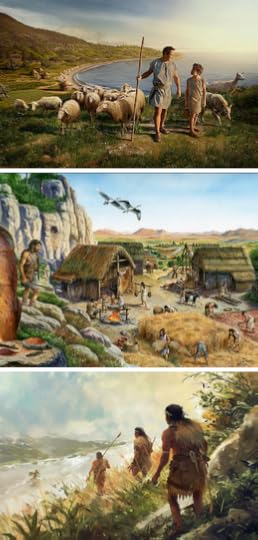
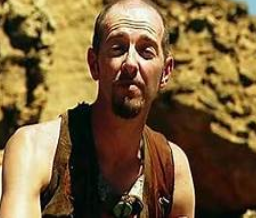
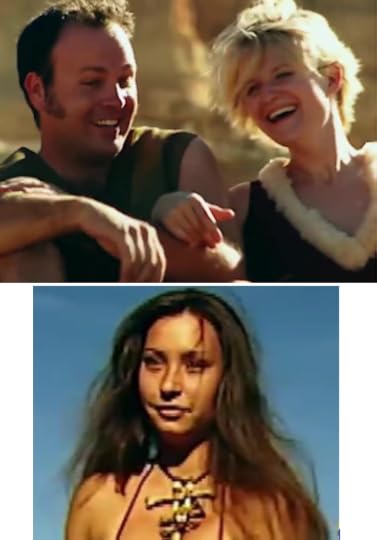
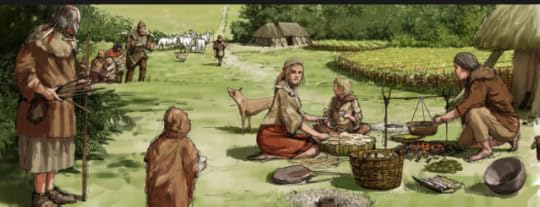
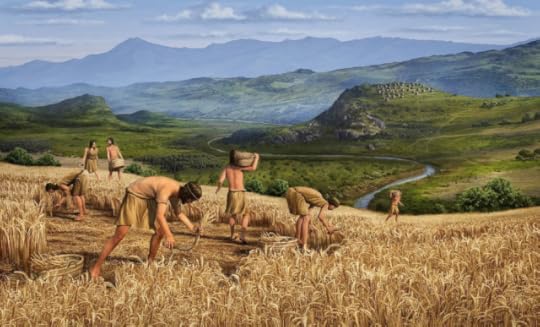
This novel is set on the Great Plain of England in the Neolithic period, around 2500 BCE. The story focuses on three tribes: herders - who raise cattle, sheep, goats; etc; farmers - who grow crops; and woodlanders - who hunt deer and eat nuts and berries.


Other inhabitants of the Great Plain, like flint miners, carpenters, and craftsmen, travel around to trade their goods and services for food, baskets, animal skins, shoes, and other necessities.


The story leads up to the building of Stonehenge, but is really about the tribes and their interactions.

Though the tale, necessarily, springs from author Ken Follett's imagination, it would appear Follett believes greed, self-interest, male entitlement, thirst for power, dishonesty, and other bad behavior was firmly entrenched by this time, at least in some groups.

The novel comes in at 700+ pages, so I'll just give a brief overview of the story.

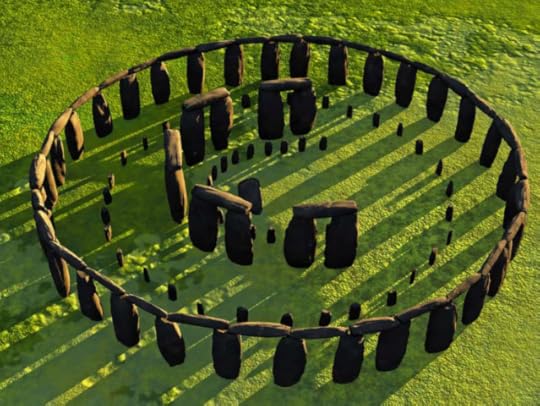
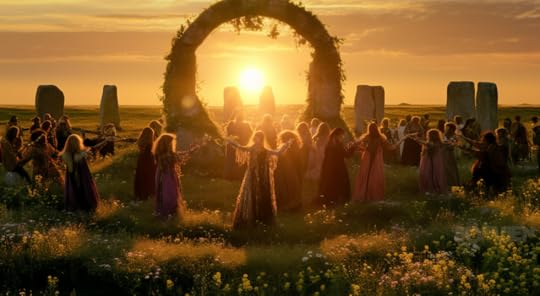
The tribes of the Great Plain are generally insular, but meet four times a year, at the Spring Rite, Midsummer Rite, Autumn Rite, and Winter Rite. The Rite celebrations take place in Riverbend, at a sacred circle made of a ring of bluestones surrounding a ring of tree trunks.


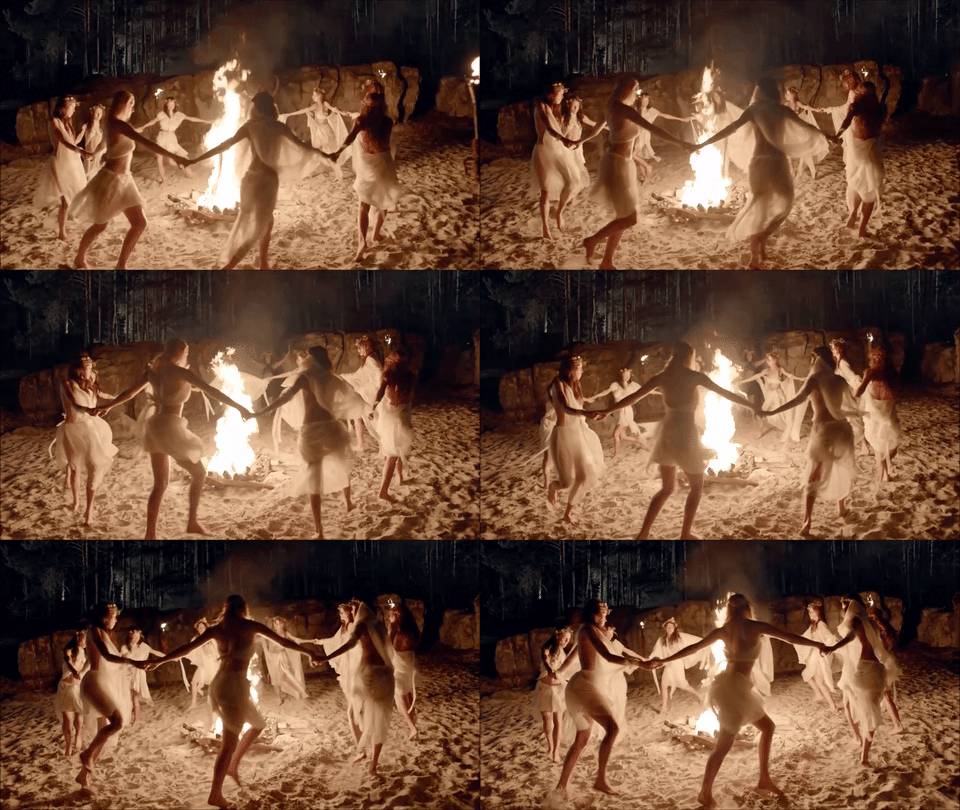
During the Rites, priestesses sing and dance, and traders set up outside to barter for goods.


A major attraction of every Rite is the evening revel, when celebrants - single or married, from teenagers on up - go off to have sex with people from other tribes and places. This is done to avoid inbreeding, which is dangerous for both humans and animals.


The book contains a wealth of characters, but for brevity I'll focus on a few important members of each tribe.

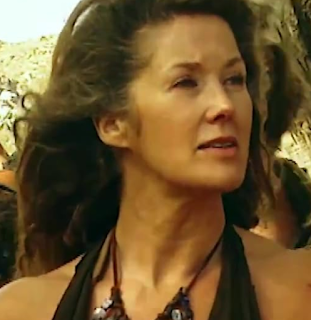
❖❖ Herders - In the herder tribe, widow Ani is an elder with two daughters named Neen and Joia, and a son called Han.


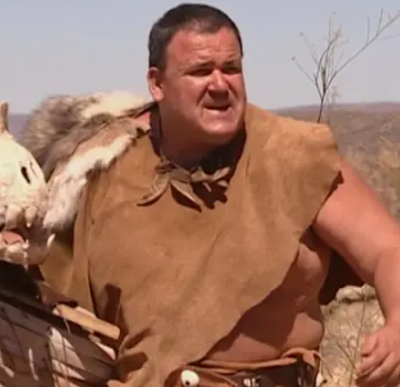
Ani tans hides to barter for other goods, and she's a peacemaker who tries to avoid conflict with neighboring tribes. Ani's chief adversary amongst the herder elders is Scagga, a loudmouth who's always spoiling for a fight. Scagga would like to arm every male herder with a bow and arrow, to be ready for battle.


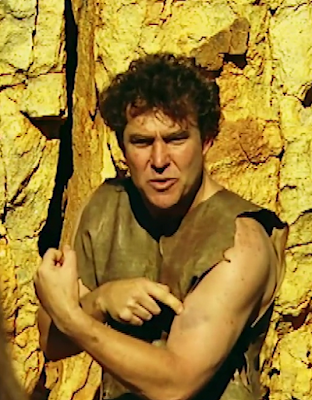
❖❖ Farmers - Troon, the dictatorial leader of the farmers, relishes and flaunts his power. In farmer society, women are the property of men, and may not leave the tribe for marriage or any other reason. In addition, Troon can force women to marry, even if the men are VERY unsuitable.


Troon's wife Katch fears him and his bullyboy son Stam adores him.


Troon's right hand man is Shen, a skinny creep who spies on everyone and reports back to Troon.


Troon is constantly scheming to enlarge the farmers' domain, and hopes to become the 'Big Man' of the entire Great Plain.

❖❖ Woodlanders - Bez, the leader of the woodlanders, has a woman named Gida and a daughter named Lali. The woodlanders are generally peaceable, and Bez likes to walk in the woods with Lali and teach her about nature.


Bez doesn't usually seek clashes but has a strong sense of justice. In woodlander society, when a wrong is committed the gods demand a balance: what's stolen must be replaced; a lie demands a truth; and a murder requires a death. This differs from other tribes, who use shunning and expulsion to deal with crimes.

The three tribes are compelled to interact with each other, as well as outsiders, who come to the Rites to barter their goods and services. Communication can be sketchy since each tribe has its own language, but some inhabitants of the Great Plain are (at least somewhat) multilingual, which is necessary for commerce and negotiations.


To get on with the story:

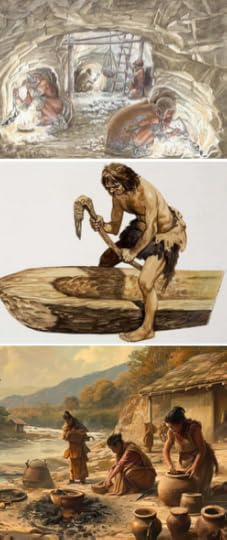
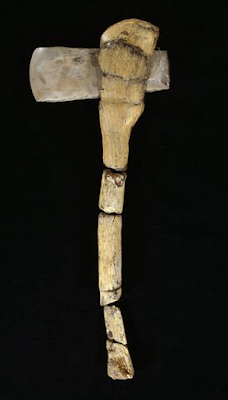
Some of the most valuable possessions in the Neolithic period are flints, because everything that has a cutting edge is made of flint - from axes, to arrowheads, to knives. Everybody needs flints.


Seft is a teenager in a family of flint miners. Seft's mother is dead, his father is cruel and abusive, and his two brothers are mean, stupid oafs. Flint mining is hard, dirty, exhausting work, but worth the effort because flints can be traded for food, clothing, livestock, etc.

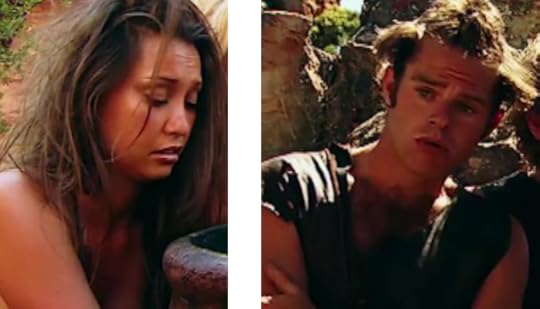
During a Midsummer Rite, Seft meets Ani's herder daughter Neen. Seft and Neen fall in love and want to marry and live with the herders.


However Seft's horrible father would kill the boy before letting him go. There are beatings, an escape, and a lot of clashes, but in the end Seft and Neen wed and have a family.

In the meantime, Neen's younger sister Joia becomes an apprentice priestess. Most Neolithic people can't count above twenty, but the priestesses have songs and rituals that allow them to count all the days of the year, and to pass on the knowledge acquired by their forebears.


Thus priestesses are invaluable, because they know when the seasons will change, when the deer will migrate, when the crops should be planted, and so on. In exchange for their knowledge, the priestesses are provided with food and supplies.

A major conflict arises between farmers and herders when farm leader Troon plows up the Break, a swatch of land between the herder and farmer communities. The herders used the Break for grazing, as well as a pathway to the river, so their cattle could drink.


Troon's land grab, to grow more crops, could lead to war. But herder elder Ani advises against violence, despite the hardship of taking the cattle 'the long way round' to get water.


In the long run, the herders' forbearance just encourages Troon to become more and more grasping and avaricious. Unwisely, Troon even has designs on a piece of the woodlander's environment, and the woodlanders are a vengeful tribe.

The rivalry for space and resources on the Great Plain is always tense, but it becomes overwhelming during a years-long drought, when the cattle die, the crops don't grow, and food in the forest becomes scarce. All the inhabitants of the Great Plain are starving, and even the priestesses fear they'll be cast aside.


The dire situation leads to selfish deeds and a GIGANTIC disaster. The subsequent act of revenge destroys the sacred circle in Riverbend, which is so important for the Rites. Joia, who's become Second High Priestess by now, wants to rebuild the circle with large indestructible stones, which are far away in Stony Valley.


An old craftsman points out, 'We're talking about moving a giant stone a distance that takes all day to walk, up and down hills and over uneven fields. How many days, or weeks, or perhaps even years would that take?' Even more daunting, the sacred circle requires 80 stones.

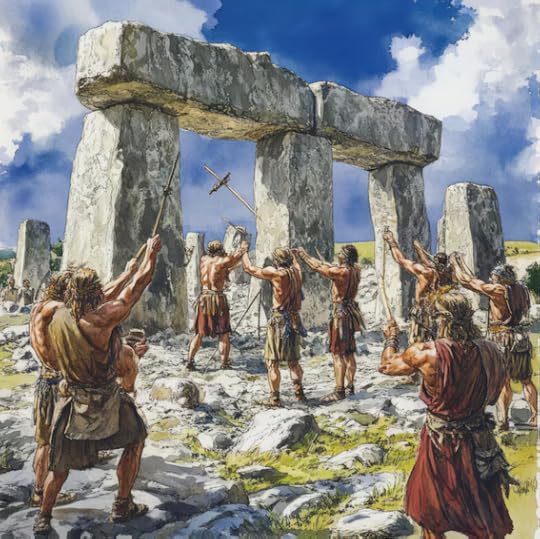
Regardless, once the drought ends, Joia is determined to rebuild the sacred circle with stones. Luckily, Joia's brother-in-law Seft (the former flint miner) is a brilliant carpenter and craftsman. Seft devises a plan to relocate the stones, which requires sophisticated engineering and the assistance of hundreds of people.


Many herders oppose the plan to rebuild the sacred circle with stones, and there are endless arguments and setbacks. Moreover, farm leader Troon is determined to stop the project, which would make Joia the 'Big Woman' of the Great Plain and derail his plan to be the 'Big Man.' Thus Troon plans for disruption, sabotage, and eventually an all-out war.


Still, as we know, Stonehenge got built (but probably not as described in this book.) 😊

My brief synopsis is the bare bones of this very long novel, which follows the lives of many characters as they work, attend Rites, fall in love, marry (or are forced to marry), have children, lose loved ones, experience grief, make friends, sow dissension, devise schemes, cook meals, build weapons, hunt food, and so on. There are slice-of-life scenes for each tribe, which demonstrates the diversity of their lives and ambitions.


There's plenty of action and adventure in the novel as well. For example, when a farm woman runs off to be with her lover, she's hunted down by Troon's 'Young Dogs', who commit murder to get her back. Revenge for the heinous killing results in a perpetrator being tortured, then burned alive. The book has plenty more violence, as well as other misbehavior, and it's a lot to take in.


To me, this book feels a lot like a Young Adult novel, though I don't think author Ken Follett aimed for this audience with the orgy scenes. Overall, the novel presents an interesting picture of Neolithic times, and the descriptions of transporting the stones to Riverbend, and putting them in place, are enlightening.

Readers curious about prehistoric days and Stonehenge would probably enjoy this book.

Thanks to Netgalley, Ken Follett, and Grand Central Publishing for a copy of the book.

Rating: 3.5 stars
Thursday, November 20, 2025

Review of "Welcome To The Hyunam-Dong Bookshop" by Hwang Bo-Reum


 Yeongju was married and had a good corporate position when 'burnout' led her to throw in the towel.


Yeongju quit her job, got divorced, and - since she's loved books since childhood - opened the Hyunam-dong Bookshop in a residential neighborhood of Seoul.


At first, Yeongju just left the bookshop's front door open and sat on a chair all day, with an ashen, tear-stained face.


Then a fashionable woman in the neighborhood, known as Mincheol's mother, ordered an iced Americano and gave Yeongju a heads up, saying 'people weren't going to shop in a bookstore with a lady nailed to a chair looking like she has a screw loose.'


Soon enough, Yeongju's tears dried up and she made the shop a welcoming place with a good selection of books.



Perky Instagram posts attracted readers from surrounding neighborhoods, and Yeongju hired a barista, Minjun, to oversee the popular coffee bar.



To boost visitors, Yeonqju organized events and activities, such as author readings, live bands, book talks, author interviews, book clubs, seminars, movie nights, etc.


Yeongju's book reviews and blog posts became popular as well, and readers would come to the shop to browse and ask for book recommendations.


It's now been more than a year since Yeongui transformed the Hyunam-dong Bookshop into a successful enterprise, and it's become the regular haunt for a handful of people who find advice, comfort and friendship there.

These include:

➤ Minjun - Minjun was a fine student with excellent grades who expected to get a good job after college. When interview after interview didn't pan out, Minjun 'took a break', then applied for the barista position at the bookshop. Minjun's mother feels he should set his sights higher.


➤ Jimi - Jimi is the manager of Goat Beans, where the bookshop buys coffee beans for its coffee bar. The barista Minjun loves to experiment with new flavors, and Jimi visits the bookstore as a friend as well as a coffee sampler and quality control expert. Jimi constantly rants about her husband, who's sloppy, does nothing useful, and stays out late.


➤ Mincheol - Mincheol is a teenager who worries his mother because he has no interests. Mincheol is indifferent to studying, playing games, and hanging out with friends. Mincheol's mother compels him to visit the bookshop regularly, so he'll be exposed to books and interesting people.


Mincheol's mother drops into the bookshop as well, and eventually becomes leader of a book club.


➤ Jungsuh - Jungsuh is a refugee from the corporate world, where she felt used and unappreciated. Jungsuh sits at a table in the bookstore for hours - drinking coffee, meditating, crocheting, and knitting.


➤ Seungwoo - Seungwoo is a corporate quality control expert whose interest in the use of language led him to critique novels, then to write a book about the subject. Seungwoo becomes attracted to Yeonqju, and agrees to give an eight-week seminar at the bookstore.


➤ Sungchul - Sungchul is a college friend of the barista Minjun. Sungchul is an enthusiastic movie fan who scolds Minjun for watching 'hit movies' rather than 'fine films.' After Sungchul hosts a movie night at the bookstore, he becomes a part-time employee.


Over the course of time, the bookstore denizens talk about their lives; their jobs; the value of work; their hopes and dreams; their spouses or ex-spouses; their children; and so on. We may also learn about their parents and how they arrived at their current situations. Best of all, we see how they learn to move on.


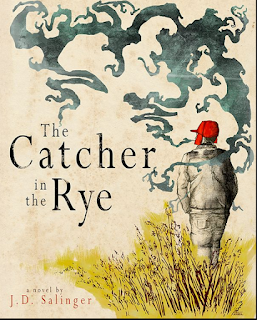
The titles of real books are scattered through the story, especially 'The Catcher in the Rye' by J.D. Salinger. This is Yeongju's favorite book which she recommends to people, explaining it's a novel about the experiences and observations of a teenage boy.


This novel has been ascribed the the sub-genre of 'healing literature', and all the protagonists get a lift during the story. We see people coming to terms with parental disapproval; quitting exploitative bosses; shedding bad husbands; and coming to term with unfulfilled ambitions.

Recommended to fans of bookstore novels and readers who like uplifting books.

Rating: 4 stars