
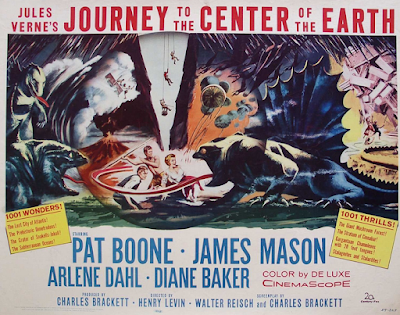
Jules Verne (b. 1828) was a French writer, best known for his 'Voyages Extraordinaires' adventure books, the most well-known being 'Voyage to the Center of the Earth' (1864), 'Twenty Thousand Leagues Under the Seas' (1870), and 'Around the World in Eighty Days' (1872). Verne's entire body of work is much more extensive, including 64 novels, plays, short stories, autobiographical sketches, poetry, songs, scientific studies, literary studies, and more.
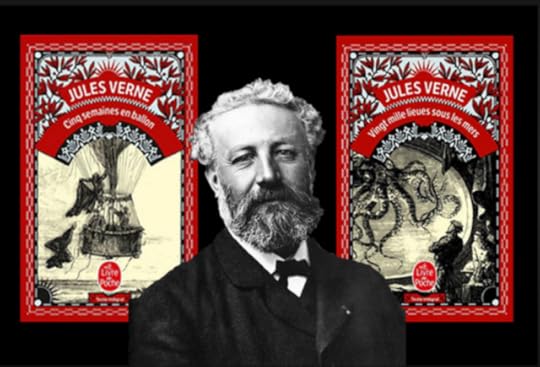
Jules Verne
Author Laurence Bergreen writes, 'Verne offered his novels as entertaining adventures, but they are in fact detailed and exhilarating forecasts (and occasional forewarnings) of countless marvels: time travel, voyages to other planets, and the mysterious depths of the seas.' Over time, the science fiction genre devised by Verne inspired comic books, movies, graphic novels, video games, television series.....and Verne's influence even extended to natural science.
Bergreen's biography of Verne is extensive and detailed, and readers interested in the writer would find it edifying. I'll just provide a glimpse of Verne's life and work.
Jules Verne was born in the port city of Nantes, France, to Sophie Allotte de la Fuÿe and Pierre Verne, a lawyer. Jules and his younger brother Paul loved boats, and adolescent Jules tried to run away on a merchant ship headed for the Antilles, but his father caught him in time.
Young Jules was educated in Catholic schools, and was encouraged to become a lawyer by his father. At age 20, Verne moved to Paris to study law, but he really wanted to be a musician and playwright. Thus during the day, Jules worked on his law studies, and at night he penned sketches and plays for the Théâtre Historique de France, but only one of Verne's skits ever made it to the stage.
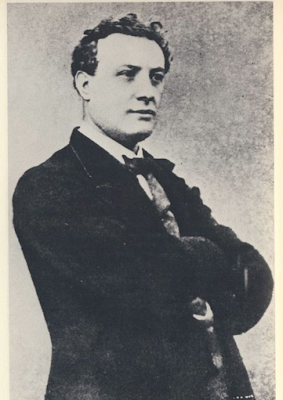
Jules Verne as a young man
Though Verne had been disappointed in love several times over the years, he was determined to find a wife. At age twenty-eight Verne met Honorine de Viane Morel, a respectable young widow with two daughters. Verne had abandoned the law as a profession, but he needed a job to support a family, so he became a stockbroker. This satisfied Honorine's parents, and Verne and Honorine wed and settled in Paris.
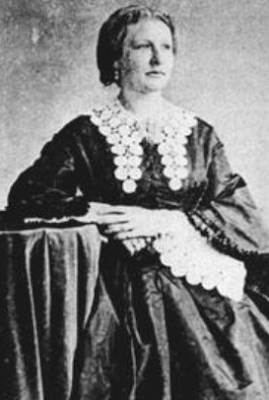
Jules Verne's wife, Honorine de Viane Morel
Around this time, Verne began to dream of a new kind of book, a 'Roman de la Science' incorporating the information he acquired from his extensive reading as well as scientists and explorers in his orbit. Among other people, Verne was acquainted with Gaspard-Félix Tournachon, known as Nadar - a photographer, political cartoonist, people collector, showman, self-promoter, visionary, and jester.
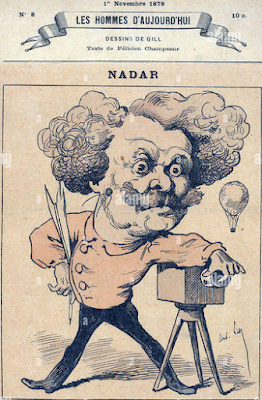
Gaspard-Félix Tournachon, known as Nadar
Among his myriad other pursuits, Nadar formed a 'Society of Aerial Locomotion' with the aim of developing a heavier-than-air flying machine - a balloon. Nadar had a colleague construct 'the biggest best-known balloon in the world', which was launched in 1865, and the age of ballooning commenced. (Note: Ballooning is extensively covered in the book.)
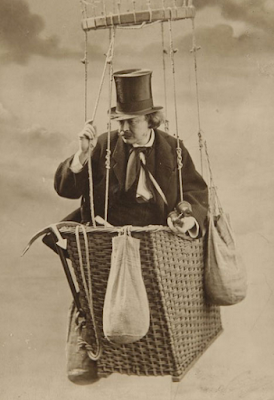
Nadar in the gondola of a hot air balloon
Besides being a stockbroker, Verne was writing his science-based novels, and editor Pierre-Jules Hetzel became Verne's publisher, editor and collaborator. Verne and Hetzel worked together for decades, until Hetzel's death in 1886.
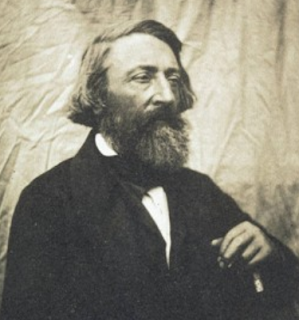
Jules Verne's publisher, Pierre-Jules Hetzel
Balloonist Nadar's aerial exploits inspired Verne to write 'Five Weeks in a Balloon, or A Journey of Discovery by Three Englishmen in Africa' (1863). This is a suspenseful narrative studded with details about storms, condors, volcanoes, crash landings and the inhabitants of different countries. 'Five Weeks in a Balloon' was the beginning of 'Voyages Extraordinaires'.
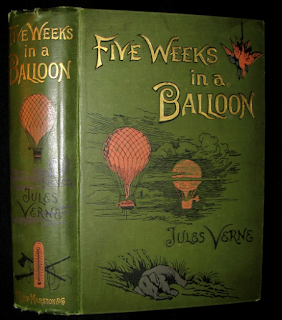
Bergreen notes, 'Verne's 'Voyages Extraordinares' take readers across continents, under the oceans, through the earth, and even into space.' The novels were, in essence, science fiction, the first books in this genre. (Note: Bergreen's book includes descriptions of several novels by Jules Verne, along with extensive excerpts - perfect if you'd like a 'taste' of Verne's writing.)
Meanwhile, in Verne's personal life, he and Honorine had a son named Michel (b. 1861) and the blended family (with Honorine's two daughters) eventually settled in the coastal town of Le Crotoy, about 125 miles from Paris.
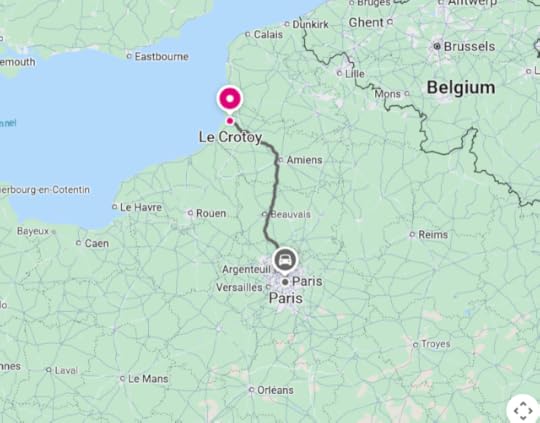
In Le Crotoy, Verne bought a small yacht, named the Saint-Michel, on which Verne and his brother Paul frequently traveled. (Note: In Verne's lifetime, he owned three yachts named Saint-Michel.)
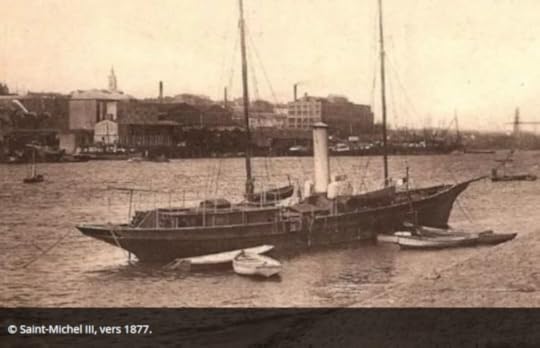
Saint-Michel III
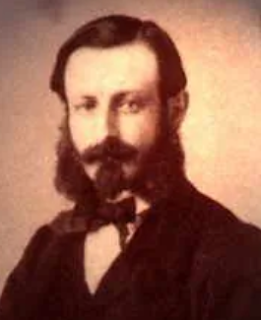
Jules Verne's brother, Paul Verne
Jules and Honorine's son Michel was the 'Terror of Le Crotoy'. Bergreen notes, 'Michel's antics, a troubling portent of behavior that would emerge later on, were ignored by his father, who was absorbed in creating his novels, and tolerated by Honorine, whom the child instinctively manipulated.' Michel was in an out of schools and in and out of trouble for years, and at one point Michel was sent to reform school, and then to sea. After Verne died, however, Michel, steadier after his erratic youth, became keeper of the Jules Verne science fiction flame.
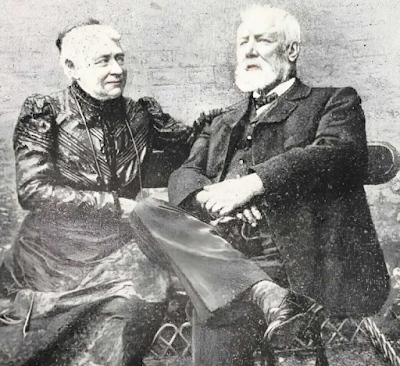
Jules Verne and his wife Honorine
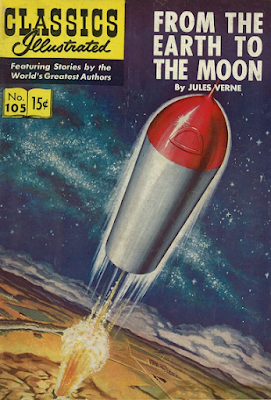
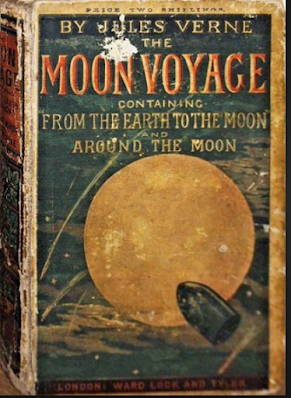
Verne was interested in space travel, and in 1865 he published the prophetic novel 'From the Earth to the Moon', in which a rocket was launched from Cape Canaveral, Florida to the moon. The sequel, 'Around the Moon' was published in 1870.
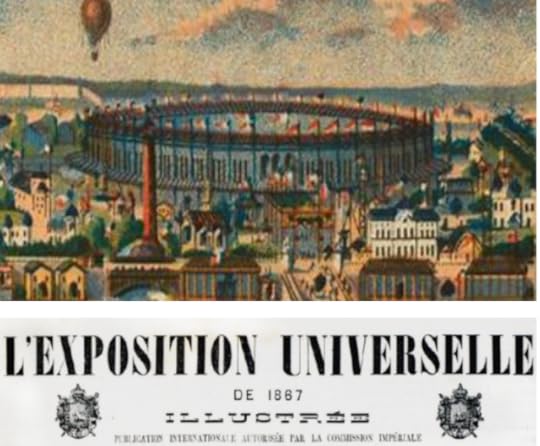
Around this time, Verne visited the United States and then the Exposition Universelle in Paris, where citations were awarded to developers of the transatlantic cable, the telegraph, the railroad, the sewing machine, and agricultural machinery. All this helped inspire Verne's writing, and at one point, Verne gave up being a stockbroker to write full time.
Verne is one of the best known authors in the world because of his characters and stories. 'Twenty Thousand Leagues Under the Seas' (1871) introduces the mysterious Captain Nemo and his captive, the harpooner Ned Land; and 'Around the World in 80 Days' (1872) has been called one of the most entertaining novels ever written.
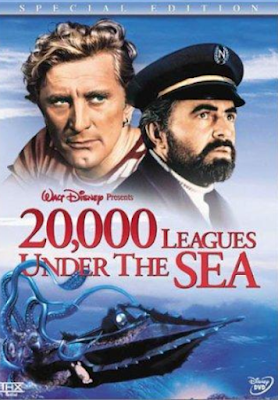
James Mason as Captain Nemo and Kirk Douglas as Ned Land in the Disney film '20,000 Leagues Under The Sea' (1954)
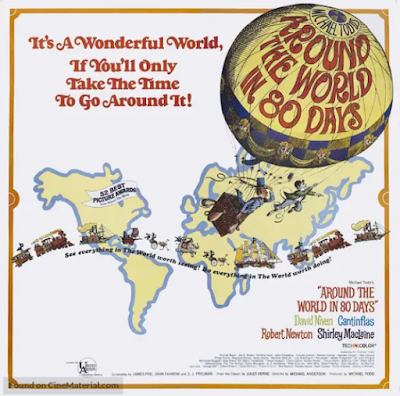
Movie poster for 'Around the World in 80 Days' (1956)
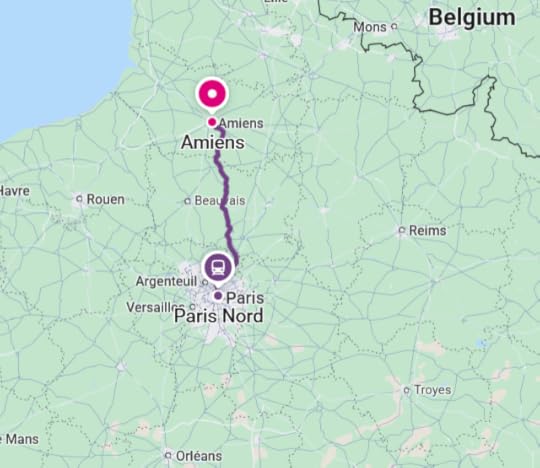
In 1872 - needing a calm atmosphere to work - Verne moved his family from Le Crotoy to his wife's home town of Amiens, 'a quiet town, well-governed and level-headed, with inhabitants that are cordial and literate, near enough to Paris to feel a reflection of Paris but without it's insufferable noise and agitation.'
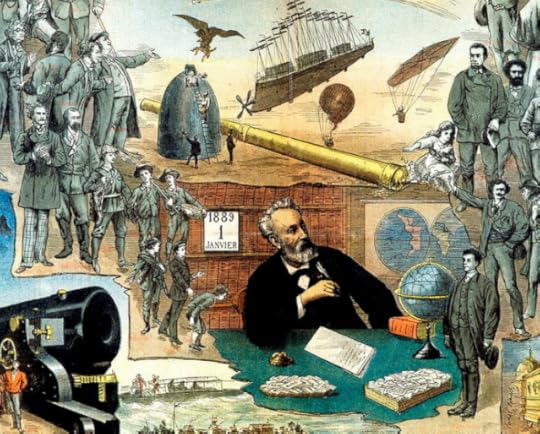
Verne continued to write and publish books for most of his life, and he became increasingly well-known and revered. As of now, Verne is the second most translated writer in history (after Agatha Christie).
Perhaps the most tragic incident in Verne's life occurred in 1886, when he was shot in the leg by his nephew Gaston (his brother Paul's son) - who had been treated for paranoia and other disorders. Gaston admitted he tried to assassinate his uncle, and he was confined to a mental asylum for the rest of his life. Jules recovered, but not completely. Diabetes complicated the healing process, a secondary infection left him with a permanent limp, he was emotionally bereft, he had episodes of facial paralysis, and he suffered from painful stomach cramps.
Still, Verne continued to travel and write until he was too ill to continue. In 1905, at the age of 77, Verne summoned his household to his bedside in Amiens. Verne's grandson Jean-Jules Verne recalled, 'When he saw we were all there, he gave us a fond look, turned his head to the wall and ceased to breathe.'
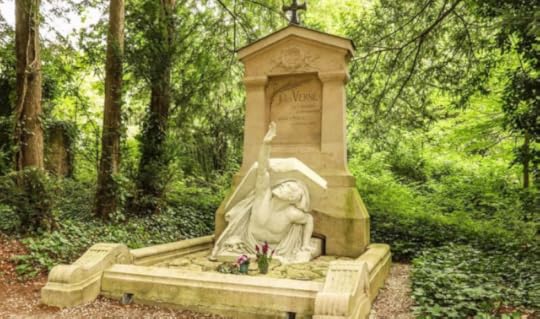
Jules Verne's tomb in Amiens, France
During Verne's life, and after his death, the writer inspired people far and wide. For example, journalist Nellie Bly journeyed around the world in 72 days, 6 hours, and 11 minutes; author H.G Wells published 'The Time Machine' and 'The First Men in the Moon'; Georges Méliès fashioned a rudimentary movie camera and made a short film called 'Le Voyage Dans La Lune' (1902), inspired by Verne's books.
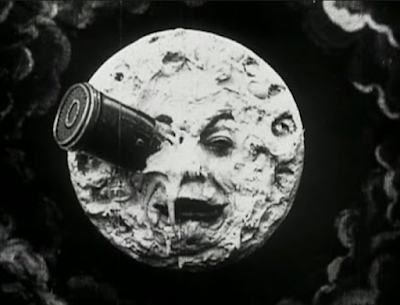
Still picture from 'La Voyage Dans La Lune'
American engineer Robert Goddard designed a rocket, as did German scientist Wernher von Braun; Russia and America sent people into space; and much more.
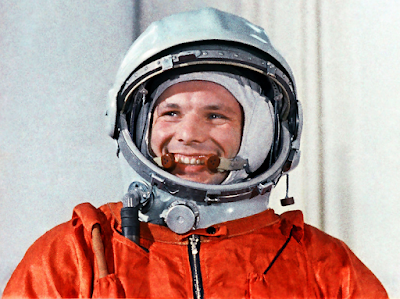
Russian Yuri Gagarin, the first man in space
As it turns out, Verne even 'predicted' modern inventions, and was prescient about the future.

In the book, Bergreen interweaves Verne's story with the politics, conflicts, and highlights of the era - such as the French Revolution (1848); Napoleon III (1852 - 1870); the Exposition Universelle in Paris (1867); the Paris Commune (1871); and more - all of which affected the author's life and work.
Bergreen's narrative is well-researched and informative, especially for Jules Verne novices. My major criticism would be that Bergreen tends to take off on tangents (which are, in any case interesting) and is sometimes repetitive. Nevertheless, I'd highly recommend the book.
Thanks to Netgalley, Laurence Bergreen and Mariner Books for a copy of the book.
Rating: 4 stars

Thank you for this in-depth, voluble review. Can you enlighten as to when this book will actually see a wide scale release?
ReplyDeleteOn Amazon, it says the book will be released July 6, 2027 (which seems way in the future). It can be requested from Netgalley now, as an advanced reader's copy.
Delete