
'Swallows', a Japanese novel translated into English, was originally published as a serialized story, and then a book. The initial presentation as a serial tale shows up in the repetitive nature of the characters' thoughts and concerns, which could have used better editing.
The plot of 'Swallows' centers on the issue of surrogacy, defined as "an arrangement whereby a woman gets pregnant and gives birth on behalf of another person or couple who will become the child's legal parents after birth."
*****
Riki Ōishi is 29-years-old and struggling.

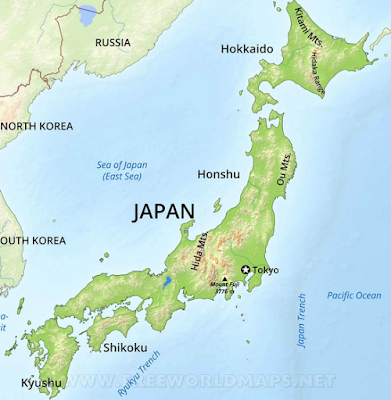
Riki grew up in Hokkaido, where she went to junior college, then worked in a nursing home - a job she hated - until she'd saved up 2,000,000 yen to move to Tokyo.
Even after moving to Tokyo, Riki couldn't get a decent job. Currently, Riki is a temp in the office of Kitamuki General Hospital, where she sits for nine-and-a-half-hours every day, and earns a minimal salary. After paying rent for a cheap apartment, Riki has 82,000 yen per month to live on.
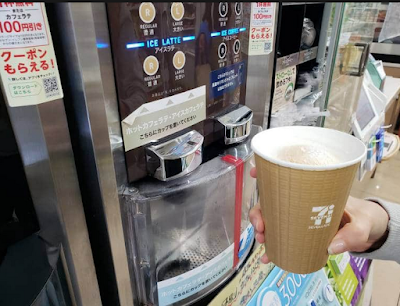
So Riki eats the same old discount hard-boiled egg for lunch every day; buys up all the discounted food at the supermarket just before closing; tries to find new ways to cut down on her energy bill; walks instead of taking public transit; and buys clothes only at used clothing stores. Riki can't even afford a coffee from the 7-Eleven.
Riki's pretty soured on men as well. Riki feels her boyfriends have used her, and she believes men are rude, stupid beings who only ever think about themselves. Men throw their dirty shoes on the floor, leave the toilet seat up, open other people's fridges without asking, and drink the bottle of sparkling wine she'd been guarding like a treasure.

Riki's co-worker at the hospital, called Teru, is in difficult straits as well. Teru helps support her boyfriend and his mother, and moonlights as a sex worker to make ends meet. Riki is intrigued when Teru asks if Riki wants to apply to be an egg-donor. Teru has done some research about it on the internet, and you could get paid up to 500,000 yen.

After thinking it over, Riki applies to be an egg-donor. There's a lot of information you have to provide on the application: name, address, occupation, blood type, height, weight, shoe size, previous illnesses, chronic conditions, vision, hair type, skin color, whether you have single or double eyelids, whether you have a history of smoking, whether you have any tattoos or piercings, your passport number, any history of traveling overseas, future goals, reason for applying, and education history. Also, you need to include a photo of yourself, and one of you as a baby.
Needing the money, Riki submits her egg-donor application to a company called Planté, which specializes in assisted-reproductive technology. Things take an unexpected turn after this.

It so happens that a former ballet star called Motoi Kusaoke and his wife Yuko have been trying to conceive for years, without success.

The couple considered adoption, but Motoi wants his own biological child, whom Motoi pictures as growing up to be a ballet dancer.

The Kusaokes contact Planté, and the upshot is that Riki is offered the 'job' of being the Kusaokes' surrogate. This means Riki will be artificially inseminated with Motoi's sperm, and when the baby is born, the Kusaokes will be the legal parents.
Riki is VERY AMBIVALENT about doing this, but she yearns for money and security. The result is - after much hemming and hawing - Riki agrees to be the Kusaokes' surrogate for 10 million yen.

Riki dislikes Motoi's 'arrogance' and resents the restrictions of the surrogacy contract, which bans alcohol and tobacco; requires maintenance of a healthy and pure body; and prohibits sex with other men. As a result Riki indulges herself; acts out; considers abortion; complains constantly; and on and on.......again and again. (This is where a good editor would have helped).
Moreover, some of Riki's acquaintances, like Ririko - a Goth woman who draws erotic art (shunga) and hates men- encourage her transgressions.
Other characters also chime in, either on behalf of the Kusaokes, or in support of Riki. In an interesting twist, Yuko Kusaoke herself gets 'cold feet' about raising a child that doesn't have her DNA.
The question at the heart of the story is this: Should a woman sell her body to make a baby for someone else. Is this exploitation? Or is it a business transaction?
There aren't many likable characters in this book, but I was especially annoyed with Riki. Riki's situation isn't like that in 'The Handmaid's Tale', where women are forced to bear children for the Commanders.

Riki could have said 'no' to the surrogacy. She wanted the money, and she signed the contract. After that, Riki should have complied with the terms (in my view).
The story is interesting. but the book's format and dialog have an odd cadence. It might be because the book was originally written in Japanese.
In any case, it's an engaging topic that would interest many readers.
Thanks to Netgalley, Natsuo Kirino, and Knopf for a copy of the book.
3.5 stars

No comments:
Post a Comment