
I first read C.P. Snow's 'Strangers and Brothers' series some time ago, and it became a favorite. The novels focus on an English barrister/civil servant, Lewis Eliot, who rises from poverty to a position of influence in the early-to-mid 1900s. Eliot is present in the entire eleven-book series, but he's not always the central character.
The Affair is part of the series, but it works fine as a standalone book.
The story takes place in 1953 and 1954, when narrator Lewis Eliot is a 48-year-old senior civil servant and an ex-Fellow of Cambridge University. Lewis still has close connections with his Cambridge college, especially because his brother Martin Eliot and his friend Francis Getfliffe are current Fellows. 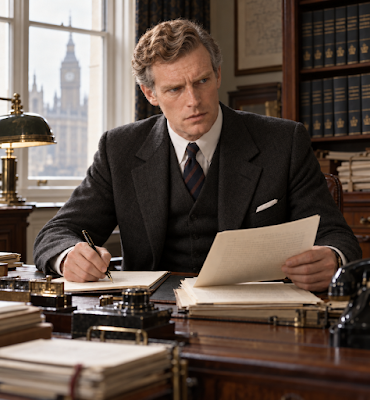
Lewis gets drawn into a college scandal when one of the younger Fellows, physicist Donald Howard, is dismissed because of "a piece of scientific fraud." Howard is accused of manipulating a diffraction photograph used in his fellowship thesis and a published paper. 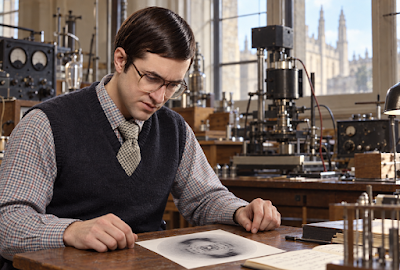
With the encouragement of his wife, Howard disputes the dismissal. He claims he found the photograph in the notes of his deceased mentor, Professor C.J.B. Palairet, a distinguished physicist and Fellow of the Royal Society.
Lewis agrees to meet Howard, whom Lewis finds to be terse and unlikable. Moreover, Howard is an admitted Communist sympathizer, which makes him unpopular with the Cambridge Fellows. All that aside, Lewis is concerned with the evidence, and he asks Howard, "Did you know there are no signs of any such photograph in the whole of [Professor Palairet's] scientific notebooks?" Howard responds, "What I want to know is, who looked?"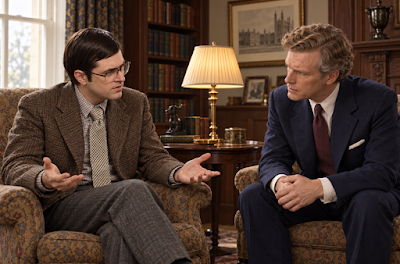
And that turns out to be the crux of the matter.
Two Cambridge scientists, Julian Skeffington and Francis Getliffe, ask the Court of Seniors - composed of the Master, Crawford; Winslow; Brown; and Nightingale - to reopen Howard's case. The court members are reluctant because they think Howard is guilty; they're anxious to avoid a public scandal; and they want to preserve Professor Palairet's reputation. 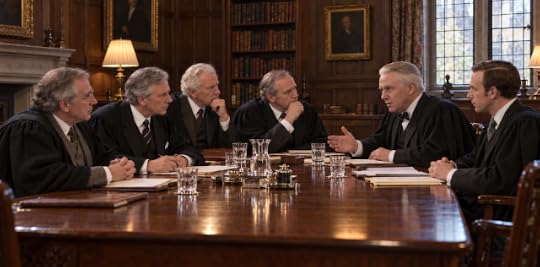
After an initial refusal, the Court of Seniors agrees to rehear Howard's case when one of Professor Palairet's notebooks is found to be missing a photograph. That is, there's a space where a photograph used to be. There's no proof it's the photograph Howard used, but it might be.
As things play out, there's a possibility someone DELIBERATELY removed the photograph that would prove Howard's innocence.
Howard has a couple of hearings, with the last one conducted as a trial, with barrister Gilbert Dawson-Hill representing the side that supports Howard's dismissal; and former barrister Lewis Eliot representing the side that wants Howard reinstated. Witnesses provide testimony, and are questioned by both barristers.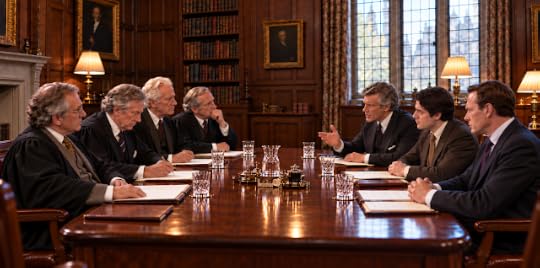
The novel has a good bit of drama before the final hearing, and the book is reminiscent of C.P. Snow's novel The Masters which also features a vote among Cambridge Fellows. In 'The Masters', the vote concerns electing the new college Master, but the dynamics are similar.
There are some light moments in the novel, provided by 96-year-old Professor Gay, a Senior Fellow who's renowned for his studies of Nordic sagas. Gay was not invited to participate in the Court of Seniors because - due to his age - he misidentifies people, falls asleep during proceedings, and would be an unreliable judge. The Master, Crawford, even suggested it would be "too much" for Gay. Gay considers this libel, and wants Lewis to help him take action against the college.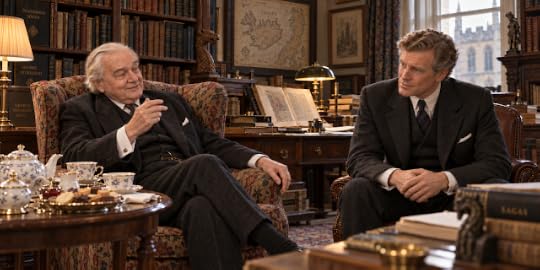
Gay tells Lewis, "That would teach them a lesson. I don't believe in being too genteel, my dear chap. That's why I've attained a certain position in the world. It's a great mistake, when one has attained a certain position in the world, to be too genteel about teaching people a lesson."
The college buys Gay off by resurrecting the eighteenth-century office of Moderator, and Gay gets to instruct the Fellows and barristers "to see that justice is done."
Gay has an amusing tic in his speech patterns, and over the course of the story he refers to: a drink and half; a gale and a half; a climate and a half; an action and a half; a surprise and a half; a purpose and a half; a case and a half; a question and a half; a luxury and a half; a book and a half; a term and a half; and a task and a half. One can't help but like the old fellow. 😊
While the depiction of Gay is amusing, descriptions of some characters in the novel are unflattering. For example, Lewis describes lecturer Tom Orbell - who got Lewis involved in the Howard case - as "A large young man, cushioned with fat, but with heavy bones and muscles underneath. He was already going bald...the skin of his face was fine-textured and pink, and his smile was affable, open, malicious, eager to please...his big light-blue eyes stayed watchful and suspicious."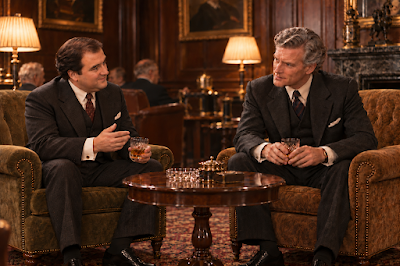
Some of the women wouldn't be delighted with their descriptions either. For instance, Lewis notes that Nightingale's wife is a plump woman [whose] shoulders and upper arms were beginning to ham out with fat; her eyes were full, sleepy, exopthalmic. 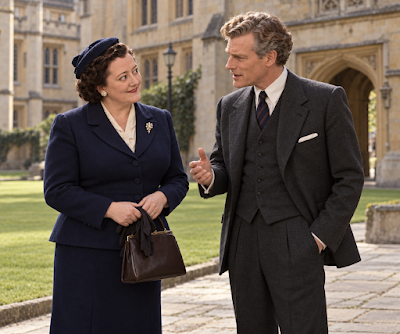
And Lewis describes his brother Martin's wife as looking much more worn than her husband. Lewis goes on, "She had always been tall and big-framed, but recently her shoulders had rounded and she had put on weight; not only had her bosom got full and shapeless, but she had thickened through the middle." 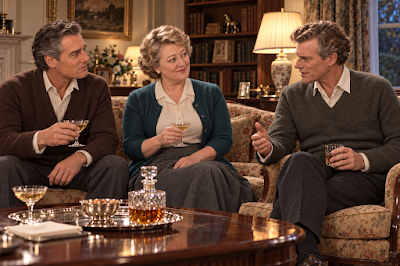
Luckily, Lewis's wife Margaret has fine bones and looks youthful. 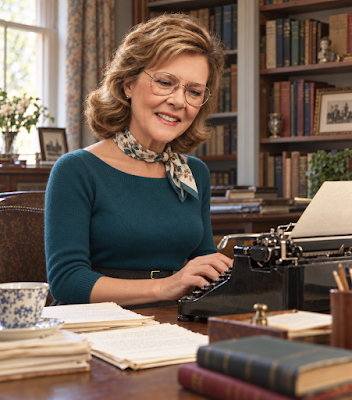
I found the story engaging and was anxious to learn the outcome of the trial at the Court of Seniors. Nevertheless, I'm hoping other books in the series don't involve voting by Cambridge Fellows.
Rating: 3.5 stars

No comments:
Post a Comment