Friday, July 25, 2025

Review of "Two Sisters: Betrayal, Love, and Resistance in Wartime France" by Rosie Whitehouse


British journalist Tim Judah's grandmother Edith Müller perished in the Holocaust, and Edith's daughters (Tim's mother Marion and aunt Huguette) survived by dint of grit, luck, and the kindness of a stranger.
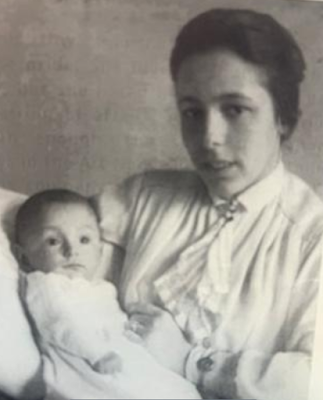


Edith Müller and her baby Marion

In this book Rosie Whitehouse (Tim's wife) tells the well-researched story of Tim's Jewish forebears, who fled from Germany to France before WWII. Jews hoped to be safe in France, but many were victims of the Vichy government's cooperation with the Nazis and/or French citizens who either collaborated or looked the other way.


Even in the midst of this deplorable situation, however, there were French heroes who helped Jews. Righteous Among Nations is an honor given by the State of Israel to non-Jews who risked their lives to save Jews during the Holocaust. Author Rosie Whitehouse writes, "Almost 28,000 people across the world have been given the honor, 4,000 of them in France."


Righteous Among Nations Medal

One recipient of Righteous Among Nations is Dr. Frédéric Pétri, whose name will be engraved on Jerusalem's Wall of Honor in the Garden of the Righteous. Dr. Pétri saved the life of Tim's aunt Huguette, and this kindness is what inspired Whitehouse to research and write this book.
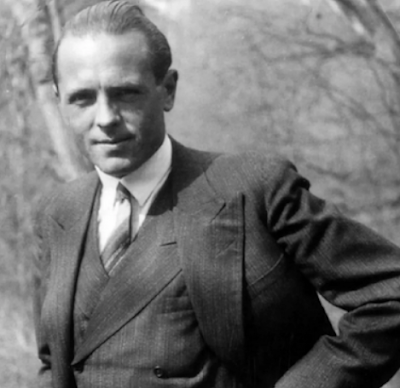

Dr. Frédéric Pétri


Garden of the Righteous in Israel

Dr. Pétri's brave deed happened like this: In the fall of 1943, during the German occupation of France, Edith Müller was sent to a concentration camp. Her daughters, 15-year-old Huguette and 20-year-old Marion fled from Lyon to hide out in the mountain town of Val d’Isère. Huguette slipped and broke her leg, and Dr. Pétri was called to help.
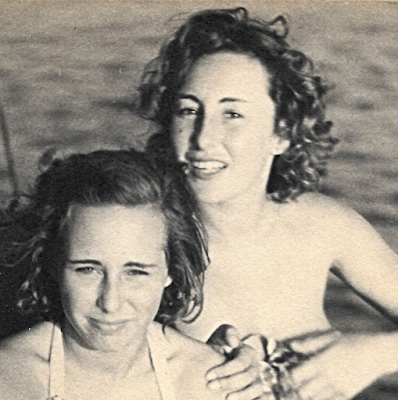

Huguette (left) and Marion Müller
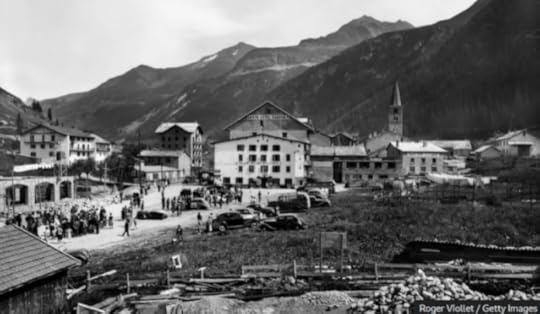

Val d’Isère, France

Dr. Pétri said Huguette needed to be moved to the hospital, but Marion knew the Germans patrolled the hospital, and she punched Dr. Pétri in the face. Dr. Pétri realized the girls were Jewish and immediately said he would look after Huguette himself in his own house. Dr. Pétri warned Marion to leave the village immediately and come back in six months, by which time Huguette's leg would be healed.
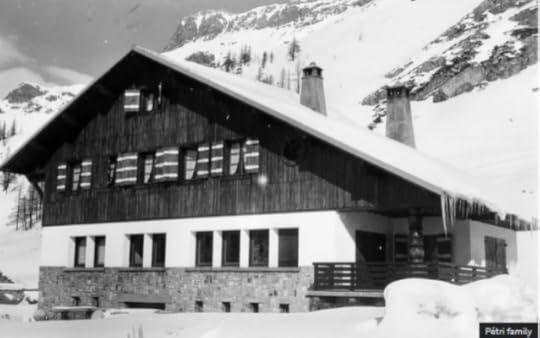

Dr. Frédéric Pétri's chateau

After six months Marion and Huguette were re-united, and though they faced more danger, both girls survived WWII.

This is the bare bones of the story, which Whitehouse begins back when the Müllers' forebears lived in Berlin. To research the book, Whitehouse (who lives in Britain) traveled to Germany and France; went to addresses and sites related to the family; visited museums and archives; found photos and papers among Marion and Huguettes belongings; did research on the internet; interviewed people; and more.
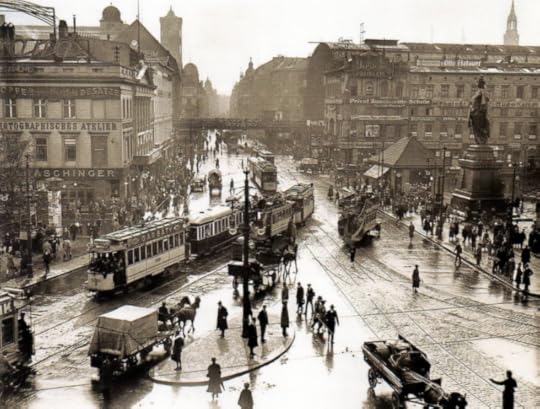

Berlin in the early 20th century

Whitehouse's narrative is very detailed, and includes the history and politics of western Europe; stories about roundups of Jews; descriptions of resistance groups; anecdotes about radio broadcasts; portrayals of Nazis and other relevant people; and much more. Whitehouse also imaginatively re-creates events, and describes them as they might have happened. For this review, though, I'll just provide a glimpse of the Müllers' personal tale.

Before WWII, the Müllers - Edith, her husband Johannes, and their daughters Marion and Huguette - lived in Berlin, where Edith's family owned a large textile factory. After Hitler came to power in 1933, stormtroopers beat up Jews and denounced them, and the Müllers moved to France.
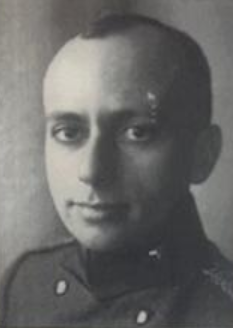

Johannes Müller
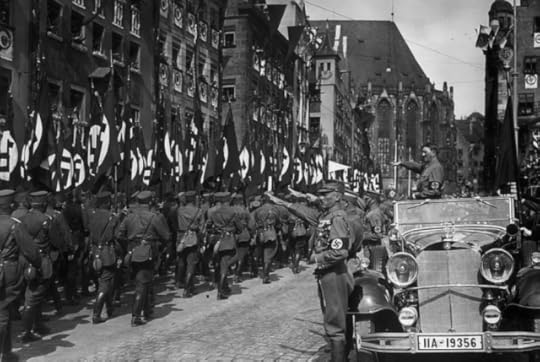

Nazi Stormtroopers

Once WWII broke out, France was no haven. Xenophobic language filled newspapers, and right-wing leaders inflamed the population's anti-Semitism. Marion and Huguette were told not to tell anyone they were Jewish. The family pretended to be Catholic, and became "as French as they possibly could in their tastes, in the clothes they wore, and even the food they ate."

In 1940, Germany forced the capitulation of France, and a new anti-democratic, anti-Semitic government was formed in the town of Vichy. German troops poured into France, hunted down Jews, and sent them to concentration camps. The Müllers had forged identification papers, but these were no guarantees of safety.
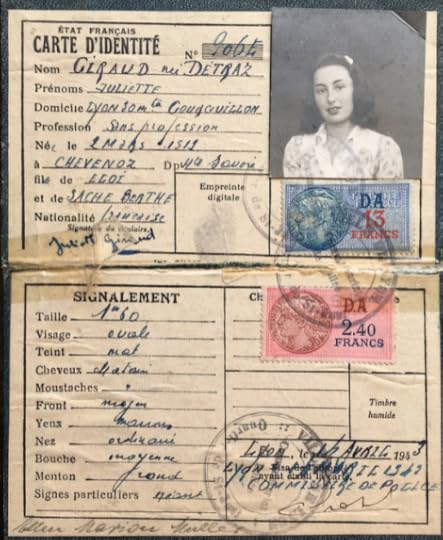

Marion Müller's forged papers

To exacerbate the situation, Johannes Müller was an unfaithful husband and neglectful father who abandoned the family to be with his mistress Lucette. This left the female Müllers on their own, which amplified their problems.

In September 1943 Marion was in Lyon, and Edith and Huguette were in Nice. An informer reported Edith, who was arrested while Huguette was in school.

In Whitehouse's imagination, this was Edith's fate: Edith was taken to the Hôtel Excelsior, which was crowded with apprehended people waiting under a huge Swastika flag. Edith was then interrogated by frightening and shouting SS officers, who wanted the names of family and friends. Edith was made to give up her valuables and - on transport day - she and other prisoners were marched to the train station, crowded into a carriage, and taken to the transit camp at Drancy. The trip took 48 hours, and the prisoners had no room to sit, no food, and no water. From Drancy, Edith was sent to Auschwitz and gassed.
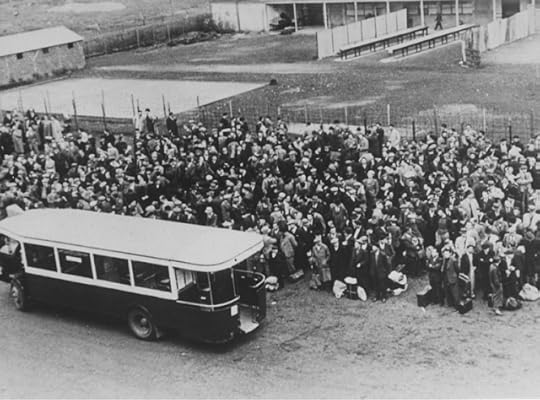

Drancy Transit Camp

When Huguette returned from school to find an empty house, she was told her mother had been arrested. Huguette then made her way to Marion in a roundabout way, and the girls went to Val d’Isère and were assisted by Dr. Pétri, as described above.

Marion and Huguette survived the war, as did their father Johannes, and Whitehouse writes about their lives after the conflict.
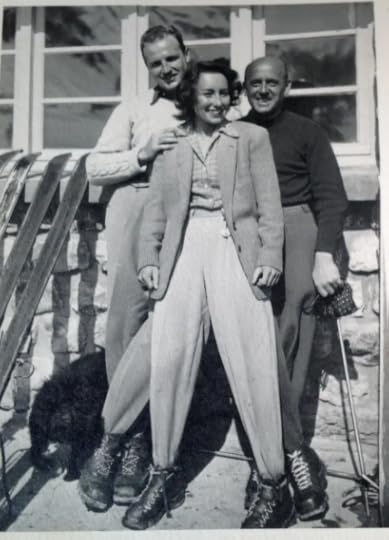

Marion Müller and two friends
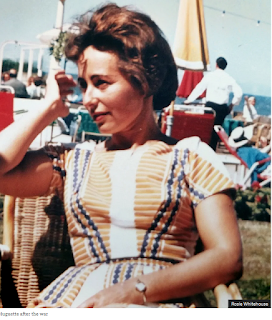

Huguette Müller

France's role in exterminating Jews is probably less well known than Germany's, and Whitehouse's explication is edifying and horrifying. I'll give a few examples.

► In 1940, Marshal Philippe Pétain became head of the collaborationist regime in Vichy. Under his leadership, a commission revoked the citizenship of over a million naturalized French citizens, many of whom were Jews. This led to innumerable arrests and murders.
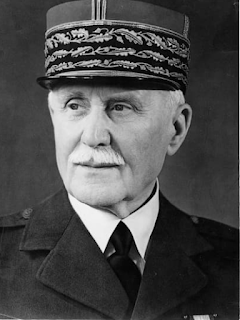

Marshal Philippe Pétain

► In 1942, SS Officer Theodor Dannecker ordered a roundup of all Jews in France, René Bousquet - Vichy's French head of police - agreed that his men would round up 22,000 foreign Jews whose names the police held in a register.
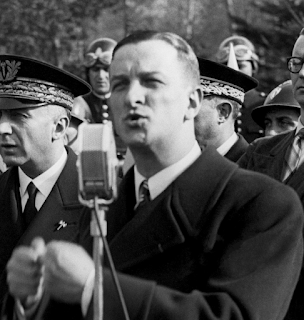

René Bousquet

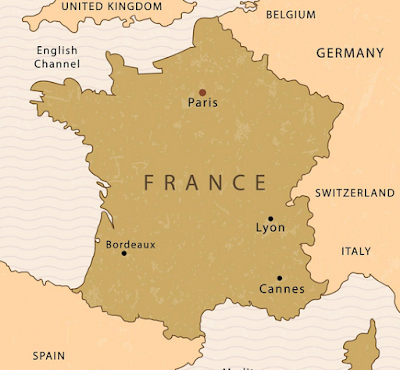
► In summer 1942, there was a wave of denunciations as French people wrote to local officials and even to Marshal Pétain, denouncing Jews. One person wrote to say 'we want a French Cannes and not an international town where the Jews are the masters in control...Jews should be forced to wear a yellow hat, condemned to forced labor and their money confiscated. Ideally they should be made to disappear in bottomless boats to feed the fish they deprive us of.'



► In 1943, a violent roundup took place in Marseille. The city was full of Jewish refugees, and on René Bousquet's orders, 12,000 French police were brought into the city to help the Germans carry out a major operation against the Jews.
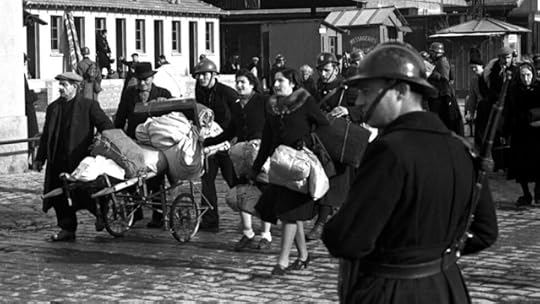

The Marseille Roundup

► In 1945, shortly before VE Day, disputes over housing shortages in Paris prompted 500 demonstrators to march through the city shouting 'Death to the Jews' and 'France for the French.'



After the war, the Jewish experience in France was pushed aside as people attempted to whitewash the horror. Whitehouse notes, 'Thousands of Jewish businesses had been sold to non-Jews during the war, who were now reluctant to return them. There was little sympathy for Jewish survivors. French stateswoman Simone Veil was called 'Dirty Jew' by a doctor in a medical examination after she returned home from Auschwitz.' And on and on.
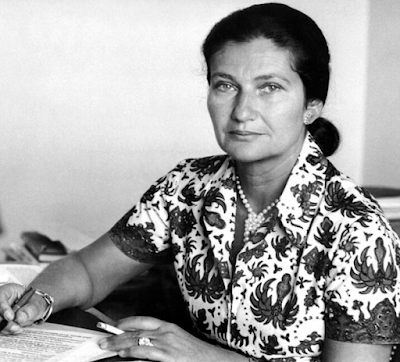

Stateswoman Simone Veil

To be fair, in 1995, President Jacque Chirac, referring to the persecution of Jews, admitted: "These dark hours forever sully our history and are an insult to our past and our traditions. Yes, the criminal folly of the occupiers was seconded by the French, by the French state."

Chirac also recognized the Righteous Among Nations as new national heroes. Then in 2000, July 16 became a day "of commemoration of racist and anti-Semitic crimes committed by the French State and of tribute to the Righteous of France."


President Jacque Chirac

Whitehouse and her relatives met some of Dr. Frédéric Pétri's descendants, and attended the ceremony when Dr. Pétri was posthumously awarded the Righteous Among Nations. This is an uplifting finale to an often dark story.

Two Sisters would appeal to readers interested in history, WWII, and the Holocaust.

Thanks to Netgalley, Rosie Whitehouse, and Union Square & Co. for a copy of the book.

Rating: 4 stars

Wednesday, July 23, 2025

Review of "Inversions: The Guardian Cycle #2" by M.V. Melcer


This book is the sequel to Refractions, but works fine as a standalone. In Inversions, we follow three main characters: Jason Nevsky, Elizabeth Lake, and Ranath Eyre.


✿ Jason Nevsky - head of Earth's Food Alliance.

It's close to the year 2400 and Earth is in dire straits. The planet has never adapted to climate change and is reeling from scarcity wars and the plague - a phage that kills crops. All terrestrial populations are going hungry, barely holding on with help from the Food Alliance, headed by Jason Nevsky.


The Food Alliance has a deal with the Yun Ju, a conglomerate of wealthy organizations on outposts in space. In return for food shipments from Earth, the Yun Ju supplies anti-phage treatments and technology. Nevertheless Earth is on the verge of becoming unable to sustain life (at least human life).


A big part of Jason Nevsky's job is to limit Earth's population growth and restore its natural ecosystems, such as rain forests. Unfortunately, this means less farmland for growing food. If countries don't agree to the environmental restorations, Jason can withhold phage remedies and technology. Thus starving populations throw feces and trash at Jason, who's the most hated man on Earth.


✿ Elizabeth Lake (Liz) - an engineer with a double doctorate in heliophysics and magnetospherics.

Liz just graduated from the Aspire Academy on Earth, and applies for a job with the Renewal Corporation of the Yun Ju. Liz has been working toward this for years, her ambition being to leave Earth forever, and have a life and career in space.


Liz is actually Jason Nevsky's daughter, Anna Nathalie Nevsky. Liz changed her name twice (at great expense) to break ties with her father, and the hate his name stirs. Liz hasn't spoken to her dad for ten years, since she left home at age fifteen. This breaks Jason's heart.

✿ Ranath Eyre - head of the Renewal Corporation.

Ranath is head of the Yun Ju's Renewal Corporation, which builds and sells 'assemblers' (robots) that do various kinds of work. For three decades, Ranath has used the Renewal Corporation to secretly accumulate a fortune - not for herself but to build an 'Ark' (a human habitat) near Saturn.


Ranath believes the Earth is doomed, and she has a clandestine plan to populate the Ark with the best of humanity, such as professionals, scientists, philosophers, artists, writers, etc. In Ranath's view, the Ark will eventually be self-sustaining.....and will be the future of humankind.

Ranath is aware of Liz Lake's secret identity but still hires her to work for the Renewal Corporation.

*****

Just like countries on Earth are rivals for power and resources - and spy on and plot against each other, the corporations that make up the Jun Yu are rivals for power and resources - and spy on and plot against each other.


Ranath has two main competitors in the Jun Yu: 'Liberty' run by American Nevil Richardson.....


......and the 'Sunrise Group' run by Chinese Li Qiang.


Both Richardson and Qiang want more than their fair share of Ranath's assemblers, particularly the newest model just now coming off the assembly line.

To keep her Ark a secret, and to hoard the assemblers needed to build the Ark, Ranath is constantly scheming, prevaricating, lying, and maneuvering. Hardly a word out of Ranath's mouth is the truth.


Everyone up in space seems to have a secret agenda, and much of the book is about the negotiating and manipulating among the various groups.

One thing the entire Jun Yu shares is a strategy to keep the populations on Earth poor and subjugated, almost like serfs whose sole purpose is to supply the Yun Ju with food. Jason Nevsky was unaware of the Yun Ju's devilry for upwards of twenty years, but he's caught on now, and institutes a plan of his own.


As the complicated situation plays out, Liz finds herself caught between her boss Ranath and her father Jason, and Liz has some difficult decisions to make.


The story is engaging, but most of the main characters are unlikable. Ranath is a liar; Liz is a spoiled brat; and Richardson and Qiang are blackmailers. Jason is almost the sole sympathetic protagonist, doing his best to save Earth. Will he succeed? What do you think?

On an amusing note: Most of the characters in the novel are CONSTANTLY drinking coffee, and I thought this was a plot point, that the coffee was laced with drugs, or exerted mind control, or stripped memories.....or SOMETHING. But no, these folks apparently just love coffee. LOL


M.C. Melcer deserves props for her (probably) realistic portrait of what will happen to Earth if humanity doesn't wake up and roll back global warming, and repair the damage we've done to the flora and fauna.

All in all, I enjoyed the book and recommend it to sci-fi fans.

Rating: 3.5 stars
Tuesday, July 22, 2025

Review of "Jules Verne and the Invention of the Future" by Laurence Bergreen


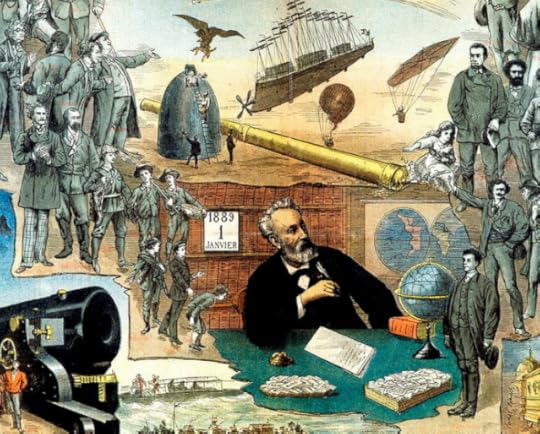
Jules Verne (b. 1828) was a French writer, best known for his 'Voyages Extraordinaires' adventure books, the most well-known being 'Voyage to the Center of the Earth' (1864), 'Twenty Thousand Leagues Under the Seas' (1870), and 'Around the World in Eighty Days' (1872). Verne's entire body of work is much more extensive, including 64 novels, plays, short stories, autobiographical sketches, poetry, songs, scientific studies, literary studies, and more.


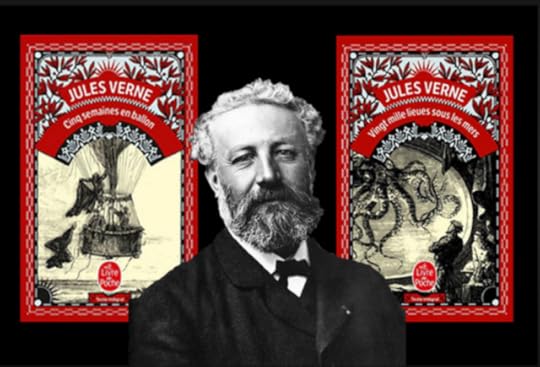
Jules Verne

Author Laurence Bergreen writes, 'Verne offered his novels as entertaining adventures, but they are in fact detailed and exhilarating forecasts (and occasional forewarnings) of countless marvels: time travel, voyages to other planets, and the mysterious depths of the seas.' Over time, the science fiction genre devised by Verne inspired comic books, movies, graphic novels, video games, television series.....and Verne's influence even extended to natural science.


Bergreen's biography of Verne is extensive and detailed, and readers interested in the writer would find it edifying. I'll just provide a glimpse of Verne's life and work.

Jules Verne was born in the port city of Nantes, France, to Sophie Allotte de la Fuÿe and Pierre Verne, a lawyer. Jules and his younger brother Paul loved boats, and adolescent Jules tried to run away on a merchant ship headed for the Antilles, but his father caught him in time.

Young Jules was educated in Catholic schools, and was encouraged to become a lawyer by his father. At age 20, Verne moved to Paris to study law, but he really wanted to be a musician and playwright. Thus during the day, Jules worked on his law studies, and at night he penned sketches and plays for the Théâtre Historique de France, but only one of Verne's skits ever made it to the stage.


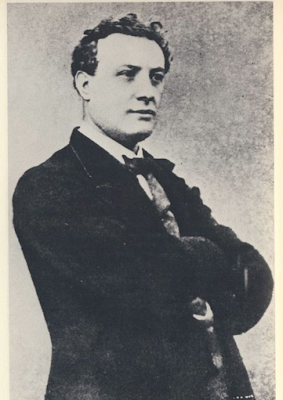
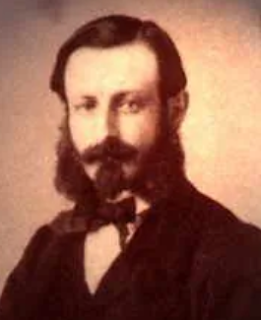
Jules Verne as a young man

Though Verne had been disappointed in love several times over the years, he was determined to find a wife. At age twenty-eight Verne met Honorine de Viane Morel, a respectable young widow with two daughters. Verne had abandoned the law as a profession, but he needed a job to support a family, so he became a stockbroker. This satisfied Honorine's parents, and Verne and Honorine wed and settled in Paris.


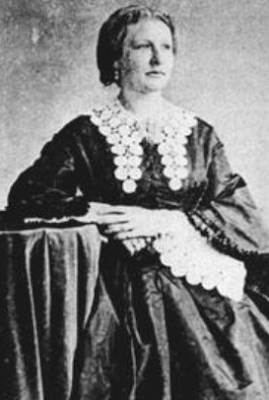
Jules Verne's wife, Honorine de Viane Morel

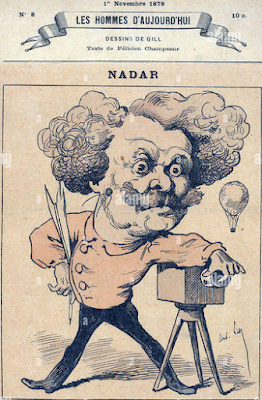
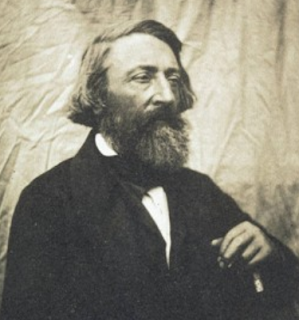
Around this time, Verne began to dream of a new kind of book, a 'Roman de la Science' incorporating the information he acquired from his extensive reading as well as scientists and explorers in his orbit. Among other people, Verne was acquainted with Gaspard-Félix Tournachon, known as Nadar - a photographer, political cartoonist, people collector, showman, self-promoter, visionary, and jester.


Gaspard-Félix Tournachon, known as Nadar

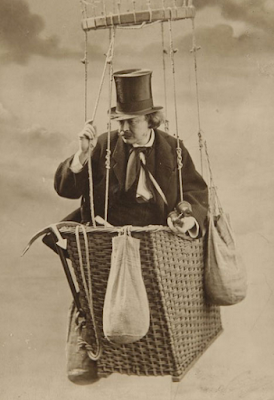
Among his myriad other pursuits, Nadar formed a 'Society of Aerial Locomotion' with the aim of developing a heavier-than-air flying machine - a balloon. Nadar had a colleague construct 'the biggest best-known balloon in the world', which was launched in 1865, and the age of ballooning commenced. (Note: Ballooning is extensively covered in the book.)


Nadar in the gondola of a hot air balloon

Besides being a stockbroker, Verne was writing his science-based novels, and editor Pierre-Jules Hetzel became Verne's publisher, editor and collaborator. Verne and Hetzel worked together for decades, until Hetzel's death in 1886.


Jules Verne's publisher, Pierre-Jules Hetzel

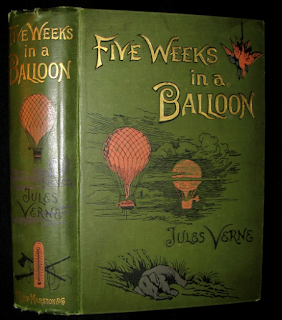
Balloonist Nadar's aerial exploits inspired Verne to write 'Five Weeks in a Balloon, or A Journey of Discovery by Three Englishmen in Africa' (1863). This is a suspenseful narrative studded with details about storms, condors, volcanoes, crash landings and the inhabitants of different countries. 'Five Weeks in a Balloon' was the beginning of 'Voyages Extraordinaires'.


Bergreen notes, 'Verne's 'Voyages Extraordinares' take readers across continents, under the oceans, through the earth, and even into space.' The novels were, in essence, science fiction, the first books in this genre. (Note: Bergreen's book includes descriptions of several novels by Jules Verne, along with extensive excerpts - perfect if you'd like a 'taste' of Verne's writing.)

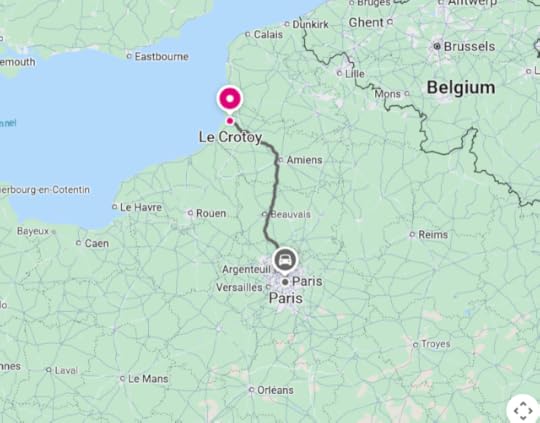
Meanwhile, in Verne's personal life, he and Honorine had a son named Michel (b. 1861) and the blended family (with Honorine's two daughters) eventually settled in the coastal town of Le Crotoy, about 125 miles from Paris.


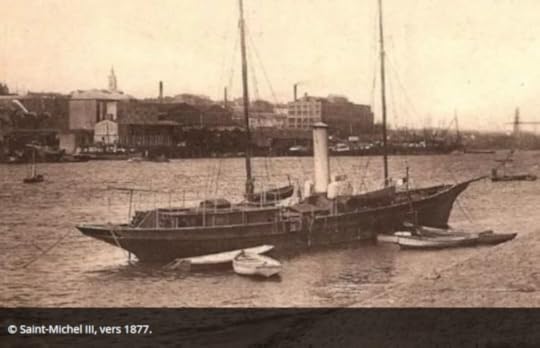
In Le Crotoy, Verne bought a small yacht, named the Saint-Michel, on which Verne and his brother Paul frequently traveled. (Note: In Verne's lifetime, he owned three yachts named Saint-Michel.)


Saint-Michel III


Jules Verne's brother, Paul Verne

Jules and Honorine's son Michel was the 'Terror of Le Crotoy'. Bergreen notes, 'Michel's antics, a troubling portent of behavior that would emerge later on, were ignored by his father, who was absorbed in creating his novels, and tolerated by Honorine, whom the child instinctively manipulated.' Michel was in an out of schools and in and out of trouble for years, and at one point Michel was sent to reform school, and then to sea. After Verne died, however, Michel, steadier after his erratic youth, became keeper of the Jules Verne science fiction flame.


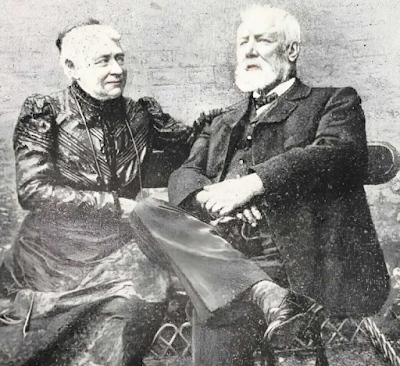
Jules Verne and his wife Honorine

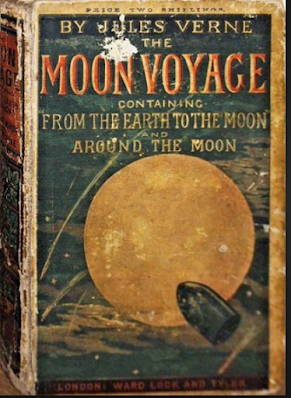
Verne was interested in space travel, and in 1865 he published the prophetic novel 'From the Earth to the Moon', in which a rocket was launched from Cape Canaveral, Florida to the moon. The sequel, 'Around the Moon' was published in 1870.


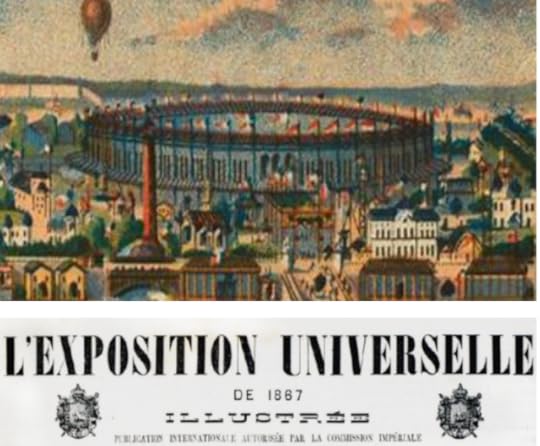
Around this time, Verne visited the United States and then the Exposition Universelle in Paris, where citations were awarded to developers of the transatlantic cable, the telegraph, the railroad, the sewing machine, and agricultural machinery. All this helped inspire Verne's writing, and at one point, Verne gave up being a stockbroker to write full time.


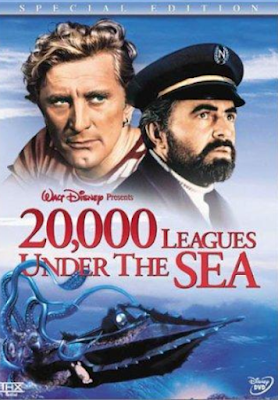
Verne is one of the best known authors in the world because of his characters and stories. 'Twenty Thousand Leagues Under the Seas' (1871) introduces the mysterious Captain Nemo and his captive, the harpooner Ned Land; and 'Around the World in 80 Days' (1872) has been called one of the most entertaining novels ever written.


James Mason as Captain Nemo and Kirk Douglas as Ned Land in the Disney film '20,000 Leagues Under The Sea' (1954)


Movie poster for 'Around the World in 80 Days' (1956)

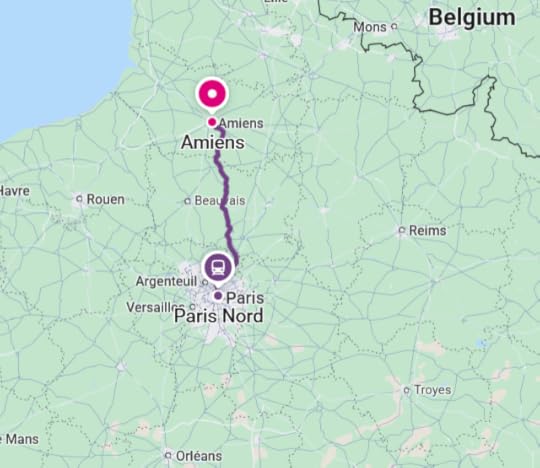
In 1872 - needing a calm atmosphere to work - Verne moved his family from Le Crotoy to his wife's home town of Amiens, 'a quiet town, well-governed and level-headed, with inhabitants that are cordial and literate, near enough to Paris to feel a reflection of Paris but without it's insufferable noise and agitation.'


Verne continued to write and publish books for most of his life, and he became increasingly well-known and revered. As of now, Verne is the second most translated writer in history (after Agatha Christie).


Perhaps the most tragic incident in Verne's life occurred in 1886, when he was shot in the leg by his nephew Gaston (his brother Paul's son) - who had been treated for paranoia and other disorders. Gaston admitted he tried to assassinate his uncle, and he was confined to a mental asylum for the rest of his life. Jules recovered, but not completely. Diabetes complicated the healing process, a secondary infection left him with a permanent limp, he was emotionally bereft, he had episodes of facial paralysis, and he suffered from painful stomach cramps.

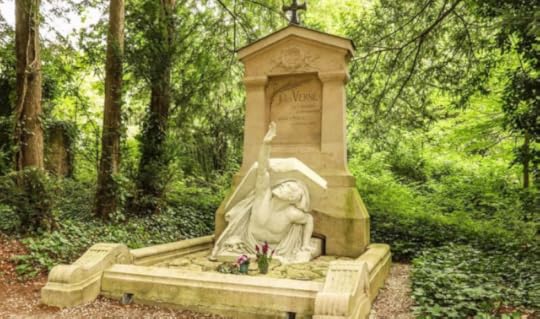
Still, Verne continued to travel and write until he was too ill to continue. In 1905, at the age of 77, Verne summoned his household to his bedside in Amiens. Verne's grandson Jean-Jules Verne recalled, 'When he saw we were all there, he gave us a fond look, turned his head to the wall and ceased to breathe.'


Jules Verne's tomb in Amiens, France

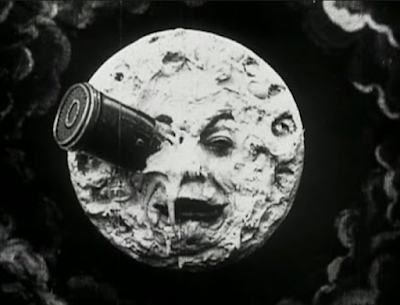
During Verne's life, and after his death, the writer inspired people far and wide. For example, journalist Nellie Bly journeyed around the world in 72 days, 6 hours, and 11 minutes; author H.G Wells published 'The Time Machine' and 'The First Men in the Moon'; Georges Méliès fashioned a rudimentary movie camera and made a short film called 'Le Voyage Dans La Lune' (1902), inspired by Verne's books.


Still picture from 'La Voyage Dans La Lune'

American engineer Robert Goddard designed a rocket, as did German scientist Wernher von Braun; Russia and America sent people into space; and much more.


Russian Yuri Gagarin, the first man in space

As it turns out, Verne even 'predicted' modern inventions, and was prescient about the future.


In the book, Bergreen interweaves Verne's story with the politics, conflicts, and highlights of the era - such as the French Revolution (1848); Napoleon III (1852 - 1870); the Exposition Universelle in Paris (1867); the Paris Commune (1871); and more - all of which affected the author's life and work.

Bergreen's narrative is well-researched and informative, especially for Jules Verne novices. My major criticism would be that Bergreen tends to take off on tangents (which are, in any case interesting) and is sometimes repetitive. Nevertheless, I'd highly recommend the book.

Thanks to Netgalley, Laurence Bergreen and Mariner Books for a copy of the book.

Rating: 4 stars