
In 'Physics Around the Clock', author Michael Banks explains the physics
involved in our everyday activities, such as preparing breakfast,
walking the dog, taking the kids to school, commuting to work, playing
sports, choosing a book or film, and so on.
As an example, when
your dog comes in from a walk in the rain, the pooch does a 'wet dog
shake' and sprays water everywhere. This may spritz you and the
furniture, but it could be a matter of life and death for your mutt,
helping to stave off hypothermia.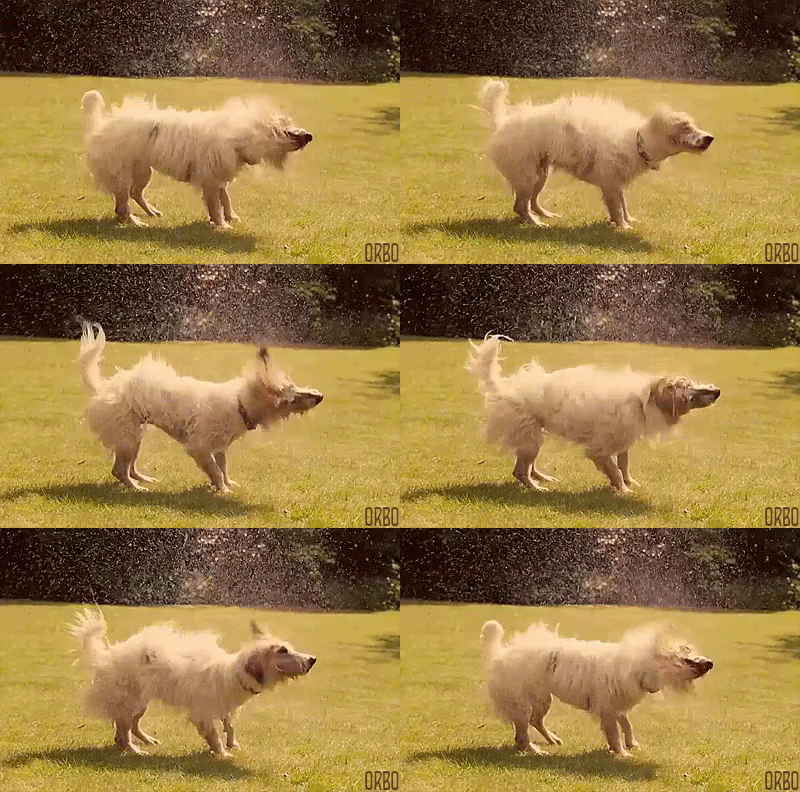
The
book's thirteen chapters discuss and explain many phenomena encountered
in everyday life. To mention just a few, this includes things like:
❃ Why a teakettle whistles and why the spout drips after you pour the tea.
❃ Why a box of cereal has the big chunks of dried fruit and nuts at the top, and the small bits at the bottom.
❃ How to make the best hard-boiled egg.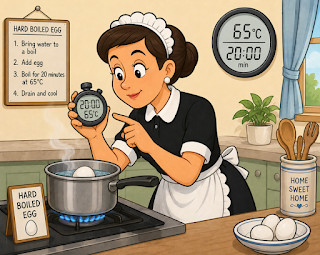
❃ Why it's hard to get the last drop of shampoo out of the bottle.
❃ Why non-conformists, like hipsters, end up conforming (i.e. wearing similar clothes).
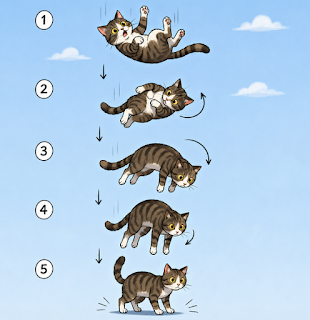
❃ Why falling cats always land on their feet.
❃ Why a goldfish in a round bowl sometimes 'disappears' due to refraction.
❃ How ferns catapult their spores into the air, to spread them far and wide.
❃ How spiders make their webs.
❃ Why traffic jams form, even when there's no accident.
❃ Why the flight of the original wooden golf balls was so unpredictable.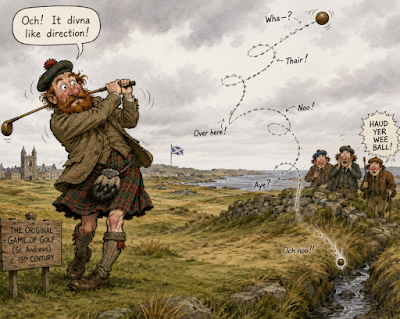
❃ How disease microbes spread through the air.
❃ What happens when a bottle of champagne is uncorked, and the best-shaped glass for drinking champagne.
❃ How to determine the size of a table you need for a a jigsaw puzzle.
❃ How to make the best pizza, and how to slice a pizza so some pieces have no crust (for the kiddies presumably).
❃ Why the Marvel Cinematic Universe is the most profitable.
.....and much more.
Though
it's sometimes a stretch, Banks explains that physics is involved in
just about everything. This is demonstrated by the fact that physicists
publish papers about 'non-traditional' research, and sometimes win the
Ig Nobel Prize - an award that recognizes achievements that make people
laugh and think. 
Examples of physics-related studies that received the Ig Nobel prize include:
❃ Levitating a frog with magnets;
❃ Why toast lands butter-side down; 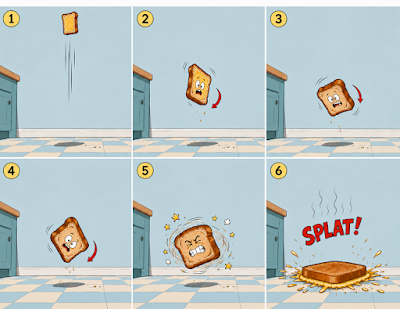
❃
The possibility of walking on water in a swimming pool (a person would
need enormous speed and very large feet to avoid sinking); 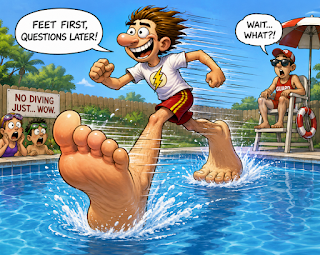
❃ The slipperiness of banana peels;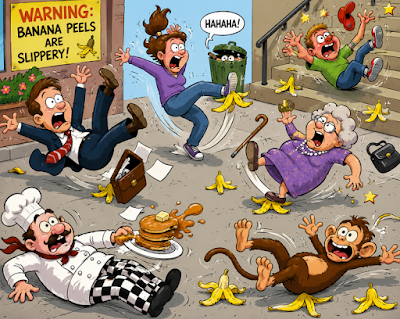
❃ The shape of ponytails; 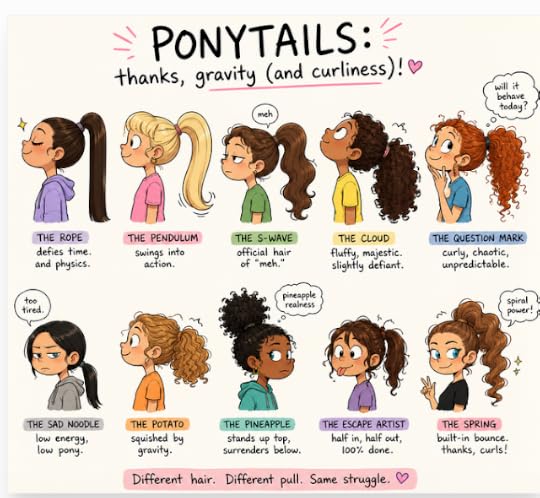
❃ Why wombats produce cube-shaped poop.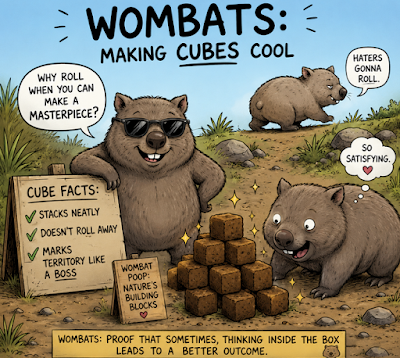
One
of my favorite vignettes describes the goal scored by Brazilian Roberto
Carlos against France in 1997. Banks writes, "Just as it seemed like
the shot would be going wide, the ball began to curve strongly to the
left and just snuck inside the goalpost; all the French goalkeepr,
Fabian Bartez could do was stand and watch, perplexed at what had just
happened." 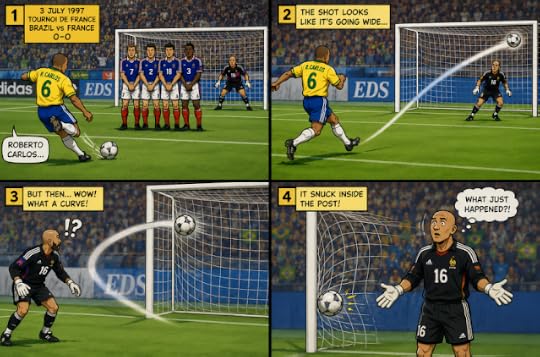
Banks
has a good sense of humor and threads fun quips and observations
through the book. Be aware though, the book contains REAL PHYSICS, not
just amusing anecdotes. Recommended to readers interested in the science
behind everyday life.
Thanks to Netgalley, Michael Banks, and Prometheus for an ARC of the book.
Rating: 4 stars

No comments:
Post a Comment