
This book is loosely based on real life events. In 1950, journalist Morris Markey was found dead in his home, with a bullet wound in his head. There was an open coroner's verdict: suicide or accident.
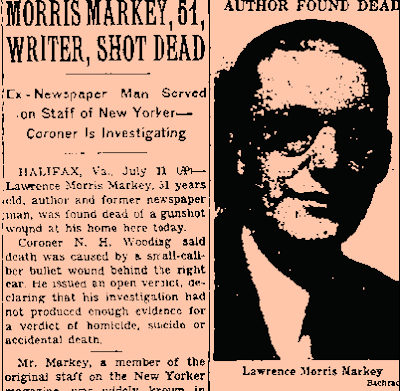
That
same year, Markey wrote a story about playboy George Elwell, who also
died from a bullet wound in his head. This novel is a fictional account
of Joseph Elwell's demise in 1920.
*****
Morris Markey,
born in Virginia in 1899, is enticed by a WWI recruitment parade, and
joins the Red Cross in 1918. Markey's job is to come out after the
battle is finished, gather up what remains, and get it into an
ambulance. 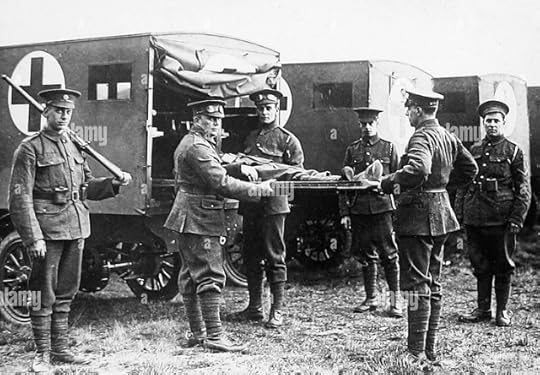
Unfortunately,
Markey sees soldiers torn up and shrieking with pain, and the
experience leaves him shell-shocked. Afterwards, in loud rowdy
situations, Markey hears buzzing in his head and zones out.
After
the war, Markey starts his journalism career in Atlanta before moving
north. It's now 1920, and 21-year-old Markey is in New York, writing for
the Daily News.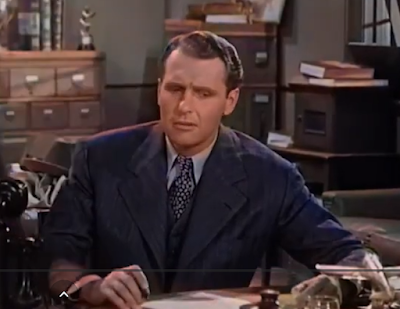
Markey
can't help but compare himself to his acquaintance, F. Scott
Fitzgerald, the writer everyone in New York is talking about. 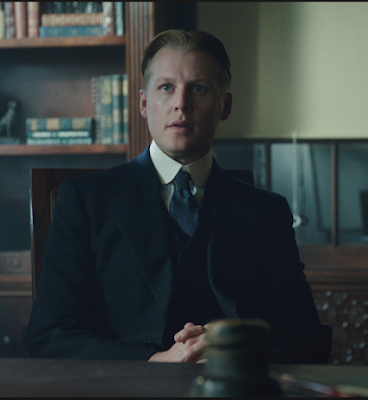
For
himself, Markey dreams of finding the right story, being there when the
big thing happens, and telling people how it really is. This is about
to occur. Late one night, Markey returns to his boarding house and sees
his neighbor, Joseph Elwell, emerge from a yellow roadster with a
beautiful red-head in a green and silver dress. Elwell nods to the
journalist and enters his brownstone with the young lady.
Markey's
heard that Elwell - a notorious womanizer - owns racehorses, plays
cards, invests in the stockmarket, and teaches bridge to socialites -
but only if they're pretty and only if they're married.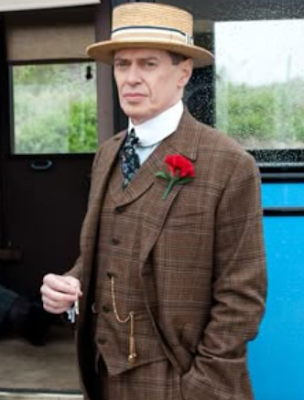
The
next morning, Markey is woken by a woman shouting, "Help me, please,
there has been a robbery, a man has been shot." The woman is Mrs.
Larsen, Elwell's housekeeper, and Markey hurries across to Elwell's
brownstone and offers to assist. 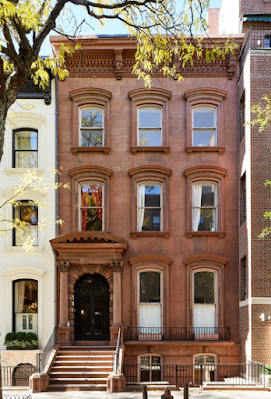
Markey
sees Joseph Elwell slumped in the drawing room with a single bullet
hole in his forehead. Rather than provide help, Markey takes the
opportunity to snoop in all the rooms, expecting to find the woman in
the green and silver dress, whom he thinks is the killer. There's no
female - or anyone else - in the house, but Markey's happy to call in
Elwell's death, scooping other reporters.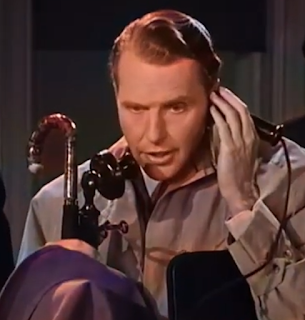
The police investigate Elwell's homicide, and Markey decides to join in, hoping to expose the culprit himself.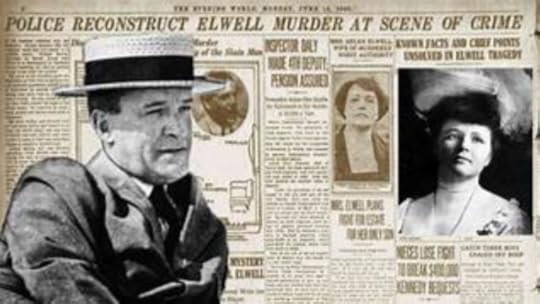
A
matchbook from the Ritz-Carlton Hotel tells Elwell the playboy was
socializing there the night before his murder. Markey learns Scott and
Zelda Fitzgerald are staying at the Ritz-Carlton, and he calls on them
to get entrée to the luxurious premises.
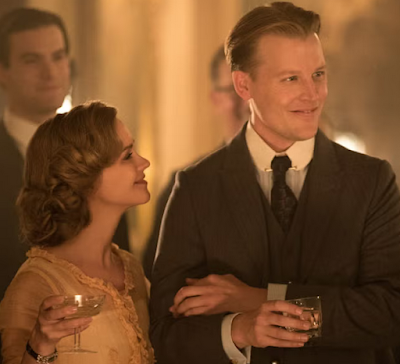
Markey
observes that the Fitzgeralds had not just taken a suite at the Ritz;
they had taken it over. Their living room was the size of his entire
apartment, and after a party last night, "Small plates with remnants of
sandwiches, bits of cheese, smears of chocolate and caviar sat abandoned
on side tables, chairs, the floor, the top of the grand piano. Flutes
and highballs were everywhere he looked. The ashtrays were full, and
most of the plateware held cigarette stubs. Near the gramophone, a pile
of records had been knocked over, sliding like playing cards across the
carpet." 
Markey
tells the Fitzgeralds about Elwell's murder, and explains he's looking
for the redhead in the green and silver dress. Zelda recalls seeing
Elwell at a party in the hotel's Japanese garden, but the playboy wasn't
with a girl in a green and silver dress. Elwell was with Viola Kraus,
"the most beautiful girl in New York", who claims to be Elwell's
fiancée. 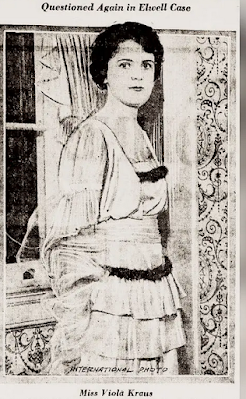
Viola Kraus
Markey's
suspicions now fall on Viola Kraus, and Zelda - who's ALWAYS up for
wild adventures - decides to help Markey investigate Elwell's killing.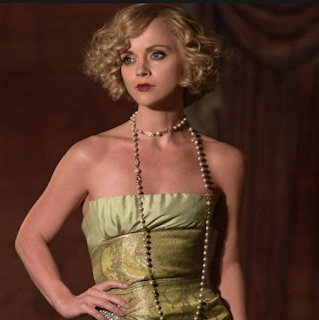
As
an acquaintance of the Fitzgeralds, Markey gains admission to Elwells's
regular haunts, like the Midnight Frolic at the New Amsterdam
Theatre.....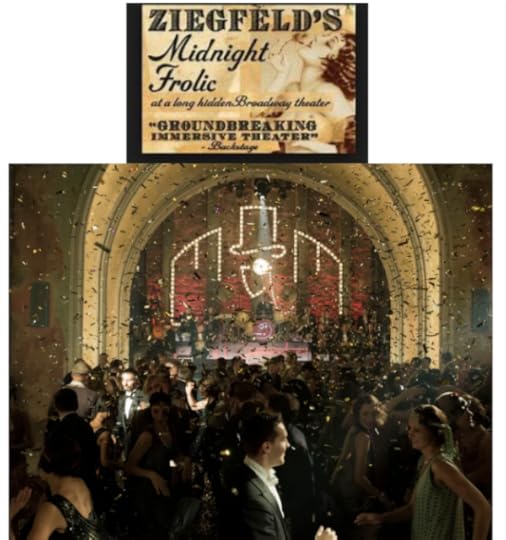
......and the Studio Gentleman's Club on Park Avenue. 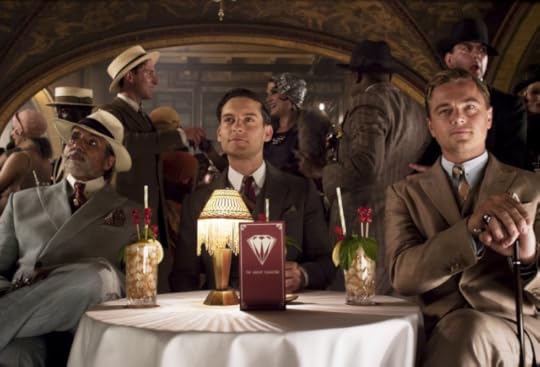
As
Markey circulates in high society, he interviews Elwell's friends,
acquaintances, and estranged wife Helen - who despises Elwell for
refusing to support herself and their son.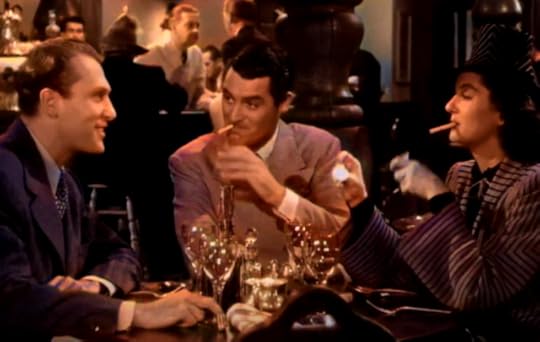
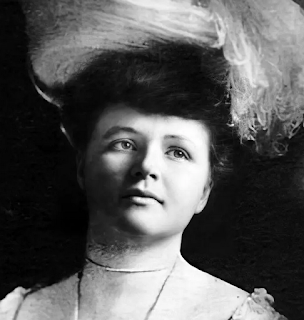
Joseph Elwell's estranged wife Helen
Markey
comes to suspect one person after another of killing the playboy, and
most of the 'suspects' are women Elwell romanced and their jealous
husbands or lovers. Nevertheless, other people are thrown into the mix
as well. 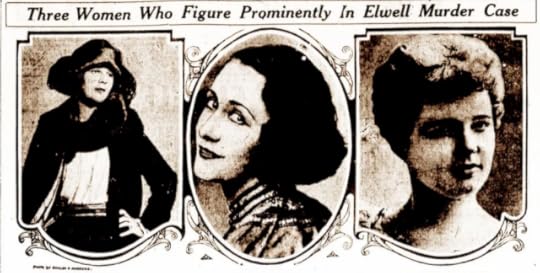
Women scrutinized by Markey and the police
In
the midst of all this, Markey relishes the opportunity to write article
after article about Elwell's murder, galvanizing the public, who always
love this kind of scandal.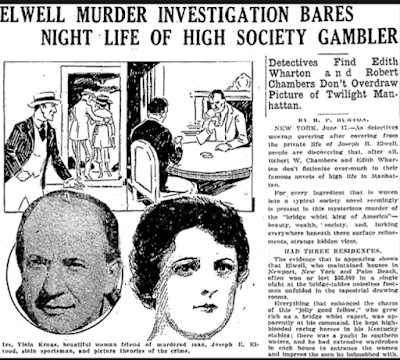
Things
get more complicated when Markey's upstairs neighbor, a nosybody called
Arthur Griswold, is shot; and a bullet comes through Markey's window as
well. In addition, Markey learns Elwell was a member of the American
Protective League (APL), an organization formed during WWI. The APL
identified suspected German sympathizers and worked against radicals,
anarchists, anti-war activists, and left-wing labor and political
organizations.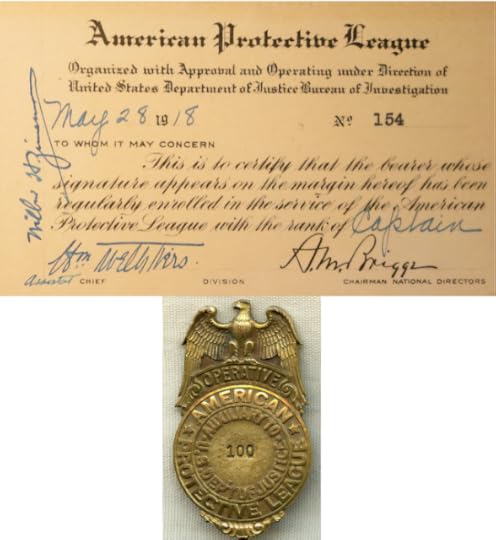
In the end, Markey identifies the killer (though Elwell's murder wasn't solved in real life.)
The
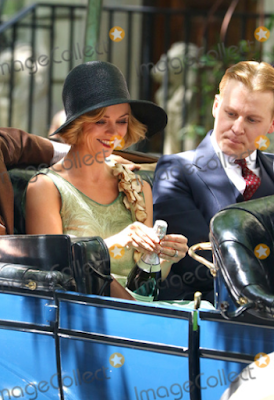
most entertaining scenes in the book revolve around Scott and Zelda
Fitzgerald, whose lives in the roaring twenties were public
performances.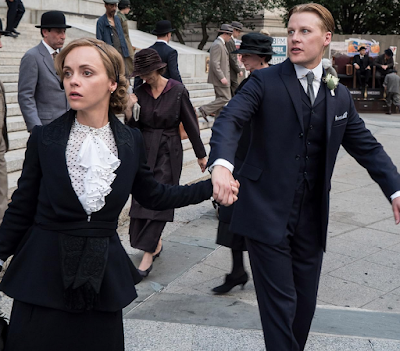
For
instance, at the Midnight Frolic, Scott gets drunk and strips, ready to
join the dancers on the stage; and Zelda climbs on the lion statue in
front of the New York Public library. The couple also make themselves
the center of attention at parties, drinking and relating one anecdote
after another about their escapades. 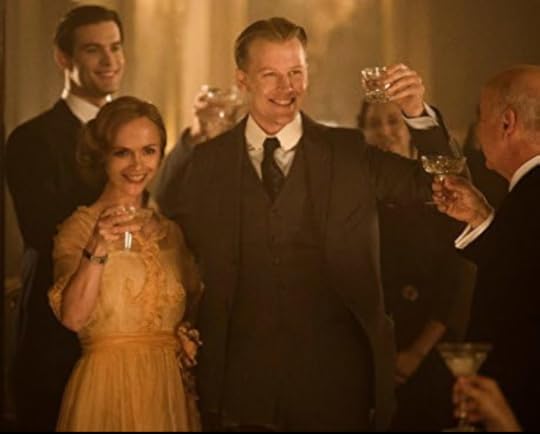
In
her Author's Note, Mariah Fredericks notes there's no record of Morris
Markey ever meeting the Fitzgeralds, though they had friends in common.
Still, Fredericks does a fine job combining fact and fiction in this
engaging story.
Thanks to Netgalley, Mariah Fredericks, and Minotaur books for a copy of the book.
Rating: 4 stars

No comments:
Post a Comment