
I first read C.P. Snow's 'Strangers and Brothers' series some time
ago, and it became a favorite. The novels focus on an English
barrister/civil servant, Lewis Elliot, who rises from poverty to a
position of influence in the early-to-mid 1900s. Elliot is present in
the entire eleven-book series, but he's not always the central
character.
I think Anglophiles and fans of historical fiction would enjoy the series.
*****
As
'Time of Hope' opens in June 1914, nine-year-old Lewis Eliot - ambling
home after an afternoon with friends - is seized with a feeling of
dread.
Lewis
soon learns his father Bertie's leather merchant business has gone
bankrupt. This is especially difficult for Lewis's mother Lena, a proud
woman whose hopes had been lofty. "She had a romantic, surging,
passionate imagination....as a girl she had expected a husband who would
give her love and luxury and state." Deprived of personal success, Lena
infuses Lewis with her dreams. 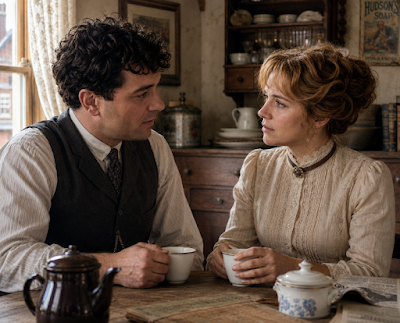
After
Bertie's bankruptcy is made public, Lena can hardly show her face in
public. Bertie, however, was born with a cheerful disposition, and
carries on as a low-paid traveling salesman.
Lena makes budgets and pinches shillings, but the war makes everything more difficult.
Then,
when Lewis is eleven, Lena swallows her pride to ask Aunt Milly
(Bertie's sister) for the fees she promised for Lewis's secondary
school. Aunt Milly agrees, but she's a 'kindly curmudgeon' who tells
Lewis, "You've got too good an opinion of yourself....It's your mother's
fault for letting you think you're something out of the ordinary." 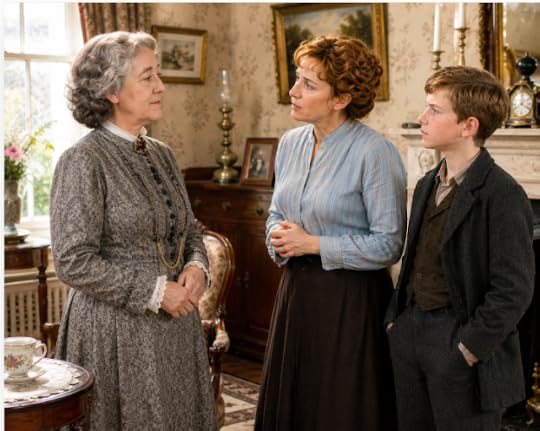
Lewis
observes, "Aunt Milly would consider that her money had been well
invested if I contrived to scrape through my years at school without
drawing unfavorable attention to myself. And once more I was to listen
to her message. My first duty, if ever my education provided me with a
livelihood, was to save enough money to pay twenty shillings on the
pound on my father's liabilities, and so get him discharged from
bankruptcy."
When Lewis finishes secondary school he's almost
sixteen, and there's no money for university. Having done well in his
studies, Lewis lands a job as a junior clerk in the local Council
Education Office, which has possibilities for advancement. 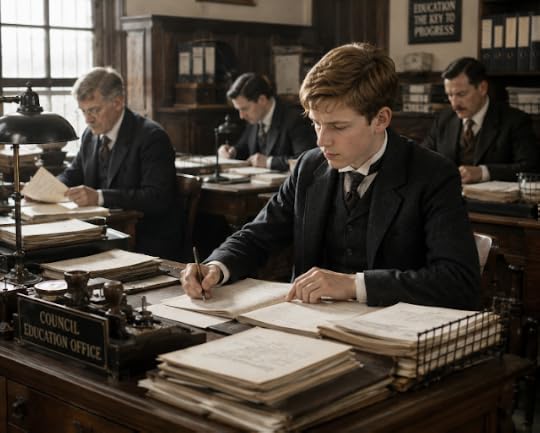
With
this in mind, Lewis enrolls in law classes at the local College of Art
and Technology (aka the School). There Lewis meets George Passant, a
solicitor/managing clerk who teaches a night class in Fundamentals of
Criminal Law. George is destined to play an important part in Lewis's
life. 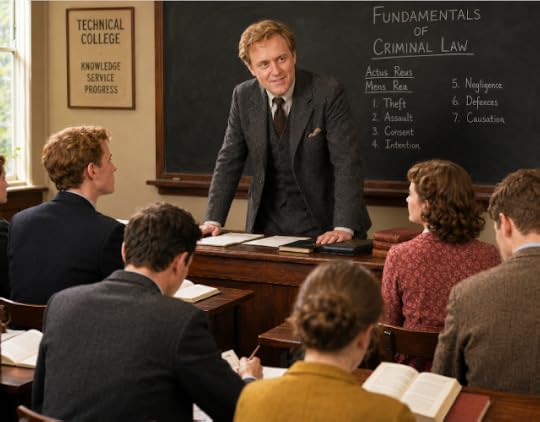
Lewis's
hopes for a brighter future are bolstered when he inherits 300 pounds
from his mother's uncle. Aunt Milly wants Lewis to pay down his father's
debts, but his mother, who's terminally ill, insists Lewis is to spend
the money to 'get a start.'
After his mother dies, Lewis asserts
his independence by taking a room in a boardinghouse. He observes, "I
had brought all my possessions in two old suitcases - another suit, two
pairs of flannels, some underclothes, a few books and school
photographs. I felt despondent in the strange, cheerless room, and yet
hopeful with the hope that I saw so often in my mother."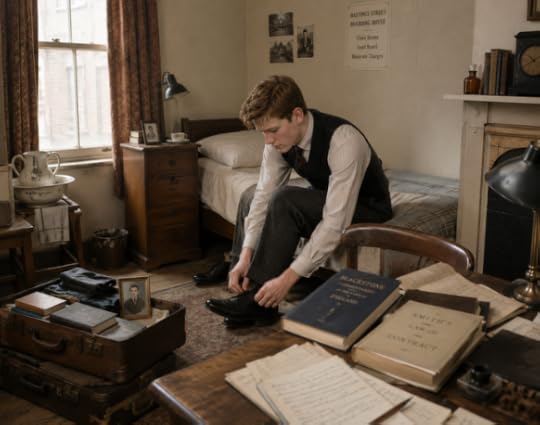
Lewis
continues working at the Council Education Office, and starts
fraternizing with young people (called 'the group') that George Passant -
now in his mid-twenties - is collecting around him. All the group, both
men and women, are students at the School. Lewis recalls, "We sat hour
after hour at night or on Sunday afternoons in dingy cafés up and down
the town, the cafés of cinemas or, late at night, the lorry drivers'
caff beside the railway station....soon we developed the practice of all
going to spend weekends in a farmhouse ten miles away, where we would
cook our own food, pay a shilling a night for a bed, and talk until
daybreak."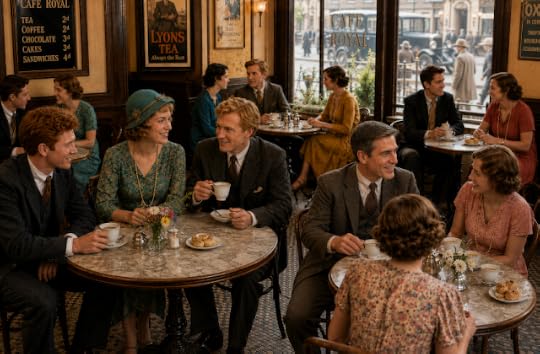
It's
now that Lewis has his next life-altering experience. He observes, "It
was in those happy days that, attuned so that my imagination stirred to
the sound of a girl's name, I first heard the name of Sheila
Knight....attuned because of the amorous climate which lapped around our
whole group on those summer evenings....One warm and cloudy midsummer
evening, I had met [my friend] Jack out of the newspaper office, and we
were walking slowly up the London Road. A car drove by close to the
pavement, and I had a moment's sight, blurred and confused, of a young
woman's face, a wave. The car passed us, and I turned my head, but could
see no more. Jack was smiling. He said 'Sheila Knight'."
For
Lewis, it's love at first sight. He and Sheila occasionally go out
together, but on Sheila's part it's much more platonic than romantic.
Sheila exhibits erratic behavior, suffers from some kind of antisocial
personality disorder, and torments Lewis with other men. Still, Lewis is
obsessed with Sheila, and their relationship forms a large and
important part of this novel (and Lewis's story going forward).
Meanwhile,
from age nineteen, Lewis takes steps to further his professional
ambitions. George Passant is a solicitor/managing clerk at the firm
'Eden & Martineau', and he urges Lewis to apply for an
apprenticeship there. This would cost Lewis a considerable sum, and
George insists, "If there's any snag, I should expect you to look on me
as your banker. I don't see how you could possibly need more than a
hundred pounds on top of your [300 pounds]. Somehow or other, that will
have to be found. I insist that you don't let a trivial sum affect your
decision." 
Lewis
meets Mr. Eden and Mr. Martineau and makes a good impression, but
ultimately decides to go in another direction. Lewis decides that,
instead of becoming a solicitor, he wants to read for the bar (become a
barrister). Lewis gets admitted to the Chambers of Herbert Getliffe,
where he'll have to pay 208 pounds down, and then pupil's fees - which
is more than his entire inheritance. Lewis must borrow money to help
with his education and living expenses, and Aunt Milly is cajoled into
providing a loan. 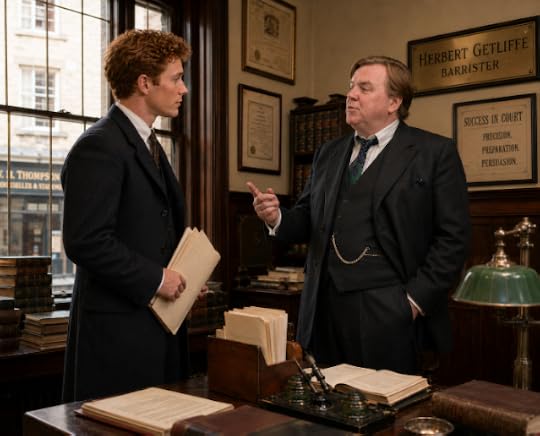
Lewis's
education/experiences at Herbert Getliffe's Inn occupies a large part
of the novel, and provides most of the lighter moments. Getliffe is a
memorable character: he's good-natured, but also arrogant; stingy (he
never pays for drinks); takes credit for other people's work; is wary
about juniors moving up the ladder....and he usually manages to slide
out of his promises. 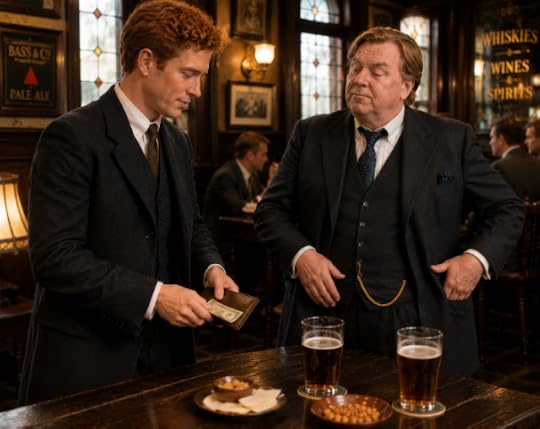
Lewis
has to deal with all this during his years at the Inn, and then must
'study study study' to take his bar exams. George Passant, who has
extensive knowledge about the law, coaches and encourages Lewis, and is
instrumental in Lewis's success.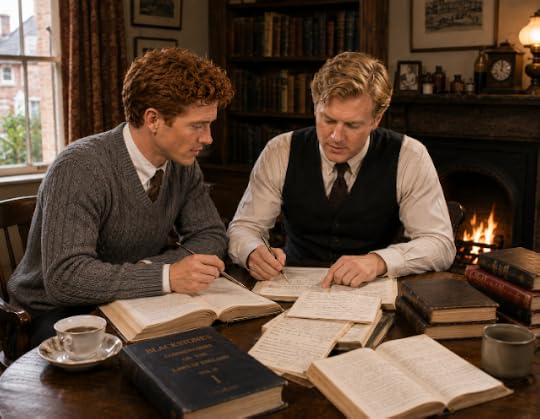
Towards
the end of the novel, Lewis is a London barrister representing a
client, and this is the subject of the next book in the series, titled
'George Passant.'
Though the book encompasses the WWI years,
there's not much about the conflict aside from the deprivation this
causes in Britain. This seems like a hole in the story, since some
characters would surely lose loved ones and talk about it. On the
upside, the novel has a good bit of British slang, archaic words, and
fancy language, which is always fun.
For instance:
➤
George tells Lewis, "You'd become an incomparably better solicitor than
most of the bellwethers and sunkets who disfigure what I still consider a
decent profession." (In this context, sunket means an idiot.)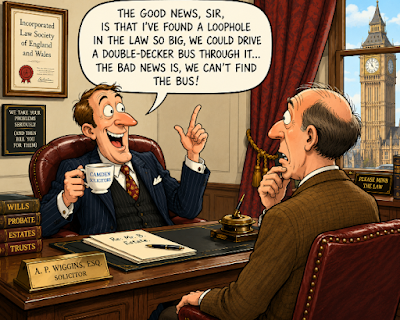
➤
When Lewis applies to apprentice in Getliffe's chambers, Getliffe tells
him, "It's not easy for me to take you, but I shall. I make it a matter
of principle to take people like you, who've started with nothing but
their brains....Also, it keeps the others up to it." Lewis observes, "He
grinned at me: his mood had changed, his face was transformed, he was
guying all serious persons." (Guying means teasing, making fun of.)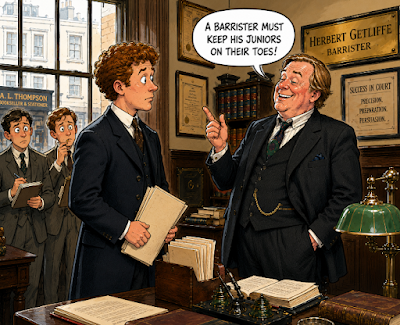
➤
Lewis is suffering in his relationship with Sheila, but can't break it
off. He observes: "I had seen something of myself, and something of my
fate. In detail, I did not burke the certain truths." (Burke originally
meant 'to murder by suffocation without leaving marks' but now means
suppress the truth/ kid yourself.) 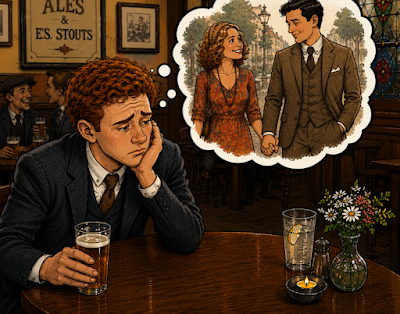
➤
When Lewis is an apprentice barrister and looking for business at
police courts, he notes, "I used to attend several....Those courts were
only a few miles apart, but in society the distance was vast - from the
smart businessmen showing off their cars on the way home from the tennis
court, to the baffled, stupid, foreign prostitutes, the ponces and
bullies, the street bookmakers, the blowsy ladies of the Pimlico
backstreets." (Ponces refers to pimps.)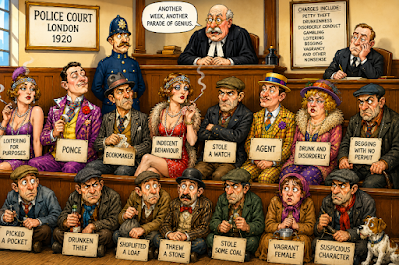
➤
Mrs. Eden admires Sheila, and Lewis observes, "She was quite
unembarrassed by her admiration; it was easy to think of her as a girl,
concentrated and intent, unrestrained in a schwärmerei, bringing some
mistress flowers and gifts. (In this context, schwärmerei means a
crush.)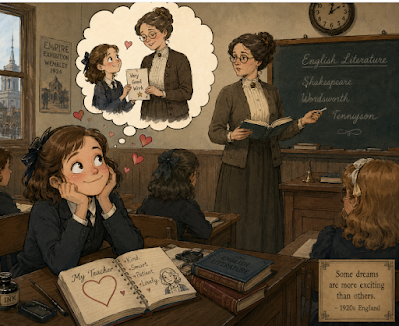
This
debut novel in the series establishes Lewis Eliot's background;
conflicted feelings about his mother; confidence in himself; ability to
read people; willingness to suffer for Sheila; and deep loyalty to his
friends.
This book is set in a time when climate
change; pollution; oil reserves; nuclear bombs; etc. weren't issues.
People had different worries then, but many concerns - like family;
education; professional success; relationships; corruption; poverty; and
so on - remain significant.
I like the book and recommend it.
Rating: 4 stars

No comments:
Post a Comment